
A cold bedroom over the garage, ice dams along the roofline, and a furnace that seems to run without a break all point to the same issue: a building enclosure that is losing too much heat. So, is insulation good for the environment? In most New England homes and commercial buildings, the answer is yes – when the material is selected for the application and installed correctly.
Insulation reduces the energy needed to heat, cool, and dehumidify a building. That means less fuel burned at the source, lower utility use at the property, and a more comfortable indoor environment for the people who use it. The full environmental picture is not limited to the insulation product itself, though. Material manufacturing, service life, air sealing, moisture control, and installation quality all matter.
Why Insulation Is Good for the Environment
The largest environmental benefit of insulation comes from what it prevents: ongoing energy waste. A home with poorly insulated attic planes, exterior walls, rim joists, or floors makes its heating and cooling equipment work harder every day. In New Hampshire, Massachusetts, Maine, and Vermont, that penalty is especially noticeable during long heating seasons and humid summers.
Proper insulation slows heat transfer through the building enclosure. Its R-value measures resistance to that heat flow, but R-value is only part of the story. Air leaks can carry a surprising amount of conditioned air through gaps around plumbing penetrations, top plates, attic hatches, recessed lights, and foundation transitions. A high-R-value product cannot perform as intended when outdoor air can move freely around it.
That is why a sound environmental upgrade often combines insulation with targeted air sealing. The result is lower heating and cooling demand, fewer drafts, steadier room temperatures, and less strain on mechanical equipment. It can also reduce the need to oversize replacement furnaces, boilers, heat pumps, and air conditioners.
For a homeowner, the benefit shows up as better comfort and lower operating costs. For builders and remodelers, it supports code-compliant assemblies that perform reliably after the project is complete. For commercial property owners, reducing energy demand can improve operating efficiency across a much larger footprint.
The Environmental Trade-Off Depends on the Material
No insulation material has zero environmental impact. Every product requires raw materials, manufacturing energy, transportation, and installation labor. The better question is whether its lifetime energy savings and durability outweigh those upfront impacts. In most climate-appropriate applications, effective insulation delivers a strong long-term benefit.
Cellulose: High Recycled Content for Open Cavities
Blown cellulose is commonly made with recycled paper fiber and treated to resist fire, pests, and mold. It is a practical choice for many attics and dense-pack wall applications because it can fill irregular spaces better than some batt products.
Its recycled content is a meaningful advantage, particularly for retrofit projects. Performance still depends on correct density, coverage depth, and air sealing below the attic floor. If a crew simply adds material over open bypasses, warm air can continue escaping into the attic and carry moisture with it.
Fiberglass: Familiar, Effective, and Installation-Sensitive
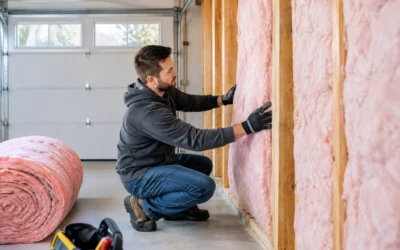
Fiberglass insulation remains widely used in new construction, remodels, and commercial work. It is noncombustible, available in many forms, and can provide dependable thermal performance when installed without gaps, compression, or voids.
From an environmental standpoint, fiberglass works best when the assembly is detailed carefully. Batts that are poorly cut around wiring or left unprotected from air movement will not deliver their rated performance. Properly installed fiberglass paired with air sealing can be a cost-effective way to reduce energy use over the life of a building.
Mineral Wool: Durability, Fire Resistance, and Moisture Tolerance
Mineral wool is valued for its fire resistance, sound control, and ability to maintain performance when exposed to incidental moisture. It is often a strong fit for exterior walls, fire-rated assemblies, basements, and areas where durability matters.
It may require more manufacturing energy than some alternatives, but its long service life and resilient performance can make it a responsible choice for demanding building details. It also gives builders a practical option where fire resistance and acoustic control are part of the project requirements.
Spray Foam: High Performance With a Need for Precision
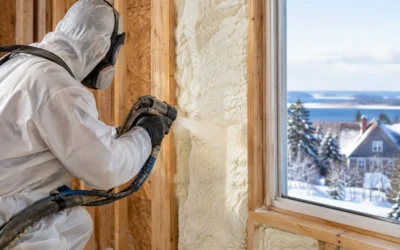
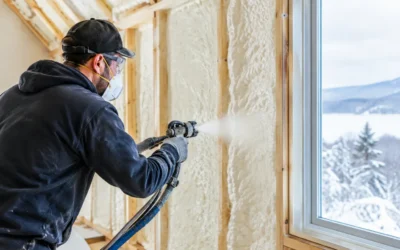
Spray foam can deliver exceptional air sealing and high R-value in limited space. It is useful at rim joists, rooflines, complex framing, cantilevers, and other locations where uncontrolled air movement is difficult to address with fibrous insulation alone.
Its environmental profile requires a more careful discussion. Spray foam uses chemical components and has a higher upfront material impact than cellulose or fiberglass. However, modern HFO spray foam has a significantly improved blowing-agent profile compared with older formulations, while still offering high thermal performance and effective air control.
The right use of spray foam is not necessarily to fill every cavity with it. Often, the most responsible approach is to use it strategically where it solves a specific air leakage, moisture, or space constraint, then use cellulose, fiberglass, or mineral wool elsewhere. This can improve building performance while keeping material use appropriate to the job.
The Best Environmental Result Comes From a Complete Assembly
Insulation is good for the environment when it is part of a building-science approach rather than a single-product decision. A well-performing assembly manages heat, air, and moisture together.
In a New England attic, for example, the priority is often to air seal the ceiling plane before adding or improving insulation. Sealing bypasses helps prevent heat loss and limits the flow of moist indoor air into cold attic spaces, where condensation can contribute to mold, wood damage, and ice dams. Then the insulation can provide the intended R-value across the attic floor.
In basements and crawl spaces, insulation choices should account for foundation moisture and the location of ductwork or mechanical equipment. In walls, the right approach depends on whether the building is new construction, a deep-energy retrofit, or a targeted renovation. Vapor control layers, drainage planes, and ventilation details must work together with the insulation strategy.
This is also why adding more insulation is not always the first fix. If a home has a wet basement, roof leak, bulk water issue, or major air leakage path, those concerns need to be addressed so the new insulation remains dry and effective. Wet or damaged insulation can lose performance and may need replacement sooner than expected.
Long Service Life Matters as Much as Initial Savings
An insulation upgrade is most sustainable when it lasts. Products installed to the right depth, density, and location can keep performing for decades. That avoids repeated material use and protects the energy savings that made the project worthwhile in the first place.
Professional installation matters here. Crews need to recognize thermal bridges, protect ventilation pathways, maintain required clearances around heat-producing fixtures, and follow local code requirements. They also need to understand when air barriers, vapor retarders, ignition barriers, or fire-resistant materials are required.
For contractors, that attention to detail supports first-pass inspections and reduces costly call-backs. For property owners, it helps prevent the frustrating outcome of paying for insulation while a drafty room or excessive utility bill remains unchanged.
How to Make an Insulation Project More Sustainable
Start with an assessment of the building rather than choosing a product from a label. An energy audit can identify where heat is escaping, whether insulation levels are inadequate, and which air leaks have the greatest effect on comfort and energy use. It can also reveal moisture concerns that should be corrected before new materials are installed.
Next, select insulation based on the assembly. A ventilated attic, cathedral ceiling, unconditioned basement, exterior wall, and commercial roofline each present different thermal and moisture conditions. The best option may be cellulose in one area, mineral wool in another, and targeted HFO spray foam where air sealing and limited cavity depth demand it.
Finally, consider the building’s future use. A renovation that creates conditioned living space over a garage needs a different solution than an attic that will remain unconditioned. Planning for durability, mechanical upgrades, and code requirements helps prevent wasteful rework later.
A knowledgeable insulation contractor can turn these choices into a practical scope of work. Colonial Insulation evaluates the full building enclosure so homeowners, builders, and property owners can invest in improvements that deliver measurable comfort, energy savings, and dependable performance through every New England season.