
A cold bedroom over the garage, ice dams at the eaves, and heating bills that climb every January often point to the same problem: the building envelope is not doing its job. When comparing cellulose versus fiberglass, the right choice is rarely just about the material. It depends on where the insulation will go, how much air leakage is present, the condition of the assembly, and what the home or building needs to handle a New England winter and humid summer.
Both materials can deliver reliable thermal performance when they are specified and installed correctly. The difference is in how they manage gaps, density, moisture, sound, installation conditions, and long-term performance.
Cellulose versus fiberglass at a glance
Fiberglass and cellulose are proven insulation materials, but they work differently. Fiberglass is made from spun glass fibers and is available in batts, rolls, and blown-in loose fill. Cellulose is typically made from recycled paper fiber treated with borate compounds for fire resistance and pest deterrence. It is most often installed as blown-in insulation in open attics and enclosed wall cavities.
Fiberglass batts are familiar on new-construction sites because they are straightforward to handle, fit standard framing cavities, and can be installed quickly when the framing is consistent. Blown fiberglass is also a practical choice for attic upgrades and irregular spaces.
Cellulose is especially effective for existing homes with uneven framing, older wall cavities, and attics with layers of aging insulation. Its small fibers can settle into irregular areas and around obstructions more completely than a poorly cut batt. That ability matters in older New England homes, where framing is not always uniform and thermal gaps can add up fast.
Neither product should be treated as an air-sealing system. Insulation slows heat transfer, while air sealing stops uncontrolled air movement. A home can have a high R-value on paper and still feel drafty if attic bypasses, rim joists, plumbing penetrations, recessed lights, or exterior-wall gaps have not been addressed.
R-value is only part of the decision
R-value measures resistance to heat flow. Higher numbers provide greater resistance, but the installed result matters more than the number printed on the bag or batt label.
Cellulose generally provides roughly R-3.2 to R-3.8 per inch, depending on the product and installation method. Fiberglass commonly ranges from about R-2.2 to R-4.3 per inch, with higher-density batts and certain blown products offering stronger performance per inch. Exact values vary by manufacturer, product, and required thickness.
For an attic, available depth often makes it possible to add enough blown cellulose or blown fiberglass to meet a targeted R-value. For walls, cavity depth limits the choice. A 2×4 wall does not have unlimited room for insulation, so proper fit and air control become more significant.
Fiberglass batts lose performance when they are compressed, left with voids, or installed around wiring and plumbing without careful cutting. A batt that is too narrow for the cavity leaves an uninsulated channel. One that is stuffed behind a junction box can lose effective R-value. This is why installation quality matters as much as product selection.
Dense-pack cellulose can provide a more complete fill in closed wall cavities, helping reduce convective air movement within the insulation layer. It is a strong option for retrofit work, provided the wall assembly is evaluated for moisture conditions before installation.
The New England attic question
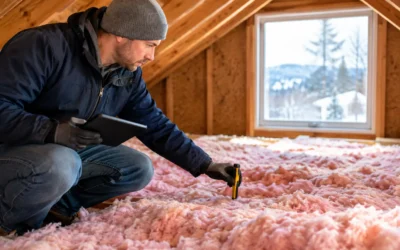
Most attic projects begin with air sealing, not insulation selection. Warm interior air can escape through gaps at top plates, around chimneys, wiring holes, duct penetrations, and attic hatches. That escaping air carries heat and moisture into the attic, contributing to energy loss and, in some cases, condensation or ice-dam conditions.
Once those pathways are sealed appropriately, either blown cellulose or blown fiberglass can be installed to the required depth. Cellulose is often favored where homeowners value recycled content and dense coverage over complex attic floors. Blown fiberglass can be a good fit where a lightweight material and strong thermal performance are priorities. The best attic recommendation should account for existing insulation, ventilation, roof details, and local code requirements.
Moisture management requires a whole-assembly view
Homeowners sometimes hear that fiberglass is vulnerable to moisture or that cellulose absorbs moisture. Both statements need context.
Fiberglass does not absorb water in the same way cellulose can, but wet fiberglass insulation can lose insulating effectiveness and may hold moisture against surrounding building materials. Cellulose can buffer small amounts of moisture and release it as conditions dry, but it should never be used to excuse an active roof leak, foundation water issue, or uncontrolled vapor problem.
The practical question is not which insulation is “waterproof,” because neither is designed to solve bulk-water intrusion. The question is whether the roof, walls, foundation, vapor control layers, drainage details, and ventilation strategy are working together.
For example, a damp basement rim joist may require air sealing and closed-cell spray foam rather than cellulose or fiberglass. A cathedral ceiling may need a carefully designed ventilation channel and vapor-control approach. In an attic with a bathroom fan exhausting into the space, the fan duct must be corrected before new insulation is installed.
A building-performance assessment can identify these conditions before insulation is added. That protects the investment and helps prevent a comfort upgrade from concealing a moisture problem.
Sound control, fire resistance, and indoor comfort
Both cellulose and fiberglass can improve sound control compared with empty wall cavities. Cellulose’s density can make it particularly useful for reducing airborne sound between rooms, floors, or exterior walls. Fiberglass acoustic batts are also designed for sound reduction and are often used in interior partitions, media rooms, and multifamily construction.
Cellulose is treated with borates to improve fire resistance and discourage insects. Fiberglass is noncombustible, although facings and surrounding materials may have separate fire-rating considerations. Neither material replaces required fire blocking, code-compliant assemblies, or proper clearances around chimneys, flues, and heat-producing equipment.
For indoor air quality, the more immediate concern is usually air leakage and contaminant pathways. Air sealing can reduce the movement of dusty attic air, insulation particles, odors, and outdoor pollutants into living spaces. Mechanical ventilation may also be necessary in tightly sealed homes to maintain healthy air exchange. Good insulation work should improve comfort without overlooking how the home breathes.
Cost and installation realities
Material price is only one part of project cost. Access, prep work, air sealing, removal of damaged insulation, wall complexity, required R-value, and safety details all affect the final scope.
Fiberglass batts can have a lower initial material cost, especially in open new-construction cavities. They can be an efficient option for builders when installed by trained crews who maintain full contact, correct depth, and consistent coverage.
Cellulose can be cost-effective for attic upgrades and retrofit applications because it is installed with blowing equipment and fills around many obstructions. Dense-packing walls is more specialized work, and the cost reflects the equipment, access, and care needed to fill cavities properly without damaging finishes.
The lowest upfront price is not always the lowest operating cost. An installation that leaves gaps, misses air leaks, or fails an inspection can lead to callbacks, comfort complaints, and higher utility bills. For remodelers and builders, that is a schedule and reputation issue as much as an energy issue.
Which insulation is right for your project?
Cellulose is often a strong choice for open attics, dense-packed existing walls, and projects where dense coverage, sound control, and recycled content are priorities. Fiberglass is often a strong choice for properly prepared new-construction walls, interior sound-control assemblies, and attic projects where blown fiberglass suits the design and budget.
There are also projects where neither is the complete answer. Spray foam may be appropriate at rim joists, difficult-to-access air leaks, or assemblies needing higher R-value in limited space. Mineral wool may be valuable where fire resistance and moisture tolerance are central concerns. Many high-performing homes use more than one insulation type, each placed where it performs best.
The most dependable path is to start with the building rather than a product preference. A qualified insulation contractor can evaluate the attic, walls, basement, air leaks, moisture risks, existing insulation, and target R-values before recommending a scope. Colonial Insulation helps New England property owners and construction teams make that decision with climate-specific guidance, trained installation, and solutions designed to perform through every season.
If one room is always colder, your attic insulation is aging, or a renovation has opened exterior walls, use that access to correct the underlying weaknesses now. The right insulation plan should leave you with steadier temperatures, lower energy waste, and confidence that the work will hold up when the next winter arrives.