
A cold bedroom over the garage, ice dams at the roofline, and a furnace that seems to run without a break usually point to more than one problem. Sustainable insulation addresses the building envelope as a system, reducing energy loss while supporting healthier indoor air, durable assemblies, and reliable comfort through New England winters and humid summers.
For homeowners, that can mean lower heating and cooling costs and fewer rooms that never feel right. For builders and remodelers, it means choosing materials and installation methods that meet code, manage moisture, and help projects pass inspection without last-minute corrections. The most sustainable choice is not simply the product with the most recycled content. It is the insulation system that performs well for the building, climate, and life of the project.
What Makes Insulation Sustainable?
Sustainability starts with reducing the energy a building needs to stay comfortable. A well-insulated, well-air-sealed home puts less demand on heating and cooling equipment year after year. In a region where winter heating loads are substantial, that operational energy savings often has a greater long-term effect than evaluating material content alone.
Material selection still matters. Recycled content, responsible manufacturing, durability, moisture resistance, and the ability to maintain thermal performance over time all belong in the conversation. So do installation quality and the details of the surrounding assembly. Insulation with an excellent R-value cannot deliver its intended value when gaps, compression, unsealed penetrations, or air leakage bypass it.
A sustainable approach also considers whether the solution helps the building last. Moisture trapped in a wall, attic, or crawlspace can lead to mold, rot, odors, and expensive repairs. The right insulation and air-sealing strategy controls heat flow and air movement while allowing the assembly to manage moisture appropriately.
Sustainable Insulation Options for New England Projects
There is no universal best material. Each insulation type has strengths, limitations, and ideal applications. A qualified evaluation looks at the location being insulated, target R-value, existing conditions, access, budget, and local code requirements.
Blown Cellulose
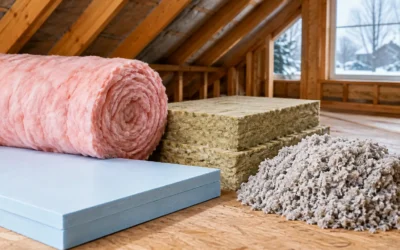
Cellulose is commonly made with recycled paper fiber and treated for fire resistance. It is a practical sustainable insulation option for many attics, dense-packed walls, and retrofit projects because it can fill around framing irregularities and obstructions more effectively than some batt products.
In an attic, properly installed blown cellulose can create a continuous thermal layer that improves comfort below. Dense packing can also help reduce air movement inside wall cavities, although it is not a replacement for dedicated air sealing. The key is correct density and coverage. Underfilled areas, missed cavities, or insufficient attic depth can compromise performance.
Cellulose needs to be used in a properly designed assembly. Roof leaks, bulk water intrusion, and unmanaged indoor humidity must be addressed first. Like any insulation, it performs best when the building enclosure is dry and protected.
Mineral Wool
Mineral wool is valued for its fire resistance, moisture tolerance, sound-control properties, and high-temperature performance. Many mineral wool products contain recycled content, and the material can be especially useful in exterior walls, basements, mechanical areas, multifamily construction, and locations where fire and acoustics matter.
Its density helps it fit securely in framing cavities, and rigid mineral wool boards can support continuous exterior insulation strategies. Continuous insulation is particularly valuable because it limits thermal bridging through studs and other framing members. That improves real-world wall performance beyond what cavity insulation alone can provide.
The trade-off is cost and labor. Mineral wool can be more expensive than standard fiberglass, and installation still must be careful to avoid gaps. For projects where fire resistance, sound reduction, and moisture resilience are priorities, the added investment may be well justified.
Fiberglass
Modern fiberglass insulation remains a dependable and cost-effective choice for many homes and commercial buildings. Some products include recycled glass content, and fiberglass can provide strong thermal performance when it is correctly sized, fully fluffed, and installed without voids or compression.
Fiberglass batts are often appropriate for open wall cavities in new construction or remodeling. Blown fiberglass can be a useful attic option as well. Its sustainability depends heavily on installation quality: a batt with gaps around wiring, pipes, or framing will not perform like a complete insulation layer.
Fiberglass does not stop air leakage on its own. Pairing it with careful air sealing at top plates, bottom plates, rim joists, penetrations, and transitions is what turns a basic insulation package into a higher-performing enclosure.
HFO Spray Foam
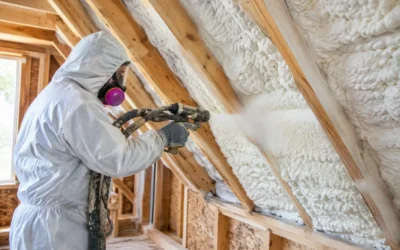
Spray foam can deliver high R-value per inch and, when installed correctly, can provide insulation and air control in one application. This makes it especially effective in tight rooflines, rim joists, irregular cavities, and renovation areas where space is limited.
Next-generation HFO spray foam uses a blowing-agent technology with a lower global warming impact than older formulations. That is a meaningful improvement, but spray foam should still be selected thoughtfully. It is not automatically the right answer for every cavity or every budget, and the best sustainable design may use foam selectively where its air-sealing and space-saving advantages solve a specific problem.
Professional installation is essential. The substrate, temperature, thickness, ventilation requirements, and curing conditions all affect the finished result. Properly specified foam can help create a durable, efficient assembly. Poor installation can create delays, rework, and performance issues.
Why Air Sealing Is Part of Sustainable Insulation
Insulation slows conductive heat transfer. Air sealing controls the drafts that carry heat, moisture, and outdoor pollutants through hidden openings. New England homes often lose conditioned air through attic bypasses, rim joists, recessed fixtures, plumbing penetrations, duct chases, and transitions between additions and original structures.
Without air sealing, warm indoor air can escape into a cold attic during winter. That heat loss raises energy use and may contribute to roof snow melt and ice dam conditions. In summer, humid outdoor air can move into cooler building cavities, where moisture can condense on cold surfaces.
A thoughtful building-performance plan identifies these leakage paths before insulation is added. Energy audits, visual inspection, and diagnostic testing can reveal where the enclosure is underperforming. The result is a recommendation based on measurable conditions rather than a one-size-fits-all material choice.
Match the Assembly to the Climate and the Building
New England insulation decisions are shaped by long heating seasons, significant temperature swings, wind-driven weather, and summer humidity. An attic in Maine, a renovation in Massachusetts, and a new home in New Hampshire may share similar goals, but their existing assemblies, ventilation details, and code requirements can differ.
For an older home, the priority may be air sealing an attic floor and bringing insulation levels up to current expectations. In a deep renovation, dense-packed cellulose or mineral wool may improve walls without removing every interior finish. In new construction, builders may combine cavity insulation with continuous exterior insulation to reduce thermal bridging and support a more consistent thermal envelope.
Moisture control deserves equal attention. Vapor control layers, drainage planes, ventilation, and drying potential must work together. Adding insulation changes the temperature of wall and roof components, which can change where condensation risk occurs. This is why material selection should be coordinated with the full assembly, not handled as an isolated upgrade.
Choosing a Sustainable Insulation Plan
Start with the problem you are trying to solve. If your concern is cold floors and high heating bills, the attic, basement, rim joist, and air leaks may offer the best return. If a remodel opens exterior walls, it may be the right time to improve cavity insulation and address thermal bridging. If a commercial space struggles with noise, fire requirements, or inconsistent temperatures, mineral wool and targeted air sealing may deserve a closer look.
A professional assessment brings the details together: existing insulation levels, moisture conditions, access, HVAC performance, code requirements, and project schedule. Colonial Insulation helps property owners, builders, and remodelers evaluate those conditions and select a practical system that supports comfort, efficiency, and durable construction.
The right insulation plan should make the building feel better every day, not just look better on paper. When the materials, air sealing, and moisture strategy work together, a New England home or commercial property is better prepared for the next cold snap, humid week, and heating bill.