
A cold bedroom over the garage, ice dams at the roofline, and a heating bill that keeps climbing usually point to one issue: the building envelope is not doing its job. When comparing spray foam versus fiberglass, the best choice is rarely just about insulation thickness. It is about where heat is escaping, how moisture moves through the assembly, and whether the material fits the building’s design and budget.
For homes and commercial buildings in New Hampshire, Massachusetts, Maine, and Vermont, that distinction matters. New England structures must manage long heating seasons, humid summer conditions, wind-driven cold, and major temperature swings. The right insulation strategy can improve room-to-room comfort, reduce equipment run time, and help a new build or renovation pass inspection without avoidable delays.
Spray Foam Versus Fiberglass: The Core Difference
Fiberglass slows heat transfer by trapping air within its fibers. It is available in batts, rolls, and blown products, and it remains a practical, widely used option for walls, floors, ceilings, and attics. Its performance is measured primarily by R-value, or resistance to heat flow.
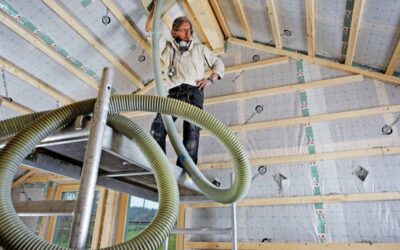
Spray foam also insulates, but its defining advantage is air sealing. Once applied, it expands into cracks, gaps, and irregular cavities that fiberglass alone may not fully close. Air leakage is a major source of energy loss and discomfort, especially around rim joists, roof penetrations, attic transitions, exterior wall penetrations, and older framing.
That does not mean spray foam is automatically the answer everywhere. Fiberglass can deliver excellent thermal performance when it is properly installed, fully supported, and paired with a deliberate air-sealing plan. The question is not which material wins in every situation. The question is which assembly will control heat, air, and moisture most reliably in the specific part of your building.
Where Spray Foam Performs Best
Spray foam is often selected where air leakage, moisture exposure, or limited cavity depth creates a demanding insulation challenge. It is especially useful in difficult-to-reach areas that would otherwise require multiple air-sealing steps.
Closed-Cell Spray Foam
Closed-cell foam is dense, durable, and delivers a high R-value per inch. It can be an effective choice for basement walls, crawl spaces, rim joists, cathedral ceilings, and compact roof assemblies where every inch of space matters. At sufficient thickness, it also limits vapor movement, which can be valuable in moisture-prone areas when the assembly is designed correctly.
For New England projects, closed-cell foam can help create a more controlled building envelope. It adheres to many surfaces and can reduce the air pathways that allow cold outdoor air to reach interior finishes or warm indoor air to reach cold roof sheathing. That can support more even indoor temperatures and reduce the risk factors associated with condensation.
Next-generation HFO spray foam offers high thermal performance while using a lower global-warming-potential blowing agent than older foam formulations. It is a strong option for homeowners and builders who need high R-value performance in a tight space without sacrificing air-sealing capability.
Open-Cell Spray Foam
Open-cell foam is lighter and expands significantly, making it useful for larger cavities and certain interior applications. It provides air sealing but has a lower R-value per inch than closed-cell foam and is more vapor permeable. It may be appropriate for some walls or unvented roof assemblies, but the moisture details must be evaluated carefully for the climate zone and construction type.
Spray foam also requires professional installation. Surface preparation, chemical temperature, application thickness, ventilation, and curing conditions all affect the final result. A trained crew can install foam to the intended depth while coordinating required ignition or thermal barriers and local code requirements.
Where Fiberglass Makes Sense
Fiberglass remains a dependable insulation material for many residential and commercial applications. It is cost-effective, readily available, noncombustible, and available in products designed for different wall, floor, and attic assemblies. When installed with care, it can provide consistent thermal resistance over a large area.
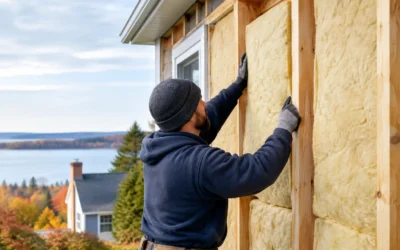
In a standard framed wall, fiberglass batts can be an efficient choice when the wall cavity is regular, the air barrier is continuous, and electrical boxes, plumbing, and other obstructions are handled correctly. For open attics, blown fiberglass can add substantial R-value across a broad ceiling plane at a practical cost.
The limitation is that fiberglass does not stop air movement on its own. If air can bypass, compress, or move around the insulation, the real-world performance drops. A batt with an impressive label cannot compensate for open top plates, unsealed wiring holes, gaps at the sill, or a poorly detailed attic hatch.
This is why fiberglass often performs best as part of a system. Air sealing first, then installing fiberglass without gaps, voids, or compression, produces much better results than treating insulation as a standalone material. For builders, that approach can be a reliable way to meet energy targets while keeping material costs predictable.
Cost Depends on the Assembly, Not Just the Material
Fiberglass generally has a lower upfront installed cost than spray foam, particularly across large, accessible areas. That makes it attractive for new construction, additions, and attic upgrades where there is room for adequate depth and air sealing can be completed separately.
Spray foam typically costs more because it is a specialized installed product, but it can reduce the need for separate air-sealing materials and labor in complex areas. In tight rooflines, irregular framing, rim joists, and below-grade locations, its combined insulation and air-sealing value may justify the additional investment.
A lower initial price does not always create the lower-cost project over time. Persistent drafts, moisture-related repairs, oversized heating equipment, and uncomfortable rooms all carry costs of their own. At the same time, paying for spray foam where a well-air-sealed fiberglass assembly would perform just as well may not be the best use of a project budget.
Energy incentives, financing options, and available utility programs can also affect the decision. A professional assessment can identify improvements with the strongest comfort and efficiency return before work begins.
Moisture Control Requires More Than an R-Value
New England homes need insulation assemblies that manage moisture as carefully as they manage heat. During winter, warm indoor air naturally moves toward colder exterior surfaces. If that air reaches a cold surface inside a wall or roof cavity, moisture can condense and create conditions for wood damage or mold growth.
Closed-cell foam can help limit both air movement and vapor diffusion in selected applications. Fiberglass allows vapor to pass through more freely, so it depends on correctly designed air barriers, vapor control layers, ventilation, and drying potential. Neither approach should be chosen without considering where the building can dry and how the entire wall, roof, or foundation assembly is built.
Basements and crawl spaces deserve particular attention. A damp foundation wall is not solved by adding a standard fiberglass batt against it. These areas often need a moisture-control plan that addresses bulk water, humidity, air leakage, and insulation placement together.
Installation Quality Decides the Outcome
The performance gap between a careful installation and a rushed one is significant. Fiberglass must fill the cavity completely without being compressed, folded, or left with gaps behind pipes and wiring. Blown insulation needs proper depth and coverage. Spray foam must be applied evenly to the specified thickness and inspected for missed areas or trimming needs.
For remodelers and general contractors, coordination matters just as much as material selection. Insulation should fit the project schedule, work with electrical and mechanical rough-ins, and account for fire protection requirements, ventilation details, and state-specific energy codes. An inspection-ready installation protects the job schedule and the contractor’s reputation.
For homeowners, a building-performance assessment can reveal issues that are not visible from the living space. Thermal imaging, air-leakage testing, and a close look at the attic, basement, and exterior walls can show whether the problem is insufficient R-value, uncontrolled air movement, moisture, or a combination of all three.
Choosing the Right Approach for Your Property
Spray foam is often the better fit for complex, leaky, damp, or space-constrained areas. Fiberglass is often the better fit for large accessible cavities where a properly detailed air barrier is already in place. Many of the best projects use both: spray foam at rim joists and difficult transitions, fiberglass or blown insulation over larger areas, and targeted air sealing throughout.
That blended strategy avoids treating insulation as a one-material decision. It focuses instead on dependable comfort, manageable moisture, practical cost, and long-term durability.
Before committing to either material, ask for a recommendation based on your actual building conditions, not a generic sales pitch. Colonial Insulation can evaluate the trouble spots in your home or project and recommend an insulation assembly built for New England weather, your budget, and the performance results you expect.