
A spray foam job can look finished long before anyone knows whether it was done correctly. The real test arrives on a January cold snap, during a humid July week, or when an inspector looks closely at an attic, basement, or wall assembly. Choosing the best spray foam company means choosing a contractor that understands building science, local code requirements, and the conditions New England buildings face every season.
Spray foam can be an excellent insulation and air-sealing solution, but it is not a one-size-fits-all product. The right material, thickness, application area, and installation process depend on how the building is constructed and how it needs to perform. A qualified contractor should make those distinctions clear before work begins.
Look Beyond the Lowest Spray Foam Quote
A low price can be tempting, especially on a renovation or new-construction project with several moving parts. But spray foam pricing can vary for legitimate reasons: foam type, required thickness, surface preparation, access challenges, ventilation needs, safety procedures, and the experience of the installation crew all affect the cost.
The lowest quote may leave out critical details. For example, it may not specify the R-value being installed, whether the proposal includes air sealing around penetrations, or how the contractor will protect adjacent surfaces. It may assume a thinner application than your building requires. In an attic or roofline, that difference can affect comfort, condensation risk, energy use, and code compliance.
A useful proposal explains what is being installed and why. It should identify the location, foam type, target thickness or R-value, and any related work required for a complete assembly. Homeowners should be able to understand the recommendation without becoming insulation experts. Builders and remodelers should be able to confirm that the scope aligns with drawings, schedule requirements, and inspection expectations.
Ask Which Type of Spray Foam Fits the Assembly
Not all spray foam performs the same way. Open-cell and closed-cell foam have different physical properties, and the best choice depends on the application.
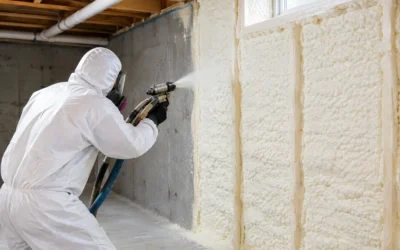
Open-cell spray foam expands significantly as it is applied, allowing it to fill irregular cavities and hard-to-reach gaps. It is often used in wall cavities, attic roof decks, and interior applications where air sealing and sound control are priorities. Because it is vapor permeable, the larger moisture-management strategy of the assembly still matters.
Closed-cell spray foam is denser and provides a higher R-value per inch. It can add a moisture-resistant layer and is frequently selected for rim joists, basements, crawl spaces, exterior walls, and areas where limited space requires more thermal performance. In the right application, it can help control air movement and moisture movement at the same time.
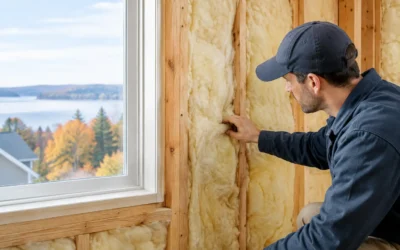
A reliable contractor will not simply recommend the foam they install most often. They will evaluate the location, framing depth, existing materials, ventilation plan, and desired performance. In some projects, spray foam is the right answer. In others, a combination of air sealing, cellulose, fiberglass, or mineral wool provides better value and the right drying potential for the building.
Why New England Conditions Change the Decision
New Hampshire, Massachusetts, Maine, and Vermont experience long heating seasons, wide temperature swings, wind-driven cold, and summer humidity. Those conditions expose weak points in the building envelope quickly. A poorly insulated attic can make top-floor rooms uncomfortable. An unsealed rim joist can create cold floors and persistent drafts. A roof assembly that is not designed for moisture control can face more serious problems than high utility bills.
The best spray foam company should understand how insulation, air leakage, ventilation, and moisture work together. That includes knowing when an attic should remain vented, when an unvented roof assembly makes sense, and how to avoid trapping moisture in an older home. Experience with regional housing styles matters, from fieldstone foundations and historic framing to modern high-performance construction.
Verify Training, Safety, and Installation Quality
Spray foam is a site-manufactured product. The two components are heated, proportioned, and mixed during installation, so results depend heavily on equipment calibration, environmental conditions, and installer technique. A strong product cannot compensate for poor application.
Ask how the company trains its crews and supervises work. Professional installers should understand substrate conditions, proper lift thickness, curing requirements, ventilation procedures, and quality checks. They should also know how to recognize issues such as off-ratio foam, inadequate adhesion, overspray, or inconsistent coverage.
Safety should be part of the conversation, not an afterthought. Occupants and other trades may need to stay out of the work area during application and for an appropriate reentry period afterward. The contractor should explain how the space will be ventilated, how surfaces will be protected, and what preparation is expected before the crew arrives.
For occupied homes, clear communication is especially valuable. A dependable contractor sets expectations about access, pets, stored belongings, project timing, and when the area can safely return to normal use. For job sites, that same discipline protects the construction schedule and reduces conflicts with other trades.
Make Sure the Scope Supports Inspection and Performance
Insulation work is often concealed behind drywall, flooring, or roof finishes. That makes pre-installation planning essential. A contractor should confirm the intended R-values, ignition or thermal barrier requirements, ventilation details, and applicable state or local code standards before the work is covered.
This is particularly important for builders and remodelers. A missed detail can delay an inspection, force rework, or create a difficult conversation with the client after the project is complete. The spray foam company should coordinate with the general contractor, understand the sequence of work, and flag conflicts early.
Homeowners should also ask what happens at transitions. Common trouble spots include attic hatches, rim joists, plumbing and wiring penetrations, chimney clearances, knee walls, and connections between old and new sections of a home. Foam can be highly effective at these locations, but safe clearances and fire-resistance requirements must be respected.
Compare Materials, Not Just Marketing Claims
Terms such as “high R-value” and “energy efficient” are useful starting points, but they do not tell the full story. Ask what product the company plans to use and how its performance supports your specific goal. A quality contractor should be able to discuss R-value, air sealing, vapor control, and long-term durability in plain language.
Next-generation HFO spray foam is one example of a product category worth discussing. HFO-based closed-cell foam can provide strong thermal performance with a lower global warming potential than older blowing-agent technologies. That can be a meaningful consideration for property owners who want efficiency improvements without overlooking material impact.
Still, material selection should be practical. The best product on paper is not automatically the best product for every budget or assembly. A thoughtful recommendation weighs upfront cost against expected comfort, energy performance, moisture control, available rebates or financing, and the useful life of the work.
Questions to Ask the Best Spray Foam Company
Before signing a contract, have a direct conversation about the work rather than relying on a price alone. Ask what foam type is recommended, what R-value will be achieved, and how the contractor determined that scope. Ask how they will handle air leaks and transitions, whether the assembly needs a vapor retarder or ignition barrier, and what preparation is required from you or other trades.
It is also reasonable to ask about licensing, insurance, crew experience, warranties, project timing, and references from similar work. For a basement, ask about moisture conditions and foundation walls. For an attic, ask how the recommendation affects ventilation and roof durability. For a commercial project, ask how the team will coordinate with site safety requirements and the construction schedule.
The answers should be specific, measured, and easy to follow. Be cautious if a contractor promises that spray foam will solve every building problem without first assessing the space. Insulation improves performance, but bulk water leaks, roof failures, combustion safety issues, and inadequate ventilation require their own solutions.
Choose a Partner Who Can See the Whole Building
A spray foam contractor should do more than fill cavities. The right company looks at why a room is cold, where air is entering, how moisture is moving, and which insulation approach will create dependable results. That broader building-performance perspective helps prevent expensive work that treats symptoms while leaving the underlying problem in place.
Colonial Insulation evaluates spray foam as part of a complete comfort and efficiency strategy for New England homes and buildings. Whether the project involves a drafty rim joist, a conditioned attic, a remodel addition, or a new commercial build, the goal is the same: insulation work that supports balanced temperatures, lower operating costs, healthy indoor air, and reliable inspections.
A good contractor will give you a clear recommendation. The best one will give you confidence that the recommendation fits your building, your climate, and the years ahead.