
A cold upstairs bedroom, ice dams along the roofline, and a heating bill that climbs every January often point to the same place: the attic. Attic insulation is one of the most effective ways to improve a home’s comfort and energy performance, but simply adding more material is not always the right answer. In New England, a successful attic system must control heat loss, air leakage, and moisture together.
For homeowners, that means steadier room temperatures and fewer drafts. For builders and remodelers, it means an insulation approach that supports code compliance, protects the roof assembly, and avoids expensive callbacks. The details matter because New Hampshire, Massachusetts, Maine, and Vermont homes face long heating seasons, humid summers, and frequent swings between freezing and thawing temperatures.
Why attic insulation has such a large impact
Heat naturally moves toward colder areas. During winter, that means warm indoor air is constantly pushing toward the attic and roof. If the attic floor is under-insulated or penetrated by unsealed openings, the home loses heat quickly. In summer, solar heat can build up under the roof and radiate downward into living spaces.
The attic is also full of common leakage points: plumbing stacks, electrical penetrations, recessed lights, chimney chases, attic hatches, duct runs, and framing transitions. Insulation slows conductive heat transfer, measured by R-value. It does not reliably stop moving air. Air sealing is what closes the pathways that let conditioned air escape and outdoor air enter.
That distinction matters. A deep layer of loose-fill insulation placed over major leaks may improve performance, but it can also hide the source of drafts and moisture-laden air. When warm, humid indoor air reaches a cold roof surface in winter, condensation can form. Over time, that moisture can contribute to mold, wood deterioration, and reduced insulation performance.
Start with air sealing, then select insulation
The most dependable attic upgrade begins with an assessment of the whole building envelope. A professional energy audit can help identify the areas where air is moving, where insulation is missing or compressed, and whether moisture or ventilation issues are already present. This prevents a one-size-fits-all recommendation.
Before new insulation is installed, crews commonly seal accessible gaps around top plates, wiring holes, pipe penetrations, soffits, duct connections, and the attic access. Larger bypasses may require rigid materials, specialized sealants, or spray foam. Chimneys and heat-producing fixtures need proper clearance and approved fire-safe detailing rather than standard foam or loose-fill material placed directly against them.
Once leakage pathways are addressed, insulation can be installed to the required depth and R-value. Current code requirements vary by state, climate zone, assembly, and project type, so builders should verify the applicable requirements for the job. In existing homes, the best target also depends on available depth, framing, wiring conditions, and whether the attic is vented or conditioned.
The attic hatch deserves attention
An uninsulated attic hatch can undermine an otherwise well-insulated ceiling. It is effectively a hole in the thermal boundary when it does not close tightly. An insulated, gasketed hatch or cover helps reduce air leakage and heat loss while preserving safe access for future maintenance.
Which attic insulation material is right?
There is no single best insulation for every attic. The correct material depends on the building design, desired R-value, access, moisture conditions, budget, and whether the attic will remain vented or become part of the conditioned space.
Blown cellulose
Blown cellulose is a practical choice for many open, vented attic floors. It fills irregular spaces well and can be installed over existing insulation when that material is dry, clean, and in suitable condition. Its density also provides useful sound control. Cellulose is commonly made with recycled content and treated for fire resistance, which appeals to property owners seeking a lower-impact material option.
The key is proper preparation. Air sealing should occur first, and installers must maintain clear, functional ventilation paths at eaves where a vented roof assembly requires them. Depth markers and coverage calculations help confirm that the installed material meets the planned R-value.
Fiberglass
Fiberglass is available in batts and blown applications. Batts can work well in accessible, regularly framed cavities when carefully cut and fitted around obstructions. Poorly fitted batts leave gaps that reduce performance, so installation quality is especially important.
Blown fiberglass is another effective attic-floor option. It is lightweight, noncombustible, and can achieve high R-values at appropriate depths. As with cellulose, it performs best after the ceiling plane has been air sealed and after moisture concerns have been resolved.
Spray foam
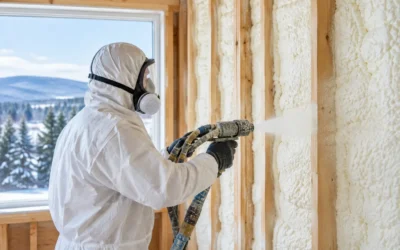
Spray foam can provide insulation and air sealing in one application. Closed-cell spray foam offers a high R-value per inch and can help control moisture vapor in specific assemblies. It is often useful where space is limited, around difficult transitions, or along roof decks in an unvented conditioned attic.
Open-cell foam can also be appropriate for certain roofline applications, but it has different vapor and moisture characteristics. The decision between open-cell and closed-cell foam should be based on the roof assembly, local code, and building-science requirements, not just R-value. Colonial Insulation uses next-generation HFO spray foam options for projects where high-performance air sealing and insulation are the right fit.
Spray foam is not automatically the best answer for every attic. A vented attic floor with accessible air leaks may be more cost-effective to seal and insulate with blown material. Conversely, a finished attic, complex roofline, or HVAC equipment located in the attic may justify a roof-deck approach. The assembly must be designed as a system.
Mineral wool
Mineral wool is valued for its fire resistance, moisture resilience, and sound-control properties. It is frequently used in walls and specific detail areas, though it can also serve attic applications where batts are appropriate. Its rigid, dense structure can make it useful around areas requiring reliable fit and added fire performance.
Vented attic or conditioned attic?
Most traditional New England homes have a vented attic. In this design, insulation and air sealing are installed at the attic floor, while the attic itself remains outside the conditioned space. Proper soffit and ridge ventilation can help manage roof temperatures and moisture when the assembly is designed correctly.
A conditioned attic moves the thermal boundary to the roofline. This approach can make sense when ducts, air handlers, or living space occupy the attic, or when a renovation changes the roof structure. It can improve equipment efficiency and reduce temperature extremes, but it requires careful moisture planning and code-compliant detailing. Blocking existing vents without changing the insulation strategy correctly can create problems rather than solve them.
Warning signs that your attic needs attention
Some symptoms are easy to dismiss as normal winter discomfort, yet they often indicate an attic performance issue. Watch for cold floors and upstairs rooms, uneven temperatures between floors, frequent ice dams, visible insulation gaps, high heating or cooling bills, pest-disturbed insulation, or frost and staining on attic framing.
Musty odors, damp insulation, and recurring condensation deserve prompt attention. Adding insulation over wet materials does not solve the source of moisture. Roof leaks, bath fan exhausts terminating in the attic, disconnected ducts, and interior air leakage all need to be investigated before insulation work moves forward.
A better investment than “more insulation” alone
The return on an attic project comes from matching the work to the home. An attic with thin but dry insulation may need air sealing and additional blown material. A home with ice dams may need a closer look at leakage, insulation continuity, roof ventilation, and drainage conditions. A remodel may require a different solution because framing, mechanical systems, and code obligations have changed.
For contractors, coordinated attic work keeps the schedule moving. Clear scope, trained installation crews, and documented coverage reduce the risk of failed inspections and late-stage corrections. For homeowners, professional recommendations make it easier to prioritize improvements, understand available efficiency incentives, and choose an approach that supports long-term comfort rather than a short-term patch.
A well-planned attic should be quiet, dry, and uneventful – even during a February cold snap or a humid July week. That is the standard worth aiming for: a home that holds its temperature, protects its structure, and gives its occupants one less thing to worry about.