
A bedroom under a busy family room, a home office beside a mechanical room, or a condo wall shared with neighbors can turn everyday sounds into a constant distraction. Soundproof insulation can make those spaces noticeably quieter, but insulation alone is rarely the whole answer. Effective noise control depends on the insulation material, the construction of the wall or floor, and the small gaps that let sound travel through the building.
For New England homes and commercial buildings, the best approach also has to support thermal performance, moisture management, and code requirements. A wall assembly that reduces noise but creates a condensation risk is not a good long-term solution. The right recommendation protects comfort in more than one way.
What Soundproof Insulation Actually Does
Sound travels as vibration through air and solid materials. Voices, television audio, plumbing, footsteps, furnaces, and traffic all take different paths through a building. Soundproof insulation reduces the amount of airborne sound that can pass through open wall, floor, and ceiling cavities by absorbing some of that energy before it reaches the other side.
Fiberglass, blown cellulose, and mineral wool are all fibrous materials that can improve acoustic performance when installed completely in a cavity. They are especially helpful for airborne noise such as conversation, music, and television sound. A properly insulated interior partition will generally sound more solid and less hollow than an empty wall.
However, no insulation product makes a standard wall fully soundproof. Sound can move around the insulation through framing, electrical boxes, duct openings, door gaps, recessed fixtures, and unsealed penetrations. It can also travel directly through wood or steel studs. That is why a quiet room requires attention to the entire assembly, not just the material placed between the studs.
The Difference Between Absorbing and Blocking Sound
This distinction matters when deciding where to invest. Insulation absorbs sound inside a cavity. Dense layers and well-built assemblies help block sound from crossing from one side to another. Air sealing limits the pathways sound uses to bypass both.
A basic interior wall with drywall on each side and insulation in the cavity can improve privacy. For a more demanding application, such as a home theater, recording space, medical office, multifamily unit, or conference room, the assembly may need additional mass, resilient channels, isolation clips, or multiple layers of drywall. These upgrades reduce vibration transfer through the framing.
Doors and windows deserve the same scrutiny. A high-performing wall will not overcome a hollow-core door with a wide gap underneath it. Likewise, sound from a roadway can enter through older windows, leaky trim, attic bypasses, or unsealed exterior-wall penetrations. The weak point often determines the final result.
Which Insulation Materials Help With Noise?
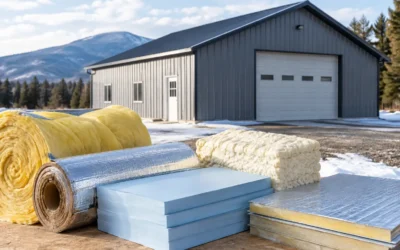
The best material depends on the location, existing conditions, desired thermal value, moisture exposure, fire requirements, and construction schedule. A building-performance assessment helps identify the practical choice rather than treating every noisy room the same.
Mineral Wool
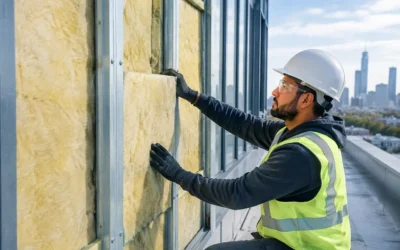
Mineral wool is a strong choice for sound control because it is dense, friction-fits securely in cavities, and absorbs airborne noise effectively. It also offers excellent fire resistance and performs well in walls, floors, and ceiling assemblies. Builders often choose mineral wool for interior partitions, multifamily separation walls, mechanical rooms, and areas where fire-rated construction is part of the plan.
Its trade-off is cost. Mineral wool can cost more than standard fiberglass, and it must be installed carefully around wiring, plumbing, and irregular framing so there are no open channels for sound to pass through.
Fiberglass
Fiberglass insulation is a practical, widely available option for reducing airborne sound in open wall and ceiling cavities. Acoustic fiberglass batts are designed for interior use and can provide meaningful improvement at a budget-conscious price point. Fiberglass can also support the thermal insulation needs of exterior assemblies when the appropriate product and installation method are used.
Performance depends heavily on fit. Compressed batts, gaps around obstructions, and missing insulation at the top or bottom of a cavity reduce both acoustic and thermal results. A careful installation matters as much as the product label.
Blown Cellulose
Dense-packed cellulose can help reduce sound transmission while delivering effective thermal performance in enclosed wall cavities and attics. Its ability to fill irregular spaces is valuable in renovation projects where opening every wall is not practical. Cellulose is also a recycled-content option that appeals to property owners looking for a lower-impact material choice.
Cellulose is not the answer to every noise issue. It needs the right cavity depth, density, and installation approach, and it should be paired with appropriate air sealing and moisture detailing. In some assemblies, mineral wool or fiberglass may be the more straightforward option.
Spray Foam
Spray foam is highly effective at air sealing and can improve comfort by reducing drafts and outdoor noise that enters through cracks and gaps. Closed-cell foam also provides a high R-value per inch and can help manage moisture in properly designed assemblies. These benefits are particularly valuable in New England homes with complex rooflines, rim joists, basement walls, and hard-to-reach cavities.
For room-to-room sound control, spray foam is not usually the first material selected solely for acoustics. It does not absorb sound in the same way fibrous insulation does. It is often best used where air leakage, moisture control, and thermal performance are the main concerns, with a separate acoustic strategy for interior partitions.
Where Better Sound Control Makes the Biggest Difference
Noise problems are easier to solve when their source and pathway are clear. A homeowner bothered by voices through a bedroom wall needs a different solution than a homeowner hearing impact noise from footsteps above.
For shared interior walls, insulation in the stud bays, sealed electrical boxes, and solid-core doors may provide a substantial improvement. For floor-ceiling assemblies, mineral wool or fiberglass between joists can reduce airborne sound, while underlayment, isolation details, and floor finish selections help address impact noise. Footsteps, dropped objects, and chair movement create vibration that travels through framing, so cavity insulation alone has limits.
Mechanical rooms benefit from a more complete plan. Insulating the surrounding walls can help, but equipment vibration, rigid duct connections, unsealed return-air paths, and gaps around pipes may continue to carry noise. In commercial spaces, these details matter for tenant comfort and for maintaining a professional environment.
Exterior noise requires a building-envelope approach. Air sealing, properly insulated exterior walls, attic air sealing, and well-installed windows all work together. If traffic noise is coming through an exterior wall, simply adding insulation may help, but it may not solve the issue if the window or a nearby gap remains the dominant sound path.
Installation Details That Determine Results
The difference between a quieter building and an expensive disappointment often comes down to installation details. Insulation should fill the cavity without voids or excessive compression. Openings around pipes, wires, ductwork, and electrical boxes need deliberate treatment. Penetrations through rated assemblies must also be sealed with compatible, code-appropriate materials.
For builders and remodelers, coordination before drywall is essential. This is the time to confirm insulation thickness, sound-rated wall requirements, fire blocking, mechanical penetrations, and any needed resilient channel or double-layer drywall details. Waiting until finishes are complete usually makes improvements more disruptive and more expensive.
For homeowners, an energy audit can be a useful starting point even when noise is the main complaint. Drafts, cold rooms, and outside noise often point to the same weaknesses in the building enclosure. Identifying air leaks and missing insulation can reveal improvements that lower utility costs while making the home calmer and more comfortable.
Choose a Solution Built for the Whole Assembly
Sound reduction is not a one-product purchase. It is a design and installation decision that should account for the source of the noise, the construction of the building, and the performance goals for that space. A nursery beside a laundry room, a finished basement theater, and a multifamily party wall each call for a different level of treatment.
Colonial Insulation helps homeowners, builders, and remodelers evaluate these conditions with practical recommendations for fiberglass, mineral wool, cellulose, spray foam, air sealing, and complete building-envelope performance. The goal is not to oversell a material. It is to create an assembly that supports quieter rooms, reliable comfort, and durable performance through New England winters and humid summers.
If a noisy room is affecting sleep, concentration, privacy, or tenant satisfaction, address it before the next renovation phase or drywall installation closes off the opportunity. A focused assessment now can prevent a much more difficult correction later.