
A five-star review can tell you whether a crew arrived on time and treated a home with respect. It cannot always tell you whether the crew found the attic bypasses causing ice dams, sealed a rim joist without trapping moisture, or verified results after the work was complete. That is why air sealing contractor ratings deserve a closer read, especially in New Hampshire, Massachusetts, Maine, and Vermont, where small gaps in the building envelope can become expensive comfort problems.
Air sealing is not simply a matter of applying foam or caulk wherever a draft is felt. It is building-performance work. The right contractor identifies how air, heat, and moisture move through a particular structure, then creates a practical plan that supports insulation performance, indoor air quality, and long-term durability.
What Air Sealing Contractor Ratings Can Tell You
Ratings are a useful starting point because repeated customer feedback often reveals patterns. A contractor with consistent praise for communication, clean job sites, scheduling, and professionalism is more likely to manage the project responsibly. For builders and remodelers, those details matter. A missed installation window or an unreliable subcontractor can affect every trade that follows.
Read beyond the average star score. Look for reviews that describe the actual issue: cold bedrooms over a garage, a drafty addition, high winter fuel use, condensation around attic penetrations, or uncomfortable second-floor rooms during humid summer weather. Specific reviews carry more weight than vague comments such as “great job.” They show whether the contractor solved a building problem rather than merely completed a transaction.
Pay attention to how a company responds when a customer has a question or concern. No contractor can prevent every scheduling change, material delay, or unexpected condition in an older home. What matters is whether the company communicates clearly, explains the options, and takes ownership of the next step.
Look for consistency, not just volume
A large number of reviews is helpful, but the timing and consistency matter more. A company with recent, detailed feedback across residential renovations, new construction, and commercial work may have a more dependable operating process than one with a high score built on a small set of older reviews.
For trade partners, look for signs that the contractor understands project coordination. Reviews mentioning inspection readiness, reliable scheduling, clean installation, and clear communication with general contractors are especially relevant. Air sealing often happens alongside insulation, drywall preparation, mechanical work, and code inspections. It needs to fit the construction sequence.
Why Ratings Alone Are Not Enough
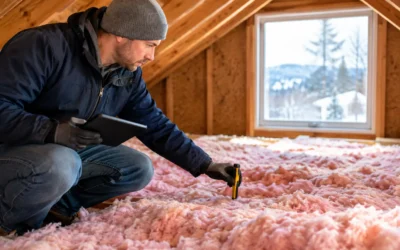
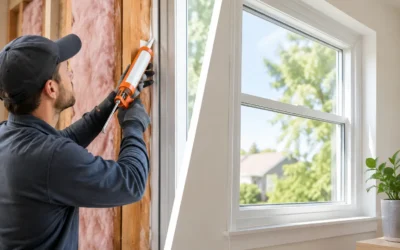
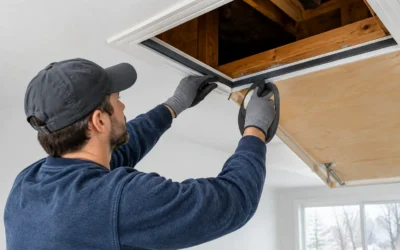
Air leaks are often hidden. They occur at top plates, attic hatches, plumbing and wiring penetrations, recessed light openings, chimney chases, rim joists, duct connections, and transitions between old and new construction. A contractor can be courteous and still miss the locations that have the largest effect on comfort and energy use.
A qualified assessment should start with questions about the building and the symptoms. When are rooms uncomfortable? Are utility bills unusually high? Is there visible frost, condensation, musty odor, or evidence of ice dams? Has insulation been added before? Is a renovation changing the home’s ventilation or moisture profile?
The answers shape the work. A 1920s home with an unfinished fieldstone basement requires a different approach from a newly framed home awaiting insulation. Likewise, a commercial roofline, a cathedral ceiling, and a garage bonus room each have different air-control details and potential moisture risks.
The best air sealing recommendations explain both the opportunity and the limits. Sealing leaks can reduce drafts and help heating and cooling systems operate more effectively, but it may not correct an undersized furnace, damaged ductwork, missing insulation, or a window with failed seals. A dependable contractor does not promise a single product will solve every comfort complaint.
Questions to Ask Before You Hire
Use contractor ratings to narrow your options, then use a conversation or site visit to confirm technical fit. Ask how the company identifies leakage areas and how it decides which repairs should come first. In many homes, the most meaningful gains come from the attic plane and basement or rim-joist areas, not from chasing every minor crack around a window.
Ask what materials the crew uses and why. Caulk, weatherstripping, rigid materials, spray foam, and specialized sealants all have appropriate uses. Spray foam can provide strong air control and insulation in the right assembly, but it is not automatically the best choice for every location. Material selection should account for access, R-value goals, moisture conditions, fire-protection requirements, future serviceability, and local code.
For larger projects, ask whether the contractor uses diagnostic testing such as a blower door before and after work. A blower door helps quantify whole-house air leakage and can help the crew prioritize the biggest openings. It is particularly valuable for deep energy upgrades, new construction, and projects pursuing incentive-program or code-performance targets.
You should also ask how the work will be documented. Builders may need product information, installation records, and coordination for inspections. Homeowners benefit from a clear scope that identifies the areas being sealed, any insulation work that follows, and conditions that could affect the final result.
What Good Air Sealing Looks Like in New England
New England homes face a demanding mix of long heating seasons, wind-driven winter weather, humid summers, and wide temperature swings. Heated indoor air naturally moves toward colder, drier outdoor conditions in winter. When it escapes through the attic, replacement air is pulled in at lower levels. That stack effect can make basements feel cold, first floors drafty, and upper rooms difficult to control.
Air sealing should slow that uncontrolled movement while preserving intentional ventilation. This distinction matters. A tighter building is not supposed to be a stale building. Kitchens, bathrooms, combustion appliances, and whole-house ventilation systems must be considered as part of the complete building strategy.
Moisture management is equally important. Warm indoor air leaking into a cold attic can carry moisture that condenses on roof framing and sheathing. Over time, that can contribute to staining, mold growth, or wood damage. Properly air sealing the ceiling plane before adding insulation helps reduce that risk and allows insulation to perform closer to its rated R-value.
For homes with basement or crawlspace concerns, the right approach depends on whether the space is inside or outside the thermal boundary, how it is ventilated, and whether bulk water issues have been addressed. Air sealing cannot substitute for drainage repairs, foundation waterproofing, or correction of active leaks.
Signs a Contractor Is Focused on Building Performance
A capable contractor will not rush directly to a quote based only on square footage. They will want to understand the structure, access conditions, existing insulation, and the customer’s goals. They should be comfortable explaining why a particular area matters and what result is realistic.
They should also discuss safety. Air sealing around chimneys, flues, recessed fixtures, electrical components, and combustion equipment requires proper clearances and approved materials. In renovation work, crews may encounter old insulation, concealed damage, or other conditions that need to be addressed before sealing proceeds.
Professional crews protect the home or job site, manage dust and debris, and leave a clear path for the next phase of work. For general contractors, that reliability protects schedules and reduces the risk of failed inspections or costly rework. For homeowners, it means the project is handled with the same care as the comfort problem that brought them to the contractor in the first place.
Comparing Quotes Without Choosing on Price Alone
The lowest quote may cover only a limited set of visible gaps. A higher quote may include diagnostic testing, detailed attic-plane sealing, rim-joist work, insulation removal, ventilation improvements, or code-related fire blocking. Neither price is meaningful until the scopes are compared line by line.
Ask each contractor to clarify the areas included, materials proposed, preparation required, and any exclusions. If an attic has existing insulation, determine whether it will be moved aside, removed, or supplemented after the air barrier is completed. If spray foam is proposed, confirm the intended thickness, coverage area, and required protective coatings or barriers.
Colonial Insulation approaches air sealing as part of the full thermal boundary, helping property owners and trade partners connect leakage control with insulation performance, moisture management, and practical project requirements. That broader view is especially valuable when a home has more than one source of discomfort.
The right rating is not just a high number beside a company name. It is evidence that a contractor listens, diagnoses carefully, explains the work plainly, and follows through. Start with the reviews, then choose the team that can show you how better air sealing will improve your specific building – through every New England season.