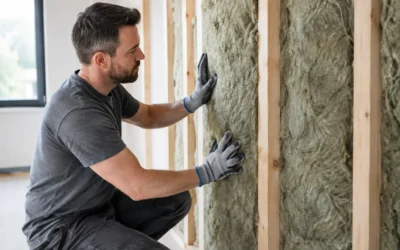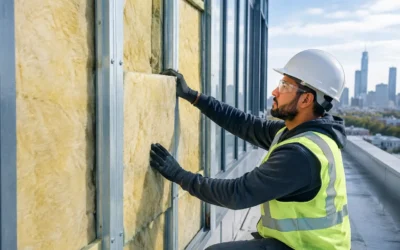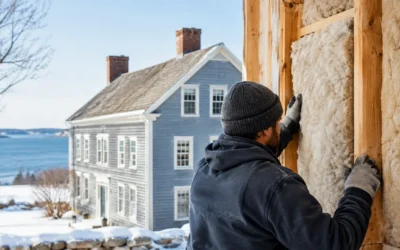

A cold bedroom over the garage, ice dams at the eaves, and a heating bill that climbs every winter are not separate problems. They often point to the same issue: a building enclosure that is losing heat and allowing outside air where it does not belong. The insulation payback period helps put a practical timeline around the cost of fixing that problem, but the answer is more nuanced than a single number.
For New Hampshire, Massachusetts, Maine, and Vermont property owners, insulation can reduce heating and cooling costs while improving the comfort, durability, and indoor air quality of the building. The best upgrade is not always the one with the shortest financial payback. It is the one that addresses the largest performance gaps without creating moisture, ventilation, or construction problems elsewhere.
What Is an Insulation Payback Period?
The insulation payback period is the time it takes for energy savings to equal the installed cost of an insulation upgrade. If a homeowner spends $4,000 to air seal and insulate an attic and saves $500 per year on energy, the simple payback is roughly eight years.
That calculation is useful as a starting point, but it does not capture every benefit. A properly insulated and air-sealed home may also have fewer drafts, more stable room temperatures, quieter interiors, reduced risk of ice dams, and less strain on heating and cooling equipment. Those improvements matter every day, even though they do not appear as a line item on a utility bill.
For builders and remodelers, the payback discussion also includes code compliance, inspection readiness, and avoiding expensive callbacks for cold floors, condensation, or uncomfortable rooms. Installing the right insulation system during construction is usually far less expensive than opening finished walls later to correct missed details.
Typical Insulation Payback Periods in New England
Most insulation projects fall within a broad range rather than a guaranteed timeline. In a New England home with major air leakage and under-insulated attic space, air sealing and attic insulation can often produce a simple payback in about three to seven years. Projects with moderate existing insulation may take longer, commonly seven to 12 years.
Wall insulation, crawl space work, and spray foam applications can have longer simple payback periods because access and installation costs are higher. Yet these upgrades may be the most effective solution when a home has cold exterior walls, damp crawl spaces, rim joist leakage, or difficult-to-reach rooflines. A payback calculation should reflect the condition of the actual building, not a generic national average.
Commercial buildings follow the same principle, although operating schedules, equipment loads, roof area, and utility rates can change the math significantly. An energy audit or building-performance assessment provides a more reliable foundation than estimating savings from square footage alone.
Why attic upgrades often pay back first
Warm air rises, and a poorly sealed attic floor gives it an easy path out of the home. That escaping air is replaced by cold outdoor air entering through lower-level gaps, rim joists, basements, and other openings. Adding insulation without sealing those pathways can help, but it leaves much of the problem in place.
In many older New England homes, the most cost-effective first step is a combination of targeted air sealing and bringing attic insulation up to an appropriate R-value. This approach reduces heat loss where it is often greatest and helps keep the interior ceiling plane more consistent during winter.
What Changes the Payback Calculation?
The cost of insulation is only one part of the equation. Two similar homes on the same street can have very different results because their construction, fuel source, and existing conditions are different.
A home heated with expensive delivered fuel may see a faster return than one with lower-cost utility gas. Rising energy prices can shorten the real-world payback over time, while mild winters can temporarily reduce annual savings. The starting condition matters just as much. Replacing thin, compressed, damp, or poorly installed insulation generally delivers more value than adding material to an already well-insulated assembly.
Air leakage is another major factor. Fiberglass, cellulose, mineral wool, and spray foam all have appropriate uses, but no insulation material can fully compensate for uncontrolled air movement through framing gaps, penetrations, and transitions. Air sealing should be evaluated alongside insulation selection, especially in attics, basements, rim joists, cathedral ceilings, and additions.
Available rebates, tax incentives, and financing can also change the homeowner’s out-of-pocket cost. Incentives vary by state, utility, fuel type, and program requirements. A qualified contractor can help identify measures that may improve project economics, but savings and incentive eligibility should always be confirmed before work begins.
Looking Beyond Utility-Bill Savings
A short payback period is attractive, but it should not become the only decision-making tool. A bedroom that stays 8 degrees colder than the rest of the house may not create a dramatic utility-bill reduction by itself. It can still make the home harder to use and put more pressure on the heating system.
Insulation also supports moisture control when it is designed as part of a complete building enclosure. In cold climates, warm indoor air reaching cold surfaces inside walls or roof assemblies can condense. The correct insulation level, air-control strategy, and vapor-management approach help protect framing, sheathing, and finishes from long-term moisture damage.
Material selection matters here. Dense-pack cellulose can be an effective option for many enclosed walls and attics. Fiberglass and mineral wool can provide dependable thermal performance, with mineral wool offering strong fire resistance and moisture tolerance. HFO spray foam provides high R-value in limited space and can serve as an air barrier when installed at the correct thickness. The right choice depends on the assembly, access, budget, code requirements, and performance goals.
How to Estimate Your Project More Accurately
A useful estimate starts with evidence, not assumptions. Review at least a full year of energy bills if possible, then identify where the home feels uncomfortable and when the problem occurs. Cold floors above a crawl space, drafts around recessed lights, condensation in a knee wall attic, and summer heat in a top-floor room each point to different enclosure details.
A professional energy audit can add valuable data. Blower-door testing helps locate excessive air leakage, while infrared imaging and visual inspection can reveal missing insulation, bypasses, and weak areas around framing. This process helps prevent a common mistake: spending money on the most visible insulation area while ignoring the air leaks or moisture conditions driving the problem.
When comparing proposals, ask what work is included beyond the insulation material itself. A lower price may exclude air sealing, baffles, ignition barriers, ventilation corrections, access preparation, or removal of damaged existing insulation. Those details affect both final cost and long-term performance.
For new construction and remodeling, planning early produces the best value. Insulation crews need clear access to cavities, proper backing where required, and coordination with plumbing, electrical, HVAC, and drywall schedules. A system designed to meet state code requirements before walls are closed is more predictable, more efficient, and easier to inspect.
When a Longer Payback Still Makes Sense
Some projects should move forward because they solve a building-risk issue rather than because they promise the quickest return. A damp crawl space, exposed rim joist, roofline condensation, or recurring ice dam can lead to repair costs that exceed the energy savings calculation. In those cases, insulation and air sealing protect the structure as well as the budget.
The same is true for additions and renovations. If a remodel creates a new exterior wall, bonus room, or cathedral ceiling, choosing an appropriate insulation approach is part of building it correctly. The incremental cost of better performance during construction is often modest compared with revisiting it after drywall, trim, and finishes are in place.
Colonial Insulation evaluates insulation as a complete building-performance investment, accounting for climate, assembly design, comfort complaints, and practical project constraints. The goal is not to sell the highest R-value in every location. It is to recommend work that delivers measurable improvements and holds up through New England winters and humid summers.
A useful next step is to compare your energy costs with the rooms that are hardest to heat or cool, then have the attic, basement, crawl space, and exterior transitions evaluated as one connected system. The best insulation investment is the one that makes the building more comfortable now while preventing expensive problems later.