
A spray foam cost review should start with more than a price per square foot. In New England, the right insulation decision affects whether upstairs bedrooms stay comfortable in February, whether humid summer air reaches cold framing, and whether a new build passes inspection without last-minute corrections. Spray foam often costs more upfront than fiberglass or blown cellulose, but its ability to insulate and air-seal in one system can change the long-term value of the project.
For homeowners, builders, and remodelers, the useful question is not simply, “What does spray foam cost?” It is, “What problem is it solving, and is that performance worth the investment in this part of the building?”
What a spray foam cost review should include
Spray foam pricing is usually based on the type of foam, the required thickness, the area being insulated, site access, and the preparation involved. A small attic repair, a full basement rim joist treatment, and a new-construction roof deck may all use spray foam, yet their installation requirements are very different.
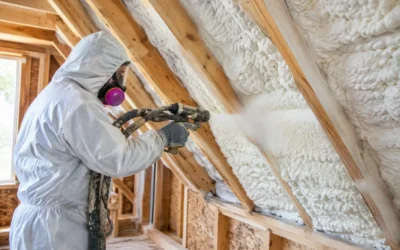
Open-cell foam is lighter and typically less expensive per installed thickness. It expands substantially after application, which makes it useful for filling irregular wall cavities, rooflines, and interior assemblies where air sealing and sound reduction are priorities. Closed-cell foam is denser, provides a higher R-value per inch, and can serve as a vapor retarder at the appropriate thickness. That added density and performance generally make it the higher-cost option.
Costs can also be expressed by board foot, which is one square foot of material at one inch thick. That unit is helpful for comparing material quantities, but it does not tell the whole story. The installed price must account for mobilization, masking and protection, equipment, trained labor, ventilation planning, cleanup, and any required ignition or thermal barriers.
A responsible proposal identifies the insulation area, target R-value, foam type, thickness, and any related air-sealing or code requirements. A low number without those details may not represent comparable performance.
Typical spray foam costs in New England
As a broad planning range, open-cell spray foam may be priced lower than closed-cell foam, while closed-cell applications typically command a premium because of material cost and higher R-value per inch. Small projects often have a higher per-square-foot cost because setup and crew time are spread over less area. Larger new-construction projects may have better production efficiency, but they can still involve significant square footage and a substantial total investment.
The final price can vary widely between a conditioned attic, exterior wall cavities, a crawl space, basement walls, and rim joists. For example, spraying a narrow rim joist area is labor-intensive but can make a noticeable difference in draft control. Insulating an entire roof deck requires more material and careful coverage, yet it may bring ductwork and mechanical equipment inside the conditioned building envelope.
New England construction also adds regional considerations. Older homes can have uneven framing, hidden bypasses, multiple additions, fieldstone foundations, and limited access. In Maine, New Hampshire, Vermont, and Massachusetts, a contractor may need to address cold-weather moisture behavior, ventilation pathways, and state or local code requirements before foam is applied. Those details are part of the scope, not extras that should be ignored to produce a lower quote.
The biggest factors that move the price
The first cost driver is thickness. A one-inch application and a five-inch application are not comparable, even if they cover the same square footage. Required R-value depends on the assembly, location, and applicable code, while the right thickness also depends on whether the foam is being used for insulation, air control, vapor control, or a combination of those functions.
Access is equally important. Open framing in a new home is straightforward compared with a finished attic, a low crawl space, or a renovation where crews must protect occupied rooms and work around existing systems. Removal of wet, damaged, or compressed insulation can add cost, but leaving failed material in place can undermine the new installation.
The condition of the structure matters as well. Spray foam is not a repair for an active roof leak, bulk-water intrusion, or decayed framing. Those issues should be corrected first. When moisture concerns are addressed properly, the insulation strategy can help create a more durable assembly.
Finally, job size affects pricing. A small application may be the right solution, but minimum project charges are common because professional foam installation requires specialized equipment and trained installers. It is often more cost-effective to evaluate related areas at the same time, such as rim joists, attic penetrations, or adjoining crawl-space walls.
When spray foam can justify the higher upfront cost
Spray foam is most valuable where air leakage is a major source of discomfort or energy loss. Fiberglass and cellulose provide excellent insulation when installed correctly, but they do not automatically stop moving air. In a house with numerous gaps around framing, wiring, plumbing, sill plates, and roof transitions, air sealing can be as important as adding R-value.
That is why spray foam is frequently considered for roof decks, cathedral ceilings, rim joists, cantilevered floors, crawl spaces, and complicated renovation details. Closed-cell foam can be especially useful where depth is limited and high R-value is needed in a thin assembly. Open-cell foam may be a practical choice for a roofline or wall cavity where expansion, air sealing, and acoustical benefits are desired.
The payoff is not always a simple utility-bill calculation. A better building envelope can reduce cold floors, limit drafts, improve room-to-room temperature balance, lessen strain on heating and cooling equipment, and help control outdoor pollutants entering through gaps. For commercial properties and multifamily buildings, those outcomes can support occupant comfort and more predictable operating conditions.
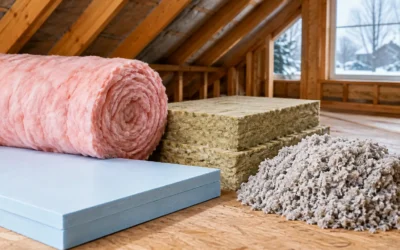
Still, spray foam is not automatically the best answer for every project. Blown cellulose can be an efficient, cost-conscious option for accessible attic floors. Fiberglass and mineral wool can perform very well in properly detailed wall assemblies, and mineral wool offers strong fire and sound-control characteristics. The right recommendation depends on the assembly, budget, moisture conditions, and performance goal.
Compare proposals by performance, not just price
A meaningful spray foam cost review compares like for like. If one proposal calls for two inches of closed-cell foam and another calls for a thinner application, the lower price may reflect less thermal resistance and different moisture-control performance. Likewise, a quote that excludes air sealing, old insulation removal, or protective coatings may look attractive until those requirements appear later in the project.
Ask each contractor to explain the planned R-value, thickness, foam type, coverage area, and whether the scope addresses ventilation and fire-protection requirements. For renovation work, ask how the crew will protect finished surfaces and handle concealed conditions discovered during the job. Builders should also confirm sequencing with other trades so insulation is installed on schedule and ready for inspection.
Product quality and installation discipline matter. Spray foam must be mixed, applied, and allowed to cure according to manufacturer requirements. Proper substrate conditions, consistent thickness, and careful detailing at transitions all affect real-world performance. A trained crew does more than fill cavities – it helps deliver an insulation system that performs as specified.
Build the right scope before setting the budget
The best way to control spray foam costs is to define the building problem clearly before requesting prices. An energy audit or targeted evaluation can identify where heat is escaping, where air is entering, and whether moisture or ventilation concerns need attention. That prevents spending premium insulation dollars in areas that will not produce the intended result.
Colonial Insulation helps New England property owners and construction professionals compare spray foam with cellulose, fiberglass, and mineral wool based on the actual assembly and project goals. The recommendation should account for comfort, code compliance, moisture management, budget, and the schedule needed to keep a project moving.
A well-scoped quote may not be the lowest number on the page, but it should give you a clear path to a quieter, more comfortable, and more efficient building through every New England season.