
A cold upstairs bedroom in January and a sweltering second floor in July usually point to the same place: the attic. The best attic insulation materials can reduce those temperature swings, but the right choice depends on how the attic is built, where air is leaking, and how moisture moves through the home.
For New Hampshire, Massachusetts, Maine, and Vermont properties, attic insulation has to do more than slow heat loss. It needs to support reliable indoor comfort through long heating seasons, humid summers, wind-driven weather, and the risk of ice dams. Material matters, but installation quality, air sealing, ventilation, and the condition of the existing attic all matter just as much.
Best Attic Insulation Materials: What Should You Compare?
A material’s R-value measures its resistance to heat flow. Higher R-values generally provide better thermal resistance, but R-value alone does not tell the whole story. A high-R-value insulation can still underperform if outside air is entering through wiring holes, open framing cavities, attic hatches, duct penetrations, or gaps around chimneys.
When comparing attic insulation, look at four practical factors: thermal performance, air sealing ability, moisture behavior, and how well the material fits the attic’s layout. Cost, sound control, fire resistance, and access for future work can also affect the best recommendation.
For many New England attics, the most effective approach is not simply adding more insulation. It starts with sealing the building envelope at the attic floor or roofline, correcting moisture issues, and then installing insulation at the proper depth and coverage. This helps protect the investment from drafts, compressed insulation, and gaps that can weaken overall performance.
Spray Foam Insulation for Attics
Spray foam is often the strongest option when air leakage is a major problem or when the attic has irregular framing, hard-to-reach areas, or a roofline that needs to be insulated. It expands into cracks and joints, creating insulation and air sealing in one installed system.
Closed-cell spray foam delivers a high R-value per inch and adds meaningful moisture resistance. That makes it well suited to tight cavities, cathedral ceilings, rim areas, and unvented attic assemblies where space is limited. Modern HFO spray foam also offers high thermal performance with a next-generation blowing agent profile.
Open-cell spray foam expands more aggressively and can be useful for sound control and filling larger cavities. It does not provide the same moisture resistance or R-value per inch as closed-cell foam, so it must be selected carefully for the assembly and local conditions.
Spray foam is typically the higher-cost option, and it requires trained installation. The roof deck, framing, and ventilation strategy need to be evaluated before converting a vented attic into an unvented conditioned space. When properly designed and installed, however, foam can make a major difference in drafts, room-to-room temperature balance, and heating and cooling demand.
When spray foam makes sense
Spray foam is a strong fit for finished attics, complex rooflines, shallow rafter bays, homes with persistent air leakage, and renovation projects where opening walls later would be difficult. It can also be valuable where ductwork runs through the attic and needs protection from extreme temperatures.
Blown Cellulose for Open Attic Floors
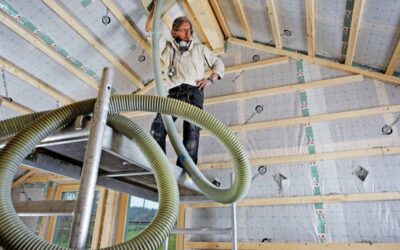
Blown cellulose is a practical, high-performing choice for many unfinished attics with accessible floor space. It is installed as a loose-fill layer across the attic floor, where it covers wiring, framing irregularities, and existing insulation more completely than many batt-only installations.
Cellulose is commonly made with recycled paper fiber treated for fire resistance and pest deterrence. Its dense coverage helps slow air movement within the insulation layer, and its sound-control benefits can be noticeable in homes near busy roads or in multi-level living spaces.
The material performs best after air sealing is completed. Loose-fill cellulose can reduce heat transfer, but it should not be expected to stop major air leaks from the living space below. Before installation, gaps around plumbing stacks, electrical penetrations, top plates, recessed fixtures, and attic access points should be addressed with appropriate air-sealing methods.
Cellulose can settle over time, which is why proper installed depth and coverage are essential. A professional installer accounts for settling and uses depth markers to verify the attic reaches the intended R-value. It is often an excellent value for older New England homes that need a substantial insulation upgrade without rebuilding the roof assembly.
Fiberglass Insulation for Flexible Coverage
Fiberglass remains a dependable attic insulation material because it is widely available, cost-effective, noncombustible, and adaptable to many project types. It is used in batts for framed cavities and in blown form for open attic floors.
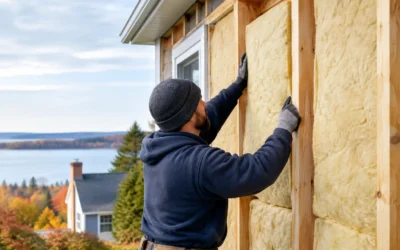
Fiberglass batts work well when framing is regular and the installer can achieve full, consistent contact with the surrounding surfaces. They are common in new construction, knee walls, and accessible wall or ceiling cavities. The key is precision: batts that are compressed, cut too short, or installed around obstructions without careful fitting leave thermal gaps.
Blown fiberglass can be a good choice for attic floors, particularly when homeowners want a lightweight material with strong thermal performance. Like cellulose, it should be paired with air sealing for the best result. Adding loose-fill insulation over an attic floor with active drafts may improve R-value while leaving comfort problems unresolved.
Fiberglass does not absorb moisture in the same way some fiber materials can, but wet insulation still loses effectiveness. Roof leaks, condensation, or bathroom exhaust vents terminating in the attic should be corrected before insulation is added. A dry, well-ventilated attic protects any insulation system.
Mineral Wool for Fire and Moisture Resistance
Mineral wool is a dense fiber insulation valued for its fire resistance, sound reduction, and moisture-resistant qualities. It is available in batts and rigid forms, making it especially useful for targeted assemblies rather than broad loose-fill attic coverage.
In attic work, mineral wool can be a strong option for knee walls, cathedral ceilings, partition walls, and areas around mechanical equipment where enhanced fire performance is beneficial. It holds its shape well, can be cut precisely, and is less prone to slumping than some other batt materials.
Its cost is generally higher than standard fiberglass, and its denser batts may require more deliberate installation around irregular framing. Still, for builders and remodelers who need a durable material with strong acoustic and fire-related benefits, mineral wool can be the right fit.
Vented Attic or Insulated Roofline?
This decision often determines which material is best. In a traditional vented attic, insulation is installed on the attic floor while outside air moves through soffit and ridge vents above it. This approach can work very well when the ceiling plane is carefully air sealed and attic ventilation is clear and balanced.
In an unvented or conditioned attic, insulation follows the roofline instead. Spray foam is frequently used because it can insulate and air seal the roof deck, bringing the attic into the home’s conditioned envelope. This approach may be beneficial when HVAC equipment, ductwork, or living space occupies the attic, but it requires careful moisture and code planning.
Neither design is automatically better. A vented attic may be the most cost-effective solution for an unfinished storage area. An insulated roofline may provide better results for a finished attic or a home with ducts exposed to severe attic temperatures. The existing structure, roof condition, mechanical systems, and project goals should guide the choice.
Do Not Skip Air Sealing and Moisture Control
Insulation slows heat movement. Air sealing stops uncontrolled air movement. Those are different jobs, and a durable attic upgrade needs both.
Warm indoor air escaping into a cold attic during winter can carry moisture with it. That moisture may condense on cold roof framing, contribute to mold concerns, and create conditions that reduce insulation performance. In summer, humid outdoor air and poorly managed ventilation can create their own problems.
A complete attic assessment should look for roof leaks, blocked soffit vents, disconnected bath fans, old vermiculite or damaged insulation, recessed lighting concerns, and inadequate attic access insulation. It should also consider ice dam history. Ice dams are not caused by insulation alone, but heat loss into the attic can warm the roof unevenly and contribute to the conditions that allow them to form.
The right material is only part of the answer. A well-sealed, properly insulated attic gives your home a better chance of staying quieter, drier, and more comfortable when the next New England cold snap arrives.