
A second-floor bedroom that stays cold in January, ice dams along the roofline, and summer humidity that makes an upstairs feel clammy often point to the same problem: an underperforming building envelope. When comparing spray foam versus cellulose insulation, the right choice is rarely about choosing the material with the highest advertised R-value. It is about how the assembly handles air leakage, moisture, space constraints, and New England’s long heating season.
Both materials can deliver meaningful comfort and energy improvements when installed correctly. They perform very differently, however, and the details of your attic, walls, basement, crawlspace, or new construction plan should drive the recommendation.
Spray Foam Versus Cellulose Insulation: The Core Difference
Spray foam is applied as a liquid that expands into place. It adheres to framing, sheathing, and many irregular surfaces, filling gaps that are difficult to address with traditional insulation. Depending on the product, it can provide insulation, air sealing, and moisture control in one installed layer.
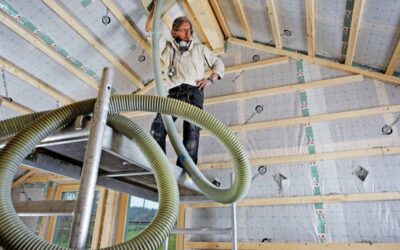
Cellulose is a loose-fill insulation made largely from recycled paper fiber treated for fire resistance. It is blown into open attic floors, dense-packed into enclosed wall cavities, or applied in certain open-cavity applications. Cellulose provides reliable thermal performance, helps reduce sound transfer, and is a strong option for homeowners who value recycled-content materials.
The key distinction is air control. Spray foam can create an air barrier when installed at the appropriate thickness and in the right location. Cellulose slows air movement through its dense fiber structure, but it is not an air barrier on its own. A cellulose project often performs best when paired with deliberate air sealing at penetrations, framing transitions, top plates, and other leakage points.
R-Value and Space Requirements
R-value measures resistance to heat flow. It matters, but it does not tell the complete story when outdoor air is leaking through the assembly.
Closed-cell spray foam generally provides a high R-value per inch, often around R-6 to R-7 per inch depending on the product. That makes it especially useful where available space is limited, such as cathedral ceilings, rim joists, exterior wall upgrades, or basement areas where every inch matters. Closed-cell foam also adds rigidity and resists water absorption.
Open-cell spray foam has a lower R-value per inch, commonly around R-3.5 to R-4, but expands farther and can be an effective air-sealing insulation for larger cavities. In some roof and wall assemblies, it may require a separate vapor-control strategy based on the building design and local code requirements.
Blown cellulose typically delivers about R-3.2 to R-3.8 per inch. In an open attic with adequate depth, that is often more than enough room to achieve a strong insulation level. Cellulose can be a cost-effective way to bring an attic up to current performance expectations, particularly after air leaks have been sealed below the insulation layer.
For a homeowner, this often means spray foam makes sense where depth is tight or air leakage is significant. Cellulose is frequently the practical choice where there is ample attic space and a properly prepared air barrier.
Air Sealing Is Often the Deciding Factor
Heat loss in a New England home is not just heat moving through ceilings and walls. It is also warmed indoor air escaping through recessed lights, plumbing openings, wiring holes, attic hatches, rim joists, and gaps around framing. That lost air is replaced by cold outdoor air in winter and humid outdoor air in summer.
Spray foam is particularly effective in irregular areas that are difficult to seal with separate materials. A properly installed application at a rim joist, for example, can insulate and air seal a common source of drafts and cold floors. In a renovated home with uneven framing or hard-to-reach cavities, this ability can simplify the overall air-sealing plan.
Cellulose should not be dismissed on this point. Dense-packed cellulose restricts air movement within wall cavities and can improve the performance of older homes substantially. Yet it works best as part of a system. Before adding attic cellulose, a trained crew should seal bypasses at the attic floor. Without that step, insulation can cover the symptoms while conditioned air continues leaking into the attic.
A professional energy audit can identify where air is actually moving. That is more useful than assuming the coldest room simply needs more insulation.
Moisture Control in New England Assemblies
New England buildings must manage cold-weather condensation, snow loads, wind-driven rain, and summer humidity. The wrong insulation approach can trap moisture where it cannot dry, creating risks for wood framing, roof sheathing, and indoor air quality.
Closed-cell spray foam is highly resistant to moisture and can function as a vapor retarder at sufficient thickness. It is often a strong fit for foundation walls, crawlspaces, below-grade areas, and certain unvented roof assemblies. It can also help protect against humid air reaching cold surfaces where condensation may form.
Cellulose can safely manage moisture when the wall or roof assembly is designed to dry appropriately. Its fibers can absorb and release small amounts of moisture without losing all insulating ability. Still, cellulose does not replace proper flashing, roof repairs, bulk-water control, or ventilation where ventilation is required. If an attic has active roof leaks or significant moisture issues, those conditions should be corrected before insulation is installed.
For rooflines, basements, and complex renovations, material selection should account for the entire assembly: exterior weather barrier, sheathing, vapor control, indoor humidity, ventilation strategy, and the local code requirements that apply to the project.
Cost: Look Beyond the Installed Price
Cellulose usually has a lower upfront installed cost than spray foam, especially for a straightforward attic upgrade. It provides substantial value when the attic can accommodate enough depth and the air-sealing work is completed first.
Spray foam costs more because the materials, equipment, preparation, and installation process are more specialized. Its value comes from combining functions in locations where air leakage, moisture exposure, or limited cavity depth create a bigger performance challenge. Spending more on foam in every cavity is not automatically the best use of a project budget.
Many high-performing homes use both. A common approach is spray foam at rim joists, difficult transitions, or specific roof details, followed by cellulose in the attic to build economical R-value. This hybrid strategy can direct budget toward the areas with the greatest air leakage while still providing deep, continuous attic coverage.
Installation Quality Determines the Result
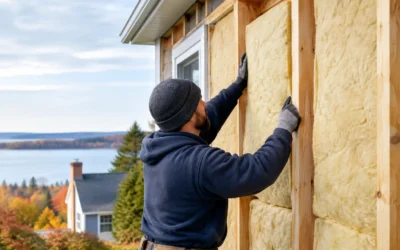
Neither product performs as intended when installation is rushed or poorly planned. Spray foam must be applied at the correct temperature, thickness, and mix ratio. Improper installation can leave voids, pull away from framing, or create uneven coverage. The installer also needs to protect surfaces and coordinate with other trades before the work begins.
Cellulose must be installed to the right depth and density. In open attics, crews should maintain consistent coverage, account for future settling, and keep insulation clear of heat-producing fixtures or locations that require service access. In wall cavities, dense-pack installation requires the correct density to avoid voids and excessive settling.
For builders and remodelers, coordination matters as much as material selection. Insulation should fit the project schedule, satisfy applicable state and local requirements, and support first-pass inspections. A trained building-performance contractor can also help identify details that should be addressed before drywall closes off access.
Which Material Fits Your Project?
Choose spray foam when you need high R-value in a thin space, reliable air sealing at complicated details, or moisture-resistant insulation in areas such as rim joists, crawlspaces, and foundation walls. It is also a strong candidate for certain roofline and renovation assemblies where access is limited.
Choose cellulose when you are upgrading an accessible attic, filling standard-depth wall cavities, seeking a recycled-content option, or building R-value over a properly air-sealed ceiling plane. It can deliver excellent comfort and savings without the higher cost of foam across large, uncomplicated areas.
The best answer may be neither material alone. Fiberglass or mineral wool can also be appropriate in assemblies that need fire resistance, sound control, easy future access, or a specific code-compliant design. The goal is not to sell one product everywhere. The goal is to build an insulation and air-sealing system that keeps rooms even, controls moisture, and reduces unnecessary heating and cooling demand.
Before choosing a material, have the existing conditions evaluated. Colonial Insulation can assess drafts, insulation gaps, moisture concerns, and project requirements, then recommend an approach that fits your home or building rather than a one-size-fits-all package. A focused conversation before installation can prevent years of uncomfortable rooms, wasted energy, and expensive corrections later.