
A renovation can transform a kitchen, add a bath, or turn an unfinished attic into usable space. But if the building enclosure is left untreated, the same project can leave homeowners with cold floors, overheated upstairs rooms, condensation concerns, and utility bills that never seem to settle down. Home renovation insulation is the opportunity to correct those hidden weaknesses while walls, ceilings, and framing are accessible.
For New England homes, insulation is not simply about adding more material. It is about managing heat flow, stopping uncontrolled air leakage, and addressing moisture before it has a chance to affect comfort or durability. The right approach depends on the home’s age, construction details, renovation scope, and the conditions inside each area being remodeled.
Start With the Building Envelope, Not Just the Wall Cavity
A wall cavity filled with insulation can still perform poorly if outside air moves around it. Air leaks at rim joists, wiring penetrations, attic hatches, top plates, and window openings allow conditioned air to escape and outdoor air to enter. In winter, that can make rooms feel drafty even when the thermostat is set high. During humid summers, warm moist air can enter wall and roof assemblies where it may condense on cooler surfaces.
That is why a well-planned renovation should consider air sealing and insulation as one system. Air sealing limits the pathways that carry heat and moisture. Insulation slows heat transfer through the enclosure. Together, they help create more stable indoor temperatures, lower heating and cooling demand, and reduce the chance of moisture-related issues.
An energy audit can be especially valuable before a major remodeling project. It helps identify where the home is losing energy and whether the problem is insulation, air leakage, duct losses, moisture, or several issues working together. For homeowners, that replaces guesswork with a clear project priority list. For builders and remodelers, it helps coordinate building-performance work before finishes conceal critical details.
Where Home Renovation Insulation Has the Biggest Impact
The most effective improvements are often in the less visible parts of a home. An attic, basement, crawl space, or exterior wall may have a greater effect on year-round comfort than a new finish material ever could.
Attics and cathedral ceilings
Heat naturally moves toward colder areas, making the attic a major source of winter heat loss. In many older New England homes, attic insulation is thin, uneven, compressed, or interrupted by gaps. Before adding insulation, air leaks around recessed lights, plumbing stacks, attic access points, and framing transitions should be addressed.
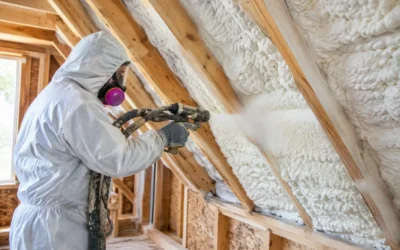
Blown cellulose can be an efficient choice for open attic floors because it fills irregular areas well and can be installed to the required depth. For rooflines and cathedral ceilings, spray foam or carefully detailed dense-pack insulation may be appropriate, depending on the assembly and ventilation strategy. The correct choice depends on available depth, roof design, and whether the attic will remain vented or become part of the conditioned space.
Exterior walls during remodeling
When siding is removed or interior walls are opened, there is a rare chance to improve underinsulated wall cavities and seal gaps around framing. Dense-pack cellulose can be effective for enclosed wall cavities because it conforms around wiring and other obstructions. Fiberglass and mineral wool batts can perform well in open cavities when they are properly cut, fitted, and supported without voids or compression.
If exterior sheathing is exposed, continuous insulation may also be considered. This reduces thermal bridging through studs, which are less insulating than the material between them. It can improve overall wall performance, but it requires attention to window details, siding attachment, drainage planes, and local code requirements.
Basements, crawl spaces, and rim joists
A finished basement will not feel truly finished if cold air continues to enter at the rim joist. This narrow band above the foundation is a common leakage point and can contribute to cold floors on the first level. Closed-cell spray foam is frequently used here because it provides insulation and air sealing in a compact application.
Foundation walls and crawl spaces require a moisture-aware plan. Insulating the wrong surface, blocking needed drainage, or trapping moisture in an assembly can create avoidable problems. The goal is to control ground moisture, bulk water, air leakage, and heat loss together. A professional assessment can determine whether the best path is interior foundation insulation, crawl-space encapsulation, improved ventilation, or a combination of measures.
Choose Materials Based on the Assembly
Every insulation material has a place. The best option is not always the product with the highest R-value per inch. Installation conditions, moisture exposure, fire requirements, access, budget, and the surrounding assembly all matter.
Spray foam is a strong option where air sealing and high R-value in limited space are priorities. Closed-cell foam can add rigidity and resist moisture, making it useful in certain basements, rim joists, and roof assemblies. Next-generation HFO spray foam offers high thermal performance with a lower global-warming-potential blowing agent than older formulations. Open-cell foam can be useful in some interior applications, but its vapor and moisture characteristics differ, so it must be specified for the assembly rather than selected by habit.
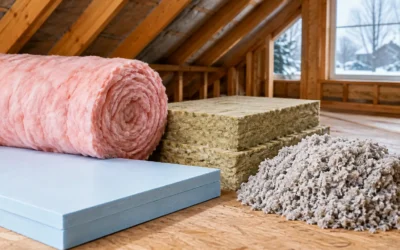
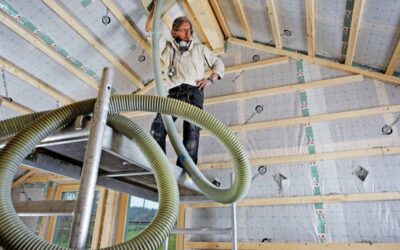
Blown cellulose is a practical, recycled-content option for attics and wall cavities. It provides good coverage around irregular framing and can support sound control as well as thermal performance. Proper density is essential in walls to reduce settling over time.
Fiberglass remains a cost-effective material for many open framing applications. Its performance depends heavily on installation quality. Gaps, folds, compression, and poorly fitted batts reduce real-world results, which is why trained installation matters as much as the labeled R-value.
Mineral wool offers excellent fire resistance, moisture tolerance, and sound-reduction benefits. It is often a smart choice in exterior walls, around mechanical areas, and in assemblies where fire performance or acoustic separation is a priority. It can be more expensive than fiberglass, but its durability and handling characteristics may justify the investment in the right project.
Respect Moisture Control and New England Code Requirements
New England’s cold winters place real demands on wall and roof assemblies. Warm indoor air carries moisture. If that air reaches a cold surface inside a wall or roof during winter, condensation can occur. Humid summer conditions add another layer of complexity, especially when air-conditioned interiors meet hot outdoor air.
A renovation insulation plan should account for vapor control, air control, drainage, and drying potential. These are not interchangeable. A vapor retarder does not replace air sealing, and insulation alone does not solve a bulk-water problem. The correct layers and materials vary by location, assembly type, and state code requirements across New Hampshire, Massachusetts, Maine, and Vermont.
Builders should also coordinate insulation details early with electrical, plumbing, HVAC, and drywall trades. A last-minute penetration through a carefully sealed roofline or exterior wall can compromise performance and create inspection issues. Clear scope, sequencing, and documentation help keep the project moving and support first-pass code compliance.
Make Comfort the Measure of Success
Energy savings matter, but homeowners feel the results room by room. A successful insulation project can make the bedroom over the garage usable in January, reduce the temperature difference between floors, quiet street noise, and lessen the demand placed on heating and cooling equipment.
It may also improve indoor air quality when air sealing reduces the entry of pollen, dust, outdoor pollutants, and damp air. That benefit is strongest when paired with appropriate mechanical ventilation, because a tighter home still needs controlled fresh-air exchange. Tightening a home without considering ventilation is not a complete building-performance strategy.
Cost decisions should be made with the renovation timeline in mind. It is generally more affordable to air seal and insulate when framing is open than to return after drywall, siding, cabinetry, or finished flooring is installed. Some projects are also eligible for efficiency incentives or financing options, which can help homeowners address the work correctly rather than postpone the highest-value improvements.
Colonial Insulation helps homeowners, builders, and remodelers evaluate the full assembly so material selection, air sealing, moisture control, and code expectations work together. The result is not just more insulation. It is a renovation that feels better through a subzero winter morning, a humid July afternoon, and every season in between.
Before closing up a wall or finishing an attic, take time to assess what the home needs behind the surfaces. That decision can protect the renovation, improve daily comfort, and keep energy costs working in your favor for years to come.