
The best insulation for exterior walls depends on what is inside your wall. In a wall with open stud cavities, closed-cell spray foam gives the most R-value per inch and the tightest air seal, and dense-packed cellulose is the proven choice for filling an existing closed wall. A brick wall needs a different plan, because moisture behavior matters as much as R-value. We install all of these, and the right pick comes from reading your wall first, then choosing the material.
TL;DR
- Closed-cell spray foam gives the highest R-value per inch and doubles as an air barrier, which suits thin walls and new construction.
- Dense-packed cellulose is the strong all-rounder for existing wood-framed walls, filling cavities through small holes without tearing out finishes.
- Mineral wool and fiberglass work well in open stud bays when they are cut and fitted carefully, and sealing air leaks first matters more than the batt itself.
- Brick walls need an assessment before any material is chosen, since the wrong layer can trap moisture in the masonry.
- A blower door test and thermal imaging show where your walls actually lose heat, so the material is matched to the problem.
Table of Contents
- What “best” means for an exterior wall
- The main options, wall by wall
- Side-by-side comparison
- How much R-value do you need?
- Insulating brick walls
- Start with an energy audit, not a material
- Where we come in
- For builders and remodelers
- A quick way to choose
- FAQ
- Sources
What “best” means for an exterior wall
Most pages on this topic rank materials by R-value alone. R-value is a measure of how well a material resists heat flow, and the U.S. Department of Energy’s insulation guide explains it and gives recommended levels by climate zone. Higher is better, but the number on the package is only part of the story for walls. Four things decide how a wall performs:
- Cavity depth. A 2×4 wall has about 3.5 inches of space. A 2×6 wall has about 5.5. The material has to deliver enough R-value in that depth.
- Air sealing. Wind-driven air moving through a wall can cost you more comfort than a missing inch of insulation. Materials that stop air as well as heat do more with less.
- Moisture. Walls get wet from rain, from indoor humidity and from condensation. The material has to suit how that wall dries.
- Access. A new wall with open studs and a finished 1920s plaster wall call for different methods, even in the same town.
In New England, with long heating seasons and cold snaps, all four count. That is why a single winner for every wall does not exist, and why a short list by situation is more useful than a ranking.
The main options, wall by wall
Closed-cell spray foam
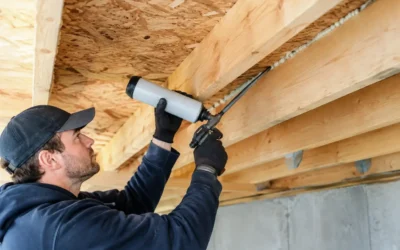
Closed-cell spray foam is sprayed into stud bays, where it expands and bonds to the framing and sheathing. It has the highest R-value per inch of the common wall materials, roughly double that of most batts and blown products, and it forms an air barrier on its own. That makes it a good fit when cavity depth is limited, such as 2×4 walls, or when you want a wall that is airtight and highly insulating in a single step.
It also suits new construction and gut renovations, when the studs are exposed and the crew can spray the cavity cleanly. If you are weighing foam types, our comparison of closed-cell and open-cell spray foam walks through where each one fits. For a full look at wall applications, see our spray foam insulation service page.
Open-cell spray foam
Open-cell foam is lighter and softer, with a lower R-value per inch. It still seals air well and fills irregular cavities completely. It works in deeper wall cavities, where you can reach your target R-value with thickness, and where you want an air seal at a more modest material cost than closed-cell.
Dense-packed cellulose
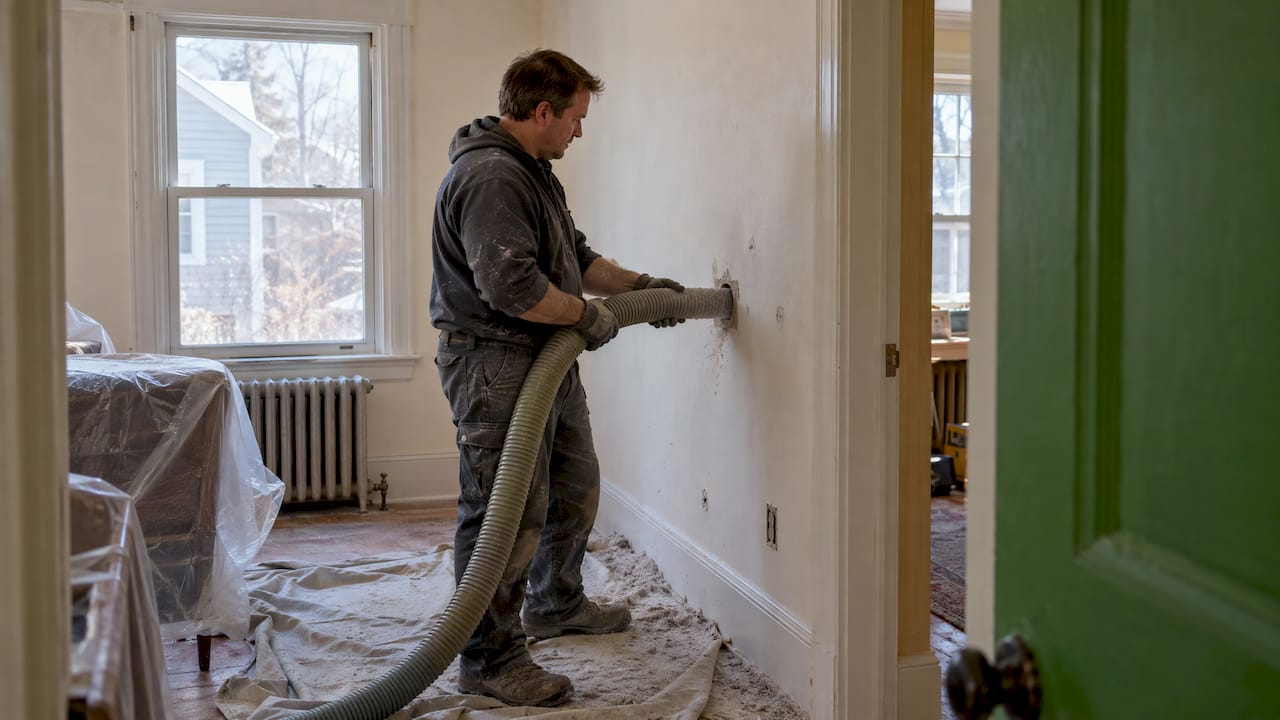
Cellulose is made mostly of recycled paper treated for fire and pest resistance. For a finished wall, installers drill small holes between studs, blow the cellulose in at high density, then patch and finish the holes. The material settles into the cavity and around wiring, pipes and framing irregularities, which is where batts usually leave gaps.
This is the method that makes the most sense for older homes with empty or poorly filled walls, because it adds insulation without removing plaster or siding. It performs well in New England climates, and it also dampens sound. Our guides to cellulose insulation benefits for New England homes and what to expect during a cellulose installation cover the details. See also our cellulose insulation page.
If you are choosing between foam and cellulose for the same wall, spray foam versus cellulose compared sets out how they differ on performance, air sealing and fit.
Mineral wool
Mineral wool is made from rock or slag fibers. It resists fire, repels water and holds its shape in a stud bay, so the batts stay where they are installed. It suits open walls in renovations and new builds, and it is a good choice where moisture tolerance and fire resistance rank high. Batts have to be cut to fit snugly around outlets and framing. Our mineral wool insulation page has more.
Fiberglass
Fiberglass batts are the most familiar wall insulation and one of the most affordable. They perform as rated when they fit the cavity fully, with no gaps, compression or voids. High-density batts and blown fiberglass improve on the basic product. For how fiberglass stacks up against blown-in material, read cellulose versus fiberglass, and for a foam comparison see spray foam versus fiberglass for New England homes.
Side-by-side comparison
The table shows how the materials compare on the points that matter inside a wall. R-values per inch are approximate, and the DOE guide gives typical ranges by material.
| Material | R-value per inch (approx.) | Air sealing | Best for |
|---|---|---|---|
| Closed-cell spray foam | Highest of the group | Excellent, air barrier on its own | Thin walls, new builds, gut renovations |
| Open-cell spray foam | Mid-range | Excellent | Deeper cavities, full fill of irregular bays |
| Dense-packed cellulose | Mid-range | Good when dense-packed | Existing finished walls, older homes |
| Mineral wool batts | Mid-range | Fair, needs separate air sealing | Open walls, fire and moisture resistance |
| Fiberglass batts | Lower to mid | Fair, needs separate air sealing | Open walls, standard framing |
The column that surprises most homeowners is air sealing. A wall can have a high R-value on paper and still feel drafty if air moves through it. That is why we start with diagnostics rather than a material.
How much R-value do you need?
Target R-values depend on your climate zone. The DOE guide maps the country into zones and recommends higher levels in colder ones. Much of New Hampshire, Vermont and Maine falls in the colder end of that map, and northern Massachusetts sits close to it. Check your county in the DOE’s zone map, then look at the wall recommendation for that zone.
Two practical points:
- Your framing sets the ceiling for cavity-only insulation. A 2×4 wall cannot hold as much material as a 2×6 wall. Closed-cell foam gets the most from a shallow cavity. Adding a layer of rigid foam over the sheathing, a method called continuous exterior insulation, raises the total wall R-value and reduces heat loss through the studs.
- The code is a floor, not a target. Local energy codes set the minimum for new work. If you are building or remodeling, ask what your town enforces. Many homeowners go beyond the minimum, since the walls are only open once.
If you want a plan built around your own house, our wall insulation service starts from the wall you have.
Insulating brick walls
Brick needs its own section, because it behaves differently from wood framing. A brick home usually has one of three wall types, and the right insulation follows from which you have:
- Brick veneer over a wood-framed wall. The brick is only a facing. The insulation goes in the framed cavity behind it, so cellulose, foam, mineral wool and fiberglass all come back into play, depending on access and cavity depth.
- Cavity brick. There are two layers of masonry with a gap between them. Whether the gap can be filled depends on its width, its condition and how it drains.
- Solid masonry. Several layers of brick with no gap, common in older New England buildings. There is no cavity to fill, so insulation is added on the interior, often over furring strips or within a new framed wall.
The risk with solid brick is moisture. Masonry absorbs rain and dries to the inside and outside. When you add insulation on the interior, the brick gets colder and can stay wetter in winter, and that can affect mortar and brick through repeated freezing and thawing. Choosing a material that controls air and moisture movement, and confirming that the exterior is sound before you insulate, helps avoid problems. Repointing loose mortar and fixing water entry points come first.
Spray foam is often used on the inside of brick because it bonds to the surface and leaves no air gap behind it. Our article on spray foam for an old house explains how it applies to older masonry homes. And if you see damp patches, frost or musty smells on exterior walls, read how to stop condensation in exterior walls.
Because every brick house is different, we recommend an assessment before choosing a material. We cover this in the next section.
Start with an energy audit, not a material
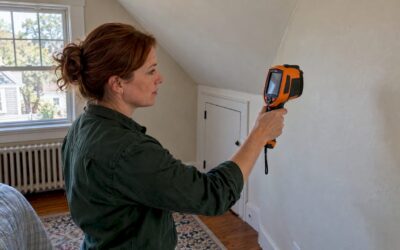
The fastest way to waste money on wall insulation is to choose the product before you know the problem. Our home energy audits use blower door testing and thermal imaging. The blower door depressurizes the house so air leaks show up. The thermal camera shows where walls are losing heat, including missing or settled insulation you cannot see from outside.
The results change the plan in practical ways. A wall that is mostly intact with a few voids may need targeted fill. A wall with large uninsulated sections, or a lot of air movement at the rim joist and window openings, may need air sealing before any insulation goes in. For what the process turns up, see what a home energy audit for insulation finds and how energy audits reveal hidden home problems.

Where we come in
We are an insulation contractor based in Rindge, New Hampshire, serving homeowners, builders and remodelers across New Hampshire, Massachusetts, southern Maine and Vermont. We install spray foam (open-cell, closed-cell and HFO), blown-in cellulose, mineral wool and fiberglass, so the recommendation for your wall is not tied to one product.
For wall projects, that means we look at the framing, the age of the house, the siding or masonry and the audit results, and then we recommend what suits the wall. As an NHSaves contractor, we help New Hampshire homeowners access available energy efficiency rebates, and financing is available for insulation projects.

If you want a plan for your exterior walls, start with our wall insulation service page or request a home energy audit.
For builders and remodelers
If you are framing new walls or opening existing ones, you have the one chance to get the wall right. Spray foam in the stud bays gives an air barrier and insulation in one pass, which can simplify the schedule. Mineral wool and fiberglass remain common for open cavities. Whichever you pick, the sequence matters: air sealing at penetrations, insulation installed to full depth, and moisture planning for the climate. Our guides on new construction insulation planning and spray foam for new home construction cover this for the New England builder. We also explain how the three most-used options compare in insulating New England homes.
A quick way to choose
- Finished walls in an older wood-framed house, with little or no insulation: dense-packed cellulose, installed through small holes.
- Open studs, shallow 2×4 cavity, high performance wanted: closed-cell spray foam.
- Open studs, deeper cavity, air sealing wanted: open-cell spray foam or a sealed cavity with mineral wool.
- Open studs, standard budget, careful fitting: fiberglass or mineral wool batts, with air sealing at every gap.
- Solid or cavity brick: an assessment first, then a moisture-safe approach, often interior foam or a framed wall.
For more on regional fit, see wall insulation that works in New England.
FAQ
What R-value should exterior wall insulation have?
It depends on your climate zone and your framing. The DOE’s insulation guide lists recommended wall levels by zone, and colder zones call for more. Your wall depth limits what cavity insulation alone can reach, which is why denser materials such as closed-cell foam are used in shallow cavities.
Can you insulate exterior walls without removing the drywall or siding?
Yes, in many wood-framed houses. Dense-packed cellulose is blown into the cavities through small holes that are then patched. A thermal imaging scan beforehand shows which walls need it most.
What is the best insulation for brick walls?
It depends on the type of brick wall. Brick veneer over framing is insulated in the framed cavity like any wood wall. Solid brick usually gets interior insulation, with foam or a framed wall, after the masonry is confirmed to be sound and dry.
Is spray foam or cellulose better for exterior walls?
Both perform well, and each fits different conditions. Spray foam is ideal in open walls, shallow cavities and new construction, while dense-packed cellulose is ideal for filling existing closed walls. We install both and recommend based on your wall.