
A basement mechanical room, an attached garage wall, and an open attic do not face the same fire risks. Neither should they automatically receive the same insulation. When property owners ask about the best fireproof insulation options, the practical answer starts with a correction: insulation is rarely fireproof in the absolute sense. The right material and assembly can resist ignition, slow flame spread, protect structural components, and meet local code requirements. That distinction matters for safer, inspection-ready work.
For homes and buildings across New Hampshire, Massachusetts, Maine, and Vermont, the decision also has to account for winter heat loss, humid summer conditions, moisture management, air leakage, and the existing structure. Fire performance is one part of a complete building-envelope plan, not a substitute for proper fire blocking, approved thermal barriers, or code-compliant construction.
What fire resistance means for insulation
Insulation products are commonly described with terms such as noncombustible, flame-resistant, flame-retardant, or fire-rated. They are not interchangeable. Noncombustible materials do not readily burn under standard test conditions. Flame-retardant products are treated to reduce their tendency to ignite or support flames. A fire-rated wall or ceiling is an entire tested assembly, usually involving framing, insulation, drywall or another protective covering, fasteners, penetrations, and installation details.
This is why a material with strong fire properties does not, by itself, create a one-hour fire-rated wall. Builders and remodelers should follow the approved assembly details required for the project. Homeowners should be especially cautious about exposed insulation in attics, garages, utility rooms, and renovation areas where a protective covering may be required.
Best fireproof insulation options by application
Mineral wool offers the strongest fire resistance
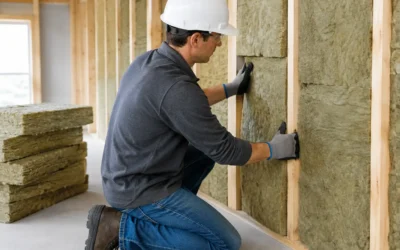
Mineral wool, also called rock wool or slag wool, is often the leading choice where fire resistance is a primary concern. It is made from mineral-based fibers and is noncombustible. Many mineral wool products can withstand very high temperatures without contributing fuel to a fire, making them well suited for exterior walls, party walls, garage separations, mechanical-room walls, and areas around fireplaces or chimneys when installed with required clearances.
For New England construction, mineral wool brings other advantages. It provides dependable thermal performance, drains and dries more readily than many materials, and helps reduce sound transmission between rooms and units. Its density can make it particularly useful in multifamily buildings, home offices, and remodels where acoustics matter as much as comfort.
The trade-off is cost and installation detail. Mineral wool batts are stiffer than fiberglass and need to be cut carefully around wiring, plumbing, and irregular framing. Gaps reduce thermal performance, so a trained installer still matters. Mineral wool also does not stop air leakage on its own. It performs best alongside dedicated air sealing.
Fiberglass provides reliable, economical protection
Fiberglass insulation is another noncombustible option commonly used in walls, ceilings, floors, and attics. The glass fibers themselves do not provide fuel for a fire, although paper or foil facings and other product components can change the performance of the overall product. Unfaced fiberglass is frequently chosen where a straightforward, code-conscious insulation solution is needed.
For budget-sensitive new construction and large retrofit areas, fiberglass can offer a practical balance of R-value, availability, and fire resistance. Blown fiberglass can also be an effective attic solution when installed to the correct depth and protected from wind washing and air leaks at the attic floor.
Its limitation is that fiberglass does not air-seal. In a drafty older home, insulation alone may leave the homeowner with cold floors, ice-dam conditions, and uneven room temperatures. Air sealing penetrations around top plates, plumbing stacks, recessed fixtures, and attic hatches should be completed before insulation is installed or upgraded.
Cellulose is a high-performance attic choice with caveats
Blown cellulose is made primarily from recycled paper fibers treated with fire-retardant minerals. The treatment helps the material resist ignition and limits flame spread, but cellulose remains an organic material. It should not be described as noncombustible or truly fireproof.
That does not make cellulose a poor choice. Properly installed cellulose is an effective, sustainable insulation option for dense-packing enclosed walls and improving attic coverage. Its ability to fill around framing irregularities can improve comfort in older New England homes that were not built with modern energy details in mind.
The key is proper installation and code compliance. Cellulose must be kept away from heat-producing fixtures and installed with required clearances, covers, or barriers. An attic upgrade should also address air leaks and ventilation conditions. Treating cellulose as part of a planned attic system, rather than simply adding more material, protects both performance and safety.
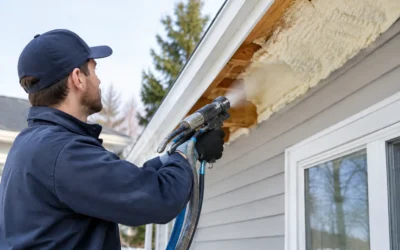
Spray foam solves air leakage but needs protection
Spray foam insulation can deliver high R-value and exceptional air-sealing performance in a single application. Closed-cell HFO spray foam is especially useful where space is limited or moisture resistance is needed, such as rim joists, foundation walls, crawl spaces, and certain roof assemblies. By reducing uncontrolled air movement, it can help improve room-to-room comfort and lower heating and cooling demand.
However, spray foam is combustible and requires protection in many occupied or accessible areas. Building codes typically require an approved thermal barrier, often gypsum board, between foam and occupied interior space. Certain applications may allow an approved ignition barrier instead, but the correct approach depends on the location, product listing, and local code requirements.
This is not a reason to rule out spray foam. It is a reason to specify it correctly. A professional installer should confirm substrate conditions, thickness, ventilation needs during installation, protective-barrier requirements, and the assembly expected by the local inspector. Exposed foam should never be treated as a finished fire-resistant surface unless the assembly is specifically approved for that use.
How to choose the right material for your building
Start with the location and the performance goal. Mineral wool is often the clear choice when noncombustibility and sound control are priorities. Fiberglass is a dependable fit for many standard wall and attic applications where cost control matters. Cellulose works well for sustainable attic upgrades and dense-packed retrofit walls when clearances and air sealing are handled properly. Spray foam is valuable where air sealing, moisture control, and high R-value per inch are essential, provided required protective coverings are included.
Then consider the assembly, not just the insulation. A garage wall separating the house from vehicle storage has different code and fire-separation needs than an attic floor. A commercial tenant partition may require a tested fire-rated design. A basement renovation may need attention to foundation moisture, wiring, mechanical equipment, and the finish materials that will cover the insulation.
For builders and remodelers, this is where early coordination avoids expensive corrections. Confirm the required rating, wall or ceiling design, penetration details, and inspection expectations before insulation is scheduled. For homeowners, an energy audit or site evaluation can identify whether the immediate issue is missing insulation, air leakage, moisture, or a combination of all three.
Fire safety and energy performance work together
The strongest insulation plan is rarely a single-product decision. A New England attic may need air sealing at the ceiling plane, properly installed cellulose or fiberglass above it, and safe clearances around heat sources. A basement may benefit from closed-cell foam at the rim joist, mineral wool in a finished wall, and a code-required thermal barrier. A multifamily project may rely on mineral wool assemblies to support both fire and acoustic goals.
Material selection should also account for indoor air quality and durability. Moisture can damage finishes, reduce insulation effectiveness, and create conditions that compromise a building over time. Controlling bulk water, vapor movement, and air leakage protects the investment in insulation while improving year-round comfort.
A qualified insulation contractor can help match the material to the building, the code pathway, and the owner’s priorities. Colonial Insulation evaluates the full building envelope so homeowners and construction teams can move forward with a solution designed for safety, comfort, and reliable long-term performance.
If your project involves a garage conversion, attic renovation, new addition, commercial build-out, or an older home with persistent drafts, get the insulation plan reviewed before walls and ceilings are closed. The right combination of fire-conscious materials, air sealing, moisture control, and protective barriers is far easier to build correctly the first time.