
A cold floor over the garage, a sweltering finished attic, and ice dams along the roofline may look like separate problems. In many New England homes, they point to the same issue: an underperforming building envelope. Green insulation can help address those conditions, but the right choice is not simply the material with the most recycled content. It must also control air movement, manage moisture, deliver the needed R-value, and fit the assembly where it is installed.
For homeowners, that means lower heating and cooling demand, more even room temperatures, and a healthier indoor environment. For builders and remodelers, it means choosing materials and installation methods that support energy codes, protect schedules, and perform as designed through long winters and humid summers.
What Makes Insulation Green?
The term green insulation is useful, but broad. A material may be considered greener because it contains recycled or renewable content, takes less energy to manufacture, avoids certain chemicals, lasts for decades, or reduces a building’s operating energy. The best decision accounts for the complete picture rather than relying on a single label.
Operational performance matters greatly in New England. An insulation product that reduces heat loss and limits air leakage can cut the energy required to heat a home through January and cool it during a humid August week. Yet insulation alone cannot correct every building-performance issue. Gaps around framing, attic penetrations, rim joists, duct runs, and wiring often allow air to bypass even high-R-value insulation.
That is why a practical green strategy starts with the assembly. The location, moisture exposure, available cavity depth, ventilation plan, and code requirements all influence the recommendation. A material that is a strong fit for an open attic may be the wrong choice for a damp foundation wall or a tight cathedral ceiling.
Green Insulation Materials Worth Considering
Blown Cellulose
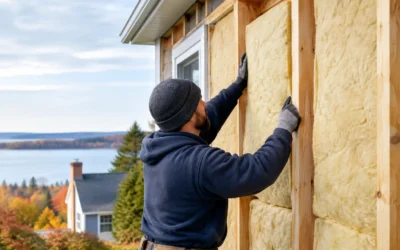
Cellulose is among the most recognized green insulation choices. It is commonly made from recycled paper fibers and treated to provide fire resistance and pest resistance. When dense-packed in walls or installed as a consistent attic blanket, it can provide reliable thermal performance and help reduce sound transfer.
For older New England homes, dense-pack cellulose is often a valuable option because it can be installed in existing wall cavities with limited disruption. In attics, blown cellulose can cover irregular spaces more completely than batts that are cut around obstructions. Proper depth and coverage are essential, particularly near eaves and attic access points where insulation is frequently thin.
Cellulose is not an air barrier or a vapor barrier. It performs best when the project also addresses air leaks and moisture details. If a roof leak, bulk-water issue, or uncontrolled indoor humidity is present, those conditions should be corrected before insulating.
Mineral Wool
Mineral wool is a durable option valued for its fire resistance, moisture tolerance, sound control, and thermal performance. It is available in batts and rigid boards, and many products include recycled material. Its stiffness can make it especially useful in exterior wall assemblies and areas where dimensional stability matters.
Builders often choose mineral wool for assemblies that need improved fire performance or exterior continuous insulation. Homeowners may appreciate its sound-dampening qualities around bedrooms, home offices, mechanical rooms, and walls facing busy roads. It does not absorb water in the same way some fibrous materials can, but the surrounding wall or roof assembly still needs a clear drainage and drying strategy.
Fiberglass With Recycled Content
Modern fiberglass insulation remains a practical choice for many projects. Products are available in batts and blown formats, and many incorporate recycled glass. Fiberglass is cost-conscious, readily available, noncombustible, and effective when installed to the correct thickness without gaps, compression, or voids.
The trade-off is installation sensitivity. A batt that is poorly cut around electrical boxes or left unsealed at its edges will not deliver its labeled R-value in real-world conditions. In new construction and renovations, fiberglass can be a dependable part of a high-performance assembly when paired with intentional air sealing and, where appropriate, a separate air-control layer.
HFO Spray Foam
Spray foam is not typically selected for recycled content, but it can be part of a responsible high-performance approach when its air-sealing and moisture-control benefits solve a specific building challenge. Next-generation HFO spray foam offers high R-value and a lower global warming potential than older foam formulations.
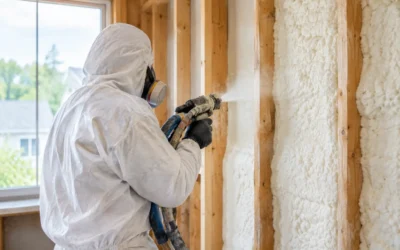
Closed-cell HFO foam is often suited to rim joists, basement walls, crawl spaces, and other areas with limited depth or higher moisture exposure. It can provide insulation, air sealing, and a vapor-control function in one application. Open-cell foam may be appropriate in certain wall and roof assemblies where air sealing is needed but drying potential remains important.
The material should be specified carefully. Spray foam requires trained installation, proper substrate conditions, and attention to curing and ventilation requirements. It also changes how an assembly dries, which is especially significant in older homes. Used in the right locations rather than applied indiscriminately, it can reduce energy waste and help prevent comfort and moisture problems that shorter-lived fixes leave behind.
R-Value Is Only Part of the Decision
R-value measures resistance to heat flow, so it is a useful starting point. Higher R-values generally slow heat transfer more effectively, but an advertised R-value is not a guarantee of whole-house performance. Thermal bridging through wood framing, unsealed penetrations, missing insulation, and air movement can all weaken results.
Consider a bonus room over a garage. Adding more insulation below the floor may help, but the room can remain cold if the garage ceiling is leaky, the rim joist is uninsulated, or ducts are exposed to outdoor temperatures. A building-performance review identifies where heat, air, and moisture are actually moving before money is committed to a material.
For new construction, continuous exterior insulation can reduce thermal bridging and support code compliance. For renovations, the best improvement may be attic air sealing followed by blown insulation, dense-pack walls, or a targeted rim-joist treatment. The right scope depends on access, budget, future remodeling plans, and the building’s existing conditions.
Moisture Control Protects Green Investments
New England buildings need to handle long heating seasons, wind-driven rain, snow, and summer humidity. Insulation choices affect how a wall, roof, or foundation manages moisture, but they cannot replace proper flashing, drainage, ventilation, or air sealing.
Warm indoor air carries moisture. During winter, that air can leak into cold cavities and condense on sheathing or framing. Over time, the result may be mold, material deterioration, or reduced insulation effectiveness. In summer, humid outdoor air can create different risks when it reaches cool conditioned surfaces.
A well-designed assembly controls bulk water first, limits air leakage, uses vapor control appropriate to the climate and assembly, and preserves a path for drying when needed. This is where an experienced contractor adds value. The goal is not to make every assembly as impermeable as possible. The goal is to create one that stays dry and durable in its specific location.
How to Choose the Right Approach
Start with the problem you want to solve. High utility bills, drafts, ice dams, uneven temperatures, condensation, and outside noise can each point to different weaknesses. An energy audit or professional assessment can reveal whether the greatest opportunity is in the attic, walls, basement, crawl space, or air-sealing details between them.
Then weigh the material against the application. Cellulose may be the best fit for an attic or existing wall cavity. Mineral wool may make sense where fire resistance, sound control, or exterior insulation is a priority. Fiberglass can provide strong value in properly detailed cavities. HFO spray foam may be the most effective targeted solution for difficult rim joists, shallow cavities, or moisture-prone foundation areas.
Cost should be evaluated over the life of the work, not only on installation day. A lower-cost material installed without air sealing may leave comfort complaints unresolved. A more specialized material may cost more upfront but avoid a larger renovation, reduce heating demand, or help a project meet inspection requirements without delays. Available incentives and financing can also affect the practical budget for efficiency upgrades.
Colonial Insulation helps property owners and construction professionals match insulation systems to New England conditions, project goals, and code requirements. A clear recommendation should explain the material, the air-sealing plan, the expected performance, and any moisture details that need attention before installation begins.
A greener building is not defined by one product in a wall. It is defined by a durable, well-installed system that keeps occupants comfortable, uses less energy, and continues working through the next New England winter.