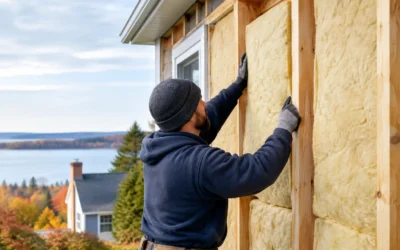

A cold bedroom over the garage, ice dams along the eaves, and a boiler that seems to run nonstop are common realities in older New England homes. If you are considering spray foam for my old house, the right answer is rarely to foam every available cavity. The best result starts with understanding how the house handles air, heat, and moisture now – and correcting the specific weak points that make it uncomfortable.
Older homes can benefit significantly from spray foam insulation. It can reduce air leakage, improve room-to-room temperature consistency, and help lower heating and cooling costs. But an old house also has details that deserve careful attention: aging roof assemblies, masonry foundations, active leaks, knob-and-tube wiring, and materials that may need testing before work begins. A building-performance approach protects the home while improving comfort.
When Spray Foam for My Old House Makes Sense
Spray foam is especially useful where insulation and air sealing need to work together. Unlike loose-fill or batt insulation alone, properly installed foam expands into irregular gaps and adheres to many surfaces. That can make a major difference in homes with uneven framing, fieldstone foundations, rim joists, and hard-to-reach attic transitions.
In New England, the most effective applications are often at the rim joist, basement or crawlspace walls, attic knee walls, cantilevers, and roof decks. These are locations where outdoor air can bypass conventional insulation and create persistent drafts. Sealing those pathways helps keep heated indoor air where it belongs during winter and reduces humid outdoor air entering the home in summer.
Closed-cell spray foam offers a high R-value per inch and can also limit vapor movement. It is often a practical choice where space is limited, such as a basement wall or an unvented roof assembly. Open-cell foam is lighter and can be useful in certain interior applications, particularly where sound reduction matters, but it does not provide the same vapor-control characteristics. The correct choice depends on the assembly, local code requirements, and the moisture conditions of the home.
Modern HFO spray foam products give homeowners high thermal performance with a newer blowing-agent technology. Still, product selection is only one part of the job. The foam must be installed at the right thickness, in the right location, and as part of an assembly that can manage moisture safely.
Start With the House, Not the Product
Before adding insulation, identify why the space feels uncomfortable. A drafty second-floor room may be caused by attic bypasses, missing insulation behind a knee wall, leaky recessed lights, or an unsealed top plate. Spraying foam into exterior walls without addressing those areas may spend money without solving the problem.
A professional energy audit can reveal where conditioned air is escaping and where insulation is underperforming. Blower-door testing, infrared imaging, and a visual inspection help distinguish between an air-leakage issue, an insulation issue, or a moisture issue. This is particularly valuable in homes that have been remodeled several times, where one addition may perform very differently from the original structure.
The inspection should also look for roof leaks, foundation water entry, bulk water problems, and visible mold. Spray foam is not a repair for wet framing or a leaking roof. Trapping an existing moisture problem behind new insulation can lead to expensive damage. Correct water management first, then insulate the dried and repaired assembly.
Older Electrical and Mechanical Systems Need Attention
Many older New England homes have electrical, heating, and ventilation systems that were installed long before modern energy codes. Active knob-and-tube wiring should be evaluated by a licensed electrician before insulation work. It should not simply be buried in insulation because these systems were designed to dissipate heat in open air.
Combustion appliances also require a careful review. Tightening a home can change how naturally drafted furnaces, boilers, and water heaters operate. A contractor should consider combustion safety, required clearances, and whether the home needs dedicated makeup air or equipment upgrades. Air sealing improves performance, but it must not compromise safe appliance operation.
Where Spray Foam Works Best in an Older Home
The rim joist is one of the highest-value locations for spray foam. This band of framing sits above the foundation and below the first floor. In many old homes, it is poorly insulated or left exposed, allowing cold air into the basement and chilled floors above. Closed-cell foam can air-seal and insulate this area in one application when the foundation and framing are dry and sound.
Basement walls can also be strong candidates, particularly when the goal is to bring the basement into the home’s conditioned envelope. A properly designed basement insulation system helps reduce cold floors, damp air, and pipe-freezing risk. However, stone and fieldstone foundations require an experienced assessment. Their moisture behavior differs from poured concrete, and water-entry issues must be resolved before foam is installed.
Attics and rooflines offer another opportunity, but they demand careful planning. If spray foam is applied to the underside of the roof deck, the attic may become a conditioned or semi-conditioned space. That can protect ducts and mechanical equipment from extreme temperatures. It also changes the roof assembly’s drying potential, so roof condition, ventilation strategy, and foam depth matter.
Exterior walls are more conditional. Dense-pack cellulose, blown fiberglass, or selective air sealing may be a better fit for many existing wall cavities. Old walls may contain wiring, blocking, plaster keys, or debris that complicates a foam installation. A targeted recommendation should consider the wall construction, siding and roofing details, budget, and whether a renovation has opened the cavities.
Spray Foam Is Not Always the Whole Solution
A well-performing old house often uses more than one insulation material. Spray foam can be the air-sealing and moisture-control layer in critical areas, while cellulose, fiberglass, or mineral wool provides cost-effective R-value across larger areas. This approach can deliver excellent performance without using spray foam where another material is better suited.
For example, an attic may benefit from air sealing at penetrations and top plates, followed by blown cellulose across the attic floor. Mineral wool can be useful where fire resistance and sound control are priorities. Fiberglass remains a practical option in properly detailed wall and ceiling assemblies. The goal is not to choose a single material for every surface. The goal is to create a continuous thermal and air barrier that works for the house.
Homeowners should also understand that insulation does not replace ventilation. Bathrooms, kitchens, and laundry areas still need effective exhaust. A tighter home may benefit from a planned ventilation strategy that supports indoor air quality while avoiding unnecessary heat loss.
Installation Quality Protects Performance
Spray foam is a professional installation material, not a shortcut. Temperature, substrate condition, mixing, lift thickness, and curing all affect the finished product. Foam that is installed too thickly in one pass, applied to wet surfaces, or left with gaps can fall short of its intended performance.
A qualified contractor will inspect the work area, protect adjacent finishes, manage ventilation during installation, and verify coverage before the project is complete. Fire and building codes may also require ignition or thermal barriers over foam in certain locations. These details matter for safety, inspection compliance, and long-term durability.
For remodelers and builders, planning insulation early prevents schedule conflicts. Mechanical rough-ins, air-sealing details, ventilation decisions, and fire-protection requirements should be coordinated before drywall. That helps avoid last-minute corrections and supports a cleaner path through inspection.
What to Expect From the Investment
The cost of spray foam varies with access, foam type, depth, project size, and the repairs or preparation required before installation. A small rim-joist project is very different from insulating an entire roof deck or bringing a damp basement into the conditioned space.
The return is measured in more than utility bills. Homeowners often notice warmer floors, fewer drafts, quieter rooms, less ice-dam potential, and more stable temperatures. Proper air sealing can also reduce the movement of dust, pollen, and outdoor pollutants through uncontrolled gaps in the building envelope.
Colonial Insulation approaches older homes with that full-picture mindset. The right recommendation may involve spray foam, cellulose, mineral wool, air sealing, or a combination designed around the structure and the way you use it.
A well-insulated old house should still feel like an old house in the ways you love – solid, familiar, and full of character – without forcing you to live with cold rooms and avoidable energy waste. Start with a careful assessment, address moisture and safety concerns first, and let the building’s conditions determine the insulation plan.