
A cold New England morning can make every weak point in a home obvious: the bedroom over the garage that never warms up, the icy floor near an exterior wall, or the furnace that seems to run without a break. Spray foam can solve many of those building-envelope problems, but spray foam safety depends on much more than choosing a high-performing insulation product. It depends on correct material selection, trained installation, proper curing, ventilation, and code-required protection after the work is complete.
For homeowners, builders, and remodelers, the goal is straightforward: create an air-tight, well-insulated assembly without creating moisture, fire, or indoor-air-quality concerns. That takes a contractor who understands both the chemistry of foam and the way New England buildings handle winter vapor drive, summer humidity, and changing code requirements.
Spray Foam Safety Starts Before Installation
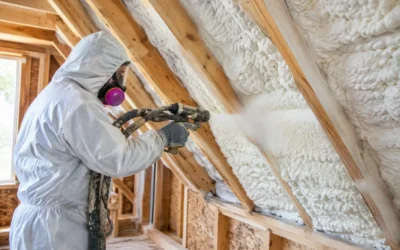
Spray polyurethane foam is made on site by combining two liquid components that react, expand, and harden in place. During application, those chemicals require careful handling. The installation crew must use appropriate personal protective equipment, control access to the work area, and follow the product manufacturer’s instructions for temperature, pressure, mixing, ventilation, and reoccupancy.
This is why spray foam is not a do-it-yourself substitute for canned sealant or batt insulation. A professional installation requires calibrated equipment and installers who can recognize whether the foam is expanding, adhering, and curing as intended. Foam sprayed at the wrong temperature, with poor substrate conditions, or at the wrong mix ratio may not deliver its expected R-value or air-sealing performance. In more serious cases, it can lead to odors, shrinkage, or the need for corrective work.
Before work begins, a qualified contractor should assess the area being insulated. That includes identifying existing moisture damage, roof leaks, combustion appliances, electrical concerns, and ventilation needs. Spray foam should not be used to cover an active leak or conceal a wet framing problem. The source of moisture needs to be corrected first, then the assembly can be insulated with a clear plan for drying and vapor control.
Choosing Open-Cell or Closed-Cell Foam
Safe, durable performance also depends on matching the foam type to the building assembly. Open-cell foam is lighter and more vapor-permeable. It can be an effective air barrier at the proper thickness and is often used in wall cavities and conditioned attic spaces where the assembly is designed to dry.
Closed-cell foam has a higher R-value per inch and a lower vapor permeability. It adds meaningful moisture resistance and can be particularly useful in areas with limited cavity depth, such as rim joists, basement walls, crawlspaces, and certain roof assemblies. Its density and performance can make it the right choice for challenging New England conditions, but it is not automatically the best choice for every project.
The trade-off matters. A wall, roof, or foundation assembly must be evaluated as a complete system, including exterior sheathing, interior finishes, climate exposure, and the home’s existing mechanical ventilation. Using more foam is not always the answer. Using the right insulation, at the right thickness, in the right location is what protects comfort and long-term durability.
Safe Installation Means Controlling the Work Area
During spraying and the initial curing period, occupants, pets, and unprotected trades should stay out of the work area. The installer should isolate the space as needed and provide mechanical ventilation according to the product requirements. Reoccupancy timing is product-specific, so homeowners should follow the contractor’s instructions rather than relying on a generic timeline found online.
For a typical project, preparation may involve covering finished surfaces, protecting mechanical equipment, and creating a clear access path for the crew. In an occupied home, the contractor should discuss whether family members need to leave for the day and which parts of the house will be off limits. On a remodeling site, coordination with electricians, plumbers, HVAC installers, and drywall crews prevents conflicts that can slow the schedule or compromise the insulation layer.
A professional crew also pays attention to substrate conditions. Foam must be installed on surfaces that are suitably clean, dry, and within the manufacturer’s temperature range. In a New Hampshire or Maine winter, that may require thoughtful scheduling or conditioning the work area. In a humid Massachusetts or Vermont summer, moisture control can be just as important. These details are not extras. They influence adhesion, consistency, and indoor-air-quality outcomes.
What a Homeowner Should Expect After Spraying
Once the foam has cured, it should appear consistent, firmly adhered, and free of unusual lingering odors. Minor trimming is normal when foam expands beyond framing faces. The finished work should not interfere with required electrical boxes, recessed-light clearances, access panels, or combustion-air provisions.
If you notice a persistent chemical odor after the stated reoccupancy period, visible foam pulling away from framing, or areas that look unusually dark, brittle, or soft, contact the installer promptly. These conditions do not automatically mean there is a serious issue, but they deserve a professional assessment. A dependable contractor should stand behind the installation and explain the next steps clearly.
Fire Protection Is Part of Spray Foam Safety
Spray foam insulation must be protected from fire exposure in many applications. Foam is not typically left exposed in occupied interior spaces. Building codes often require a 15-minute thermal barrier, commonly 1/2-inch gypsum board, between foam and occupied areas. This gives occupants more time to exit during a fire and helps limit heat exposure to the foam.
Some locations, such as attics or crawlspaces used only for service access, may qualify for an ignition barrier instead of a thermal barrier. The required protection depends on how the space is used, the foam product, and the applicable state and local code. This is one reason contractors and builders should avoid treating spray foam as a one-step installation. The insulation plan and finish plan need to work together before the job starts.
Code compliance also affects penetrations, clearances around heat-producing fixtures, and access to mechanical systems. For example, insulation cannot be installed against equipment or components that require a listed clearance. An experienced installer coordinates with the general contractor and follows approved details so the project is ready for inspection without expensive revisions.
Moisture, Ventilation, and Combustion Need a Whole-Home Plan
Air sealing is one of spray foam’s greatest benefits. By reducing uncontrolled air leakage, it can help eliminate drafts, stabilize room temperatures, and reduce heating and cooling loads. But a tighter house changes how air, moisture, and combustion gases move through the building.
Homes with atmospheric combustion appliances need particular attention. Furnaces, boilers, water heaters, and fireplaces may depend on surrounding air for combustion or draft. Tightening the building envelope without evaluating these appliances can create safety concerns. Testing and, when needed, upgrades to sealed-combustion equipment or dedicated combustion air should be part of the project discussion.
A tighter home may also benefit from planned mechanical ventilation. This does not mean every project needs the same equipment. The right approach depends on the home’s size, age, occupancy, HVAC system, and measured air leakage. Energy audits and blower-door testing can help identify where air sealing will deliver the greatest benefit and whether ventilation improvements should follow.
Moisture management is equally practical. Properly installed closed-cell foam can help control condensation risk on cold surfaces, while air sealing can reduce the amount of humid indoor air reaching vulnerable cavities. Yet foam cannot correct bulk-water intrusion from a damaged roof, missing flashing, foundation seepage, or plumbing leak. Address those building repairs first, then insulate the dry, stable assembly.
Questions to Ask Before Hiring a Spray Foam Contractor
A good proposal should make safety and performance visible, not vague. Ask what foam product will be used, whether it is open-cell or closed-cell, and why it fits your assembly. Confirm that the crew is trained for the product and that the project will follow manufacturer installation requirements.
You should also ask how the work area will be ventilated, when occupants can return, and what fire-protection layer will be required after installation. For builders and remodelers, clarify who is responsible for installing the thermal or ignition barrier and how the insulation detail aligns with plans and local inspection requirements.
Next-generation HFO spray foam can offer strong thermal performance with a lower global-warming-potential blowing agent than older formulations. That is a meaningful advancement, but it does not remove the need for careful installation, curing, and fire protection. Product technology matters. Workmanship and building-science judgment matter just as much.
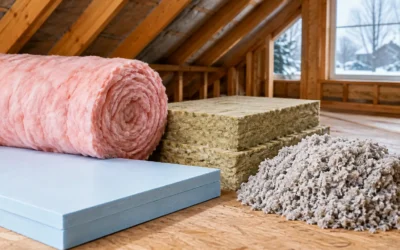
Colonial Insulation approaches spray foam as one part of a complete building-performance solution, alongside air sealing, energy audits, cellulose, fiberglass, and mineral wool. The best recommendation may be spray foam throughout a targeted area, or it may be a hybrid approach that manages budget, moisture, sound, fire protection, and R-value requirements more efficiently.
The safest insulation project is one that solves the actual problem without creating another one. When the home is assessed carefully, the foam is installed by trained professionals, and the finished assembly is protected and inspected correctly, you can move forward with greater comfort through every New England season.