
If snow disappears from your roof while the neighbors’ roofs stay white, heat from your house is probably reaching the roof deck. That heat usually comes from air leaks and thin insulation in the attic, and the sun can also be a factor. The pattern of melting tells you which. We are an insulation contractor that starts with a home energy audit, using blower door testing and thermal imaging, so the fix targets the real leak and not a guess.
TL;DR
- Snow that melts faster than your neighbors’ snow, or in patches, often means warm indoor air is leaking into the attic. Sun and above-freezing air can also melt snow on a well-built roof.
- Compare the north-facing, shaded side of your roof with the sunny side. Melting on the shaded side points to heat from inside.
- Air sealing the ceiling comes first, then insulation. Insulation on top of open leaks loses much of its value.
- Heating cables, chemicals and added roof vents do not fix the cause. Fixing the heat loss does.
- A blower door test with a thermal imaging scan finds where the heat escapes before any material goes in.
Table of Contents
- Why snow melts on a roof in the first place
- Why melting snow is not always a problem
- How to read your roof after a snowfall
- What is happening in your attic
- A worked example
- Why a diagnosis beats a guess
- Choosing the right insulation once the leaks are found
- Fixing the heat loss: what to do and what to skip
- Get the attic assessed
- FAQ
- Sources
Why snow melts on a roof in the first place
Snow sits on a roof as a blanket. It melts when something warms it from above or from below.
From above, the cause is sunshine or air that is warmer than freezing. Snow on south-facing slopes goes first, and that is normal. Snow can also stay put over unheated spaces such as carports and overhangs, according to Green Building Advisor’s guide to reading the roof for heat loss.
From below, the cause is heat from your living space. Warm air rises, slips through gaps in the ceiling and heats the underside of the roof deck. Cornell Cooperative Extension describes this as the stack effect. Warm air escapes through cracks around electrical boxes, attic access doors, plumbing vents and wires, and cold air is pulled in low in the house. The same page says air leakage can account for 40% of a typical home’s annual heating costs and is the primary cause of ice buildup at roof edges.
Building scientist John Straube lists the usual culprits in his ice dam digest: too little insulation or thermal bridging, air leaking into the space under the roof, heat sources in the roof such as poorly insulated ducts or hot-water piping, and uneven snow thickness combined with sun. He also notes that exposed shingles in sun can run about 70°F (40°C) above the air temperature.
The University of Minnesota’s building-science researchers boil it down to three core causes: inadequate attic insulation, poor air sealing between the house and the attic, and inadequate attic ventilation.
Why melting snow is not always a problem
A bare patch is a clue, not a verdict. Even a perfectly insulated and air-sealed roof loses snow to sun and mild air. The question is whether the melting follows the sun or follows the heat leaks in your house.
The snow itself also changes the picture. UMass Amherst’s Paul Fisette explains that ice dams need three things: snow, heat to melt it, and cold to refreeze the meltwater. On a poorly insulated, poorly air-sealed roof, as little as 1 to 2 inches of snow can be enough. Each inch of snow adds about R-0.5 to R-1 of insulation on top of the roof, which traps more indoor heat under the deck.
That is why melting is worth taking seriously. Meltwater runs down to the cold eave, refreezes and builds a ridge of ice. Michigan’s state guidance notes that heavy icicles along gutters or eaves may signal ice damming.
How to read your roof after a snowfall
Walk outside after a snowfall, once the sun has had a few hours, and look from the ground. Do not climb onto the roof.
Compare the shaded side with the sunny side
Snow on the north side, or in any area sheltered from the sun, should last longer than snow on the south side. Green Building Advisor’s Allison Bailes III uses exactly this comparison: look at the protected-from-sun areas to isolate interior heat loss from outside heat sources. If the shaded slope is bare while the sunny slope still has snow, something inside is heating the roof.
The same thinking applies to any insulated structure. How heat moves through a floor, wall or roof is the same physics, and a look at how an outdoor sauna floor is insulated shows how much a shaded, exposed surface reveals about heat flow.
Compare your roof with your neighbors’
If your snow lasts about as long as the snow on similar nearby houses, you are probably not losing a lot of heat through the roof. If yours goes first, and the houses have similar orientation, the difference is likely in your attic.
Look for the telltale shapes
- Stripes that follow the rafters: the roof is warmer where heat travels along framing, a pattern of thermal bridging.
- Bare spots over specific rooms or fixtures: recessed lights, bathroom fans, chimneys and ducts are common leak points.
- Melting concentrated high on the roof with icicles at the eaves: heat is being lost near the ridge and the water is refreezing at the cold edge.
- Melting over dormers or vaulted ceilings: these are hard areas to insulate and seal, so they often leak heat.
UMass Amherst adds that heat loss tends to be worst at the eave line. Rafters sit on the exterior walls there, which leaves only a shallow, low-R-value space for insulation, and builders often skip air sealing at that point.
What is happening in your attic
Once the roof suggests a problem, the attic confirms it. This is the part that matters most for the next decision: do you need more insulation, air sealing, or both?
Insulation depth
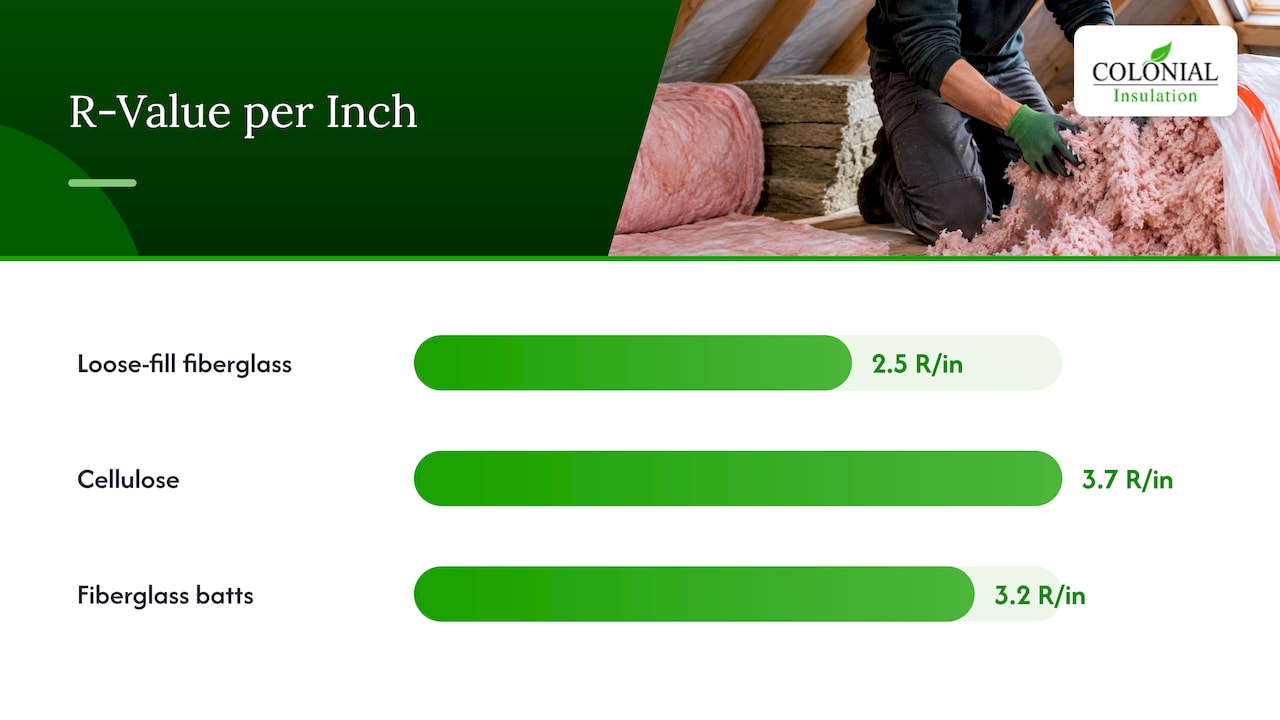
ENERGY STAR’s attic inspection guide says that if insulation is level with or below the attic floor joists, you probably need more. It gives per-inch R-values: loose-fill fiberglass 2.5, cellulose 3.7 and fiberglass batts 3.2. For uninsulated attics in climate zones 5 through 8, which covers New Hampshire and most of New England, it recommends R-49 to R-60. Where 3 to 4 inches already exist, it suggests adding R-38 to R-49.
Cornell’s attic guide says the Department of Energy recommends R-49 ceiling insulation, about 15 inches of cellulose or 27 inches of fiberglass, and that few attics reach it.
Signs of air movement
A rural electric cooperative’s pamphlet on air leaks and ice dams lists the signs: wet or dirty insulation, dust build-up underneath, water staining, frost on roofing nails and frost patches on top of the insulation on cold days. The Department of Energy’s Building America program adds that dirty insulation in the attic shows air has been flowing through it.
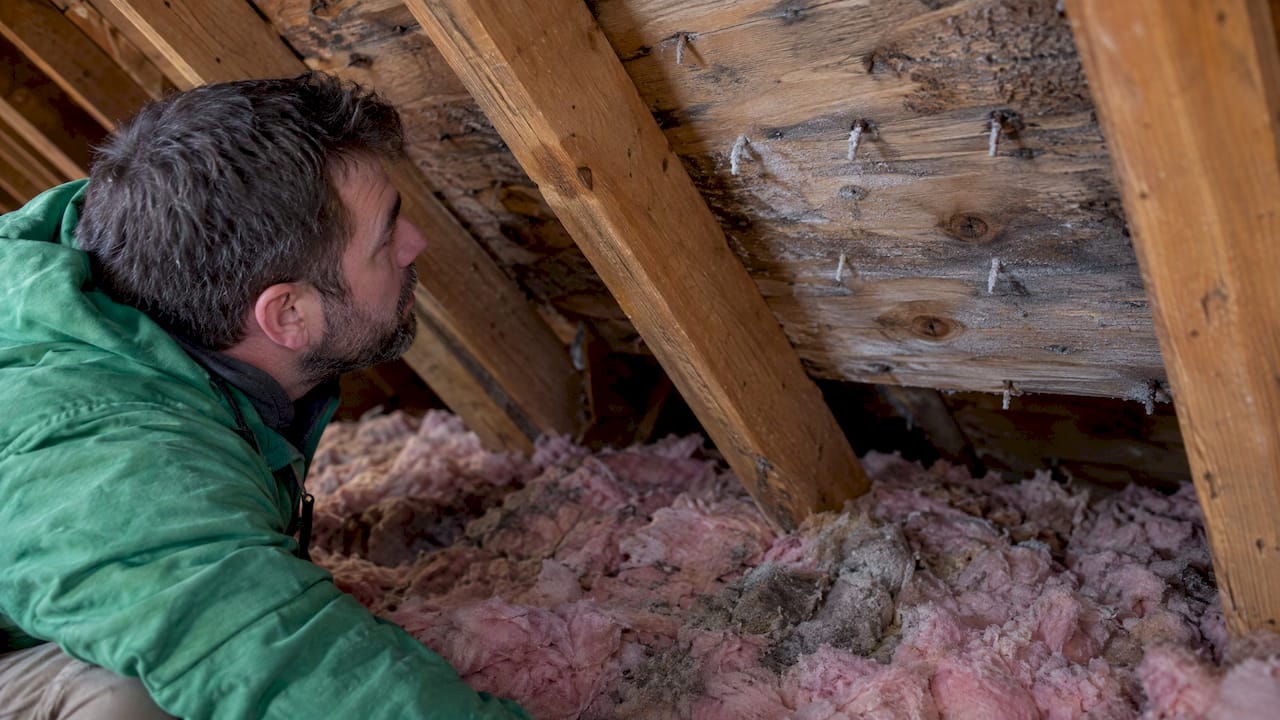
One safety point: if the attic holds loose, pebble-like vermiculite insulation, do not disturb it. The same pamphlet warns that it can contain asbestos. Call a qualified asbestos professional before anyone works around it.
Why air sealing comes before insulation
This is the step most homeowners get wrong. Adding insulation on top of open gaps feels like progress and does little. Cornell Cooperative Extension states that air moving through most insulation products can cut the manufacturer’s stated R-value by as much as 60%, so insulating an attic has little effect on heat loss until the leaks are found and sealed.
The Department of Energy’s insulation guide makes the same point: money spent on insulation is wasted if holes and gaps are not sealed first. The Pacific Northwest National Laboratory’s ice dam guidance lists three countermeasures: fully air-seal the ceiling plane, thoroughly insulate the attic (R-60 or more in climate zones 5 and up), and ventilate the roof. It calls air sealing the most important step.
Typical leak points named in the Minnesota Department of Commerce’s Home Energy Guide include:
- Attic hatches that are not weather-stripped or insulated
- Gaps around wires, pipes and ducts
- Recessed lights
- Chimney and flue gaps
- Knee-wall storage drawers
Our guides on sealing attic hatch gaps and reducing attic air leaks in New England walk through what these leaks look like in older homes.
Ventilation: more is not better
Homeowners often hear that more roof vents will cure ice dams. The Minnesota guide says adding roof vents, including powered ones, will not eliminate ice dams and often makes problems worse. The Department of Energy does not recommend powered roof fans: they use more energy than they save, increase the stack effect and can cause backdrafting of fireplaces and unsealed appliances. Its rule of thumb for passive venting is 1 square foot of net vent opening per 150 square feet of insulated ceiling, with continuous ridge and soffit vents working best.
A worked example
Take a 1950s Cape in the Monadnock Region with 4 inches of loose-fill fiberglass between the joists, an uninsulated attic hatch and four recessed lights in the upstairs ceiling. After a 4-inch snowfall, the north slope over the bedrooms is bare by the next afternoon while the neighbors’ roofs are still covered.
Four inches of fiberglass at R-2.5 per inch is about R-10, far below the R-49 to R-60 ENERGY STAR recommends for this climate zone. The hatch and the lights are open paths for warm air. Snow melts from below, runs to the eave and refreezes.
The order of repair matters. Seal the hatch, lights and penetrations first, then bring the attic to the recommended depth. Insulation alone would leave warm air moving through it and give back only part of its rated value.
Why a diagnosis beats a guess
You can learn a lot from the ground and the attic floor. What you cannot see is air moving through wall cavities, around chimney chases and behind knee walls. That is where a test helps.
The Department of Energy explains that a blower door uses a calibrated fan in an exterior door frame to depressurize the house, so outside air flows in through every unsealed crack. An infrared camera used during the test shows temperature differences that reveal leaks, insulation gaps and overheating circuits. Minnesota’s guide says a good home energy assessment should include a blower door test, infrared scans of walls, attic and foundation, combustion appliance testing and a visual inspection.
This is the diagnostic we use. Our audit uses blower door testing and thermal imaging to find air leaks and heat loss before recommending a fix. For a closer look at what the process finds, see how energy audits reveal hidden home problems and what a home energy audit for insulation finds.
Choosing the right insulation once the leaks are found
The material depends on the attic and on what the audit shows.
- Blown-in cellulose fills an open attic floor evenly and delivers 3.7 R-value per inch by ENERGY STAR’s figures. See our cellulose insulation page and the benefits of cellulose for New England homes.
- Spray foam suits roof lines, rim areas, awkward framing and spots where air sealing and insulation need to happen in one pass. Our spray foam insulation page covers open-cell, closed-cell and HFO options, and spray foam versus cellulose compares them.
- Mineral wool and fiberglass are available for batt applications and walls. See mineral wool insulation.
For a cold-climate approach to the attic as a whole, read our guide to attic insulation for cold climates.
Fixing the heat loss: what to do and what to skip
If you already have ice at the eaves, the order of operations is practical.
- Deal with the immediate leak safely. The University of Minnesota Extension’s ice dam guidance says to remove roof snow, though a roof rake can damage roofing. In an emergency with water coming into the house, hosing the dam with tap water on a warm day, working upward from the lower edge, can open temporary drainage channels that stop working within days. It warns that working on a winter roof or from below risks injury and advises contacting professionals.
- Let interior damage dry before repairing it. The same source advises waiting until ceilings and walls are dry, while also fixing the heat loss.
- Fix the cause. Make the ceiling airtight, then add insulation. UMN Extension names air leakage through ceiling penetrations such as light fixtures as, in many homes, the major path for heat reaching the roof.
The Minnesota Home Energy Guide’s list of what not to do is short: heating cables shorten roof life and cost money, and chippers, chemicals or heat to remove ice can damage shingles and gutters. These treat the symptom and leave the heat source in place.
Two cautions apply once the work is done. First, the snow that no longer melts away adds load. UMN Extension specialists note that homes built to current codes should handle it, and that a professional engineer can evaluate older structures. Second, tightening a house means combustion and exhaust appliances must still get enough air to operate safely. Have your furnace, boiler or wood stove checked by a qualified heating technician after air sealing, and see a licensed engineer if you have concerns about an older roof’s load capacity.
Our pages on preventing ice dams in New England homes, the lack-of-insulation cause and ice dam prevention examples show how this plays out in local houses.
Get the attic assessed
Colonial Insulation is a residential and commercial insulation contractor based in Rindge, New Hampshire, serving homeowners across New Hampshire, Massachusetts, southern Maine and Vermont. We install spray foam, blown-in cellulose, mineral wool and fiberglass in attics, walls, basements and crawl spaces, and our home energy audits use blower door testing and thermal imaging to locate leaks and heat loss before we recommend anything.

As an NHSaves contractor, we help New Hampshire homeowners access available energy efficiency rebates, and financing is available. If your snow is melting where it should not, start with our attic insulation services page or contact us through colonialinsulation.com.
FAQ
Does snow melting on my roof mean I have no insulation?
Not necessarily. Sun and above-freezing air melt snow on any roof. Compare the shaded north side with the sunny side and with your neighbors’ roofs. If the shaded side melts first, indoor heat is the likelier cause, and the attic needs an air leak check and an insulation depth check.
How much attic insulation do I need in New England?
ENERGY STAR recommends R-49 to R-60 for an uninsulated attic in climate zones 5 through 8, or R-38 to R-49 added where 3 to 4 inches already exist. Pacific Northwest National Laboratory recommends R-60 or more for vented attics in climate zone 5 and colder. Air sealing the ceiling first lets that insulation perform as rated.
Will more roof vents or heating cables stop snow from melting and refreezing?
No. The Minnesota Home Energy Guide says added roof vents will not eliminate ice dams and often make problems worse, and that heating cables shorten roof life and cost money. Sealing air leaks and bringing insulation up to target address the heat that causes the melting.
Should I knock the ice off the roof myself?
It is risky. Chipping ice or using chemicals can damage shingles and gutters, and working on a winter roof or from below risks injury. If water is entering the house, contact a roofing professional, and then deal with the heat loss that caused the dam.
Sources
- Reading the Roof for Heat Loss, Green Building Advisor
- Why Does My House Lose Heat?, Cornell Cooperative Extension
- BSD-135: Ice Dams, buildingscience.com
- Ice Dam Symptoms and Solutions for a Cold-Climate Roof, University of Minnesota
- Preventing Ice Dams, UMass Amherst
- Preventing Roof Ice Dams, State of Michigan
- DIY Checks and Inspections, ENERGY STAR
- Causes and Cures of Attic Condensation and Roof Ice Damming, Cornell University
- Air Leaks and Ice Dams, RSCPA
- Building America Best Practices Vol. 10, U.S. Department of Energy
- Building America Best Practices Vol. 12, U.S. Department of Energy
- Construct Roofs and Attics for Ice Dam Prevention, PNNL
- Home Energy Guide, Minnesota Department of Commerce
- Dealing with and Preventing Ice Dams, UMN Extension