
A good insulation contractor in New Hampshire measures your house before selling you a product, carries verified insurance, can show training in building-science work, and puts the scope, exclusions and rebate help in writing. The state will not vet any of that for you, so the choice is yours. At Colonial Insulation, based in Rindge, we start with a home energy audit that uses blower door testing and thermal imaging, because the right insulation depends on where your house actually leaks.
TL;DR
- New Hampshire has no state trade license for insulation and air sealing, so credentials, insurance and references are what you check.
- Ask for a certificate of liability insurance from the insurer or agent. Workers’ compensation is required by law for contractors with employees.
- Choose a contractor who tests first (blower door, thermal imaging) and who agrees to air seal before insulating.
- Compare written estimates on scope, inclusions, exclusions, cleanup and rebate paperwork, not just the bottom line.
- NHSaves incentives depend on your utility and often need approval before work starts, so ask about them before you sign.
Table of Contents
- Why New Hampshire homeowners have to vet insulation contractors themselves
- Step 1: Check training and credentials
- Step 2: Verify insurance the right way
- Step 3: Pick a contractor who tests before they recommend
- Step 4: Ask whether they air seal first
- Step 5: Match the material to the space
- Step 6: Read the estimate like a pro
- Step 7: Ask about rebates before you sign
- Red flags that should end the conversation
- What a good hire looks like in practice
- Start with an audit
- FAQ
- Sources
Why New Hampshire homeowners have to vet insulation contractors themselves
In many trades you can look up a license and see the complaint history. Insulation in New Hampshire does not work that way. The state’s NH HEAR Qualified Contractor Credential Checklist states that there is no state trade license for insulation and air sealing work. The New Hampshire Insurance Department likewise notes that general contractors do not need a state license.
That leaves four things you can judge: training, insurance, method and paperwork. Each is easy to check once you know what to look for. Insulation also hides behind drywall and under attic floors. A poor job can sit unnoticed for years while you pay for heat that escapes. ENERGY STAR notes that insulation performance depends heavily on installation quality, which is why the installer matters as much as the material, per its guidance on choosing insulation.
Step 1: Check training and credentials
Because there is no license, look for training that shows the crew understands how air, heat and moisture move through a house. The NH HEAR checklist lists the credentials New Hampshire’s program accepts for insulation and air sealing work:
- BPI Air Leakage Control Installer
- BPI Retrofit Installer Technician
- At least 10 DOE Single Family Retrofit Installer Badges
- A three-day Weatherization Installer Fundamentals training
- A BPI Building Science Principles certificate
BPI is the Building Performance Institute, a national body that certifies home performance professionals. ENERGY STAR’s attic insulation guide says a good contractor is trained and certified, and it points to ENERGY STAR Home Upgrade service providers, BPI pre-screened contractors and manufacturer-certified installers as directories to start from.
Ask who will actually be in your attic or crawl space. A company can hold a credential on paper while the crew on your job has never been trained. Ask how long the installers have been doing this type of work and what training they have had.
Step 2: Verify insurance the right way
A business card or a verbal “yes, we’re insured” is not verification. The New Hampshire Insurance Department’s contractor insurance guide lays out what to do:
- Request a certificate of liability insurance sent directly from the insurer or agent, not a copy the contractor hands you.
- Confirm the policy is active by contacting the insurer or agent.
- Use the state’s free workers’ compensation verification system.
The department says most contractors should carry commercial general liability insurance that includes “products and completed operations” coverage, with a commonly recommended minimum of $1,000,000 per occurrence and $2,000,000 aggregate. It also says contractors with one or more employees must carry workers’ compensation under New Hampshire law. If an uninsured worker is hurt on your property, that can become your problem. Spray foam, blown-in material and attic work all involve ladders, tight spaces and equipment, so this check is not a formality.
The U.S. Department of Energy’s homeowner guide to retrofits adds a few more checks: ask about installers’ training and experience, request local references, and look up the company with the Better Business Bureau. Colonial Insulation is BBB A+ accredited and a member of the New Hampshire Home Builders Association, the kind of standing that is easy to confirm.
Step 3: Pick a contractor who tests before they recommend
This is where good and mediocre contractors split. A mediocre one walks the attic, quotes a depth of material and leaves. A good one measures how the whole house performs.
The Department of Energy’s Pacific Northwest National Laboratory (PNNL) describes what a thorough assessment can include in its air sealing guide: measuring the house, blower door and duct pressure tests, infrared cameras, combustion safety testing, and a cost-benefit analysis. A blower door is a calibrated fan mounted in an exterior doorway. It pulls the house under pressure so the contractor can quantify how much air the building leaks and find where it comes in. Thermal imaging shows missing or compressed insulation and cold spots you cannot see.
The same guide stresses two points worth holding a contractor to:
- The conversation about your comfort problems and energy bills is described as perhaps the most important part of the audit. Cold rooms, ice dams and drafty floors tell the contractor where to look.
- Combustion safety issues must be resolved before air sealing begins. Sealing a house with an unsafe combustion system can create carbon monoxide hazards, and dry rot or moisture problems need repair first.
After the audit, PNNL says a home performance contractor should provide a detailed proposal within about a week, with a prioritized list of measures, packaged options and cost estimates. That is a reasonable standard to expect.
This is how we work. Our home energy audits use blower door testing and thermal imaging to find air leaks and heat loss before we recommend a fix, so the proposal follows what the house needs. If you want to see what that looks like in practice, our page on what a home energy audit for insulation finds walks through it.
Step 4: Ask whether they air seal first
Insulation slows heat flow through a material. It does not stop air moving through gaps, and in older New England homes the gaps around chimneys, wiring, plumbing and attic hatches are often large. ENERGY STAR’s attic guidance says to confirm that the contractor agrees to seal attic holes and gaps before adding insulation, and it advises calling another contractor if they will not. That is a clear, simple test you can run on the first phone call.
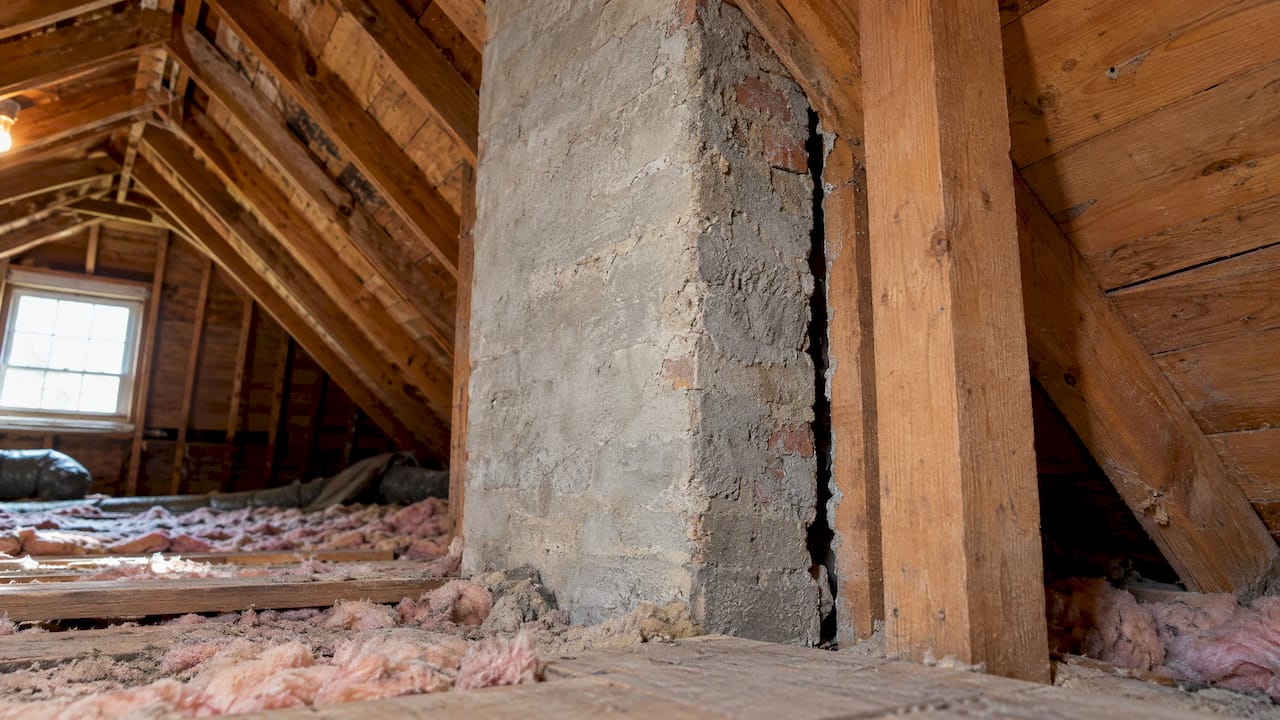
It also matters because of what insulation covers. Dropping new material over unsealed gaps hides the leaks and makes them harder to fix later. Our air sealing contractor checklist goes deeper on what to look for.
Step 5: Match the material to the space
A contractor who sells only one product will recommend that product for every house. A good one explains why a material suits each space. ENERGY STAR’s insulation type guide sums up the common pairings:
| Material | Where it typically goes |
|---|---|
| Batts and rolls | Unfinished walls, floors and ceilings |
| Loose-fill (blown-in) | Wall cavities and unfinished attic floors |
| Sprayed foam | Wall cavities and unfinished attic floors or ceilings, installed by a certified installer |
| Rigid board | Exterior continuous insulation and below-grade foundation walls |
Timing matters too. The Department of Energy’s Building America insulation guide says attic insulation is easy and cost-effective to add at any time, while a roof replacement is the ideal moment for air sealing and exterior rigid insulation. Replacing siding or drywall is the best time to insulate walls, and an unfinished basement can be insulated at any time as long as moisture and ventilation are addressed.
That last point is critical in New Hampshire, where basements and crawl spaces are often damp. The Insulation Institute says to verify that basement walls are dry and not leaking ground moisture before insulating them. A contractor who can deal with both the water and the insulation saves you from hiring two crews. We install spray foam, blown-in cellulose, mineral wool and fiberglass, and we also offer basement water sealing and encapsulation and crawl space and basement insulation.
If you are weighing products, these pages cover the trade-offs for New England homes: spray foam versus cellulose, cellulose versus fiberglass and our attic insulation service page.
More is not always better
A contractor should be able to explain how they arrived at the R-value they recommend. R-value measures resistance to heat flow, and a higher number means more resistance. Energy Trust, a nonprofit energy efficiency organization, warns on its insulation bid guide that some materials lose effectiveness when compressed in tight spaces, that excess insulation can restrict moisture pathways where ventilation is needed, and that going beyond code levels can reduce the return on your investment. Ask how the number was chosen and expect an answer tied to your house’s measurements.
Step 6: Read the estimate like a pro
Get estimates from several contractors, as ENERGY STAR advises, and compare scope before price. Energy Trust explains that a bid’s inclusions are the work promised for the quoted amount, and that exclusions can include removing existing insulation, siding repair, or insulating ducts and pipes. A low bid that leaves out old insulation removal is not low at all.
A useful written estimate states:
- Which areas will be treated, such as the attic floor, rim joists, knee walls or crawl space
- The material, the R-value target and the installed depth or thickness
- What air sealing is included and where
- What is excluded, including removal of old material and repairs
- Cleanup and who handles it
- Any rebate or incentive paperwork the contractor will manage
- Payment terms and financing, if you plan to use it
The Department of Energy cautions that a low-cost bid may reflect lesser products or untrained or inexperienced workers. It also recommends asking for references from jobs completed at least a year ago, since some problems take time to show up. Ask those past customers whether the house is more comfortable, whether the crew left it clean, and whether the final bill matched the estimate.
For more on weighing options, see our guide to choosing an insulation contractor as a builder, which covers the scheduling and code side that general contractors care about.
Step 7: Ask about rebates before you sign
New Hampshire utilities offer energy efficiency programs under the NHSaves name. NHSaves is a shared brand across several utilities, so the program that applies to you, with its own forms, amounts and rules, depends on who provides your electricity or gas. Pre-approval is often required before work starts, and incentives claimed after the fact may not be accepted. Program details and income-based options change, so confirm them on the NHSaves and utility pages and with your contractor at the audit stage.
That is a good reason to choose a contractor who works inside the program. Colonial Insulation is an NHSaves contractor and helps New Hampshire homeowners access available energy efficiency rebates, and financing is available for insulation projects. Those two facts are worth bringing up early, since the order of audit, approval and installation can affect what you qualify for. If you are comparing how energy upgrades and financing connect, this piece on energy efficiency as a financing lever shows how the two interact.
Federal rules for home energy rebates have also been shifting, and state programs roll out on their own timelines. Treat any rebate figure you read online as a starting point and confirm it with the program or your contractor before you plan around it.
Red flags that should end the conversation
- The contractor quotes by phone or by a quick look, with no measurement and no testing.
- Insurance “is on file” but no certificate comes from the insurer or agent.
- They will not agree to air seal before insulating.
- The estimate is a single line with a total and no scope or exclusions.
- Pressure to sign today, or a price that is far below every other bid.
- No local references, or none from jobs more than a year old.
- A single product recommended for every space in the house.
What a good hire looks like in practice
Imagine a 1950s Cape in the Monadnock Region with a cold upstairs and ice dams every February. A good contractor listens to those complaints, runs a blower door test, uses thermal imaging to find the missing insulation and the leaks at the attic hatch and chimney chase, and checks the heating system for combustion safety. The proposal then lists priorities in order: air sealing first, then attic insulation to a stated R-value, then the basement rim joists. Each line has a price, and the exclusions are stated.
That is the process we follow at Colonial Insulation across New Hampshire, southern Maine, Vermont and north-central Massachusetts, from Keene, Peterborough and Jaffrey to Nashua, Manchester and Fitchburg. You can see our local pages for Keene and Henniker, or our overview of insulation in New Hampshire.
Start with an audit
If you want a contractor who measures first, explains the reasoning and helps with NHSaves rebates and financing, begin with a home energy audit from Colonial Insulation. We use blower door testing and thermal imaging to find air leaks and heat loss, then recommend the fix that fits your house, whether that is spray foam, cellulose, mineral wool or fiberglass.

Builders and remodelers can reach us for new construction and renovation work too, and our New Hampshire energy code guide explains what the code expects.
FAQ
Does New Hampshire require insulation contractors to be licensed?
No. The state has no trade license for insulation and air sealing work. That makes training credentials, verified insurance, references and a written scope your best tools for judging a contractor.
How do I confirm a contractor is insured?
Request a certificate of liability insurance sent from the insurer or agent, then contact them to confirm the policy is active. The New Hampshire Insurance Department also offers a free workers’ compensation verification system, and contractors with employees must carry that coverage.
Should I get more than one estimate?
Yes. ENERGY STAR recommends comparing several estimates for cost and scope of work. Line up what each one includes and excludes, such as air sealing, old insulation removal and cleanup, so you are comparing the same job.
Is the cheapest bid a good deal?
Only if the scope matches. The Department of Energy notes that low bids can reflect lesser products or less experienced workers. Check what is left out of the estimate and ask for references from jobs at least a year old.
Can I get rebates for insulation in New Hampshire?
NHSaves utility programs offer incentives for insulation and weatherization, and the details depend on your utility. Pre-approval may be required before work starts, so raise rebates at the audit stage and ask your contractor to walk you through the current program.
Sources
- New Hampshire Insurance Department: How to Verify If Your Contractor Has the Right Insurance
- ENERGY STAR: Well-Insulated and Sealed Attic
- ENERGY STAR: Choosing the Appropriate Insulation Type
- NH HEAR Qualified Contractor Credential Checklist
- PNNL Building America Best Practices: Retrofit Air Sealing
- DOE: Retrofit Best Practices homeowner guide
- DOE Building America Insulation Guide
- Insulation Institute: Where to Insulate
- Energy Trust: How to read insulation bids