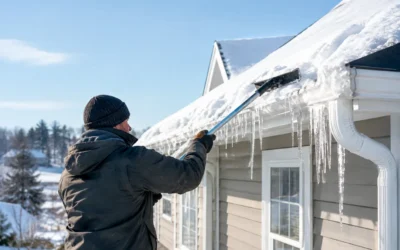

A thick ridge of ice along the eaves may look like a normal New England winter problem, but it can force melting water beneath shingles, wet insulation, stain ceilings, and damage walls. To prevent ice dams, the goal is not simply to remove snow from the roof. It is to keep the roof deck consistently cold by stopping heat from leaking out of the living space below.
That distinction matters in New Hampshire, Massachusetts, Maine, and Vermont, where long cold spells, heavy snow loads, and frequent freeze-thaw cycles put roofs under real pressure. The right solution addresses the building envelope: air leaks, insulation gaps, attic ventilation, and roof details all need to work together.
Why Ice Dams Form
Ice dams begin when heat escapes into the attic or roof assembly. Snow sitting over the warmed portion of the roof melts, and the meltwater runs downward toward the overhang. Because the eaves extend beyond the heated part of the home, they remain colder. Water refreezes there, creating a ridge of ice that blocks additional meltwater.
Once water has nowhere to go, it can back up beneath shingles and roof underlayment. The resulting leak may not show up immediately. By the time a homeowner notices a brown ceiling mark, peeling paint, or wet drywall, moisture may already have affected framing, insulation, and interior finishes.
A roof can have plenty of snow and no ice dam at all if the roof surface stays cold and even. Conversely, a newer roof can develop severe dams when the attic floor is poorly air-sealed, insulation is compressed or incomplete, or warm air is reaching the roof through recessed lights, plumbing penetrations, attic hatches, and wall cavities.
The Best Way to Prevent Ice Dams Starts Below the Roof
Roof rakes, heat cables, and emergency snow removal can reduce immediate risk in certain situations. They do not correct the source of the problem. Lasting ice-dam prevention begins in the attic and at the ceiling plane below it.
Air-seal the attic floor first
Air leakage is often the hidden driver of ice dams. Warm indoor air rises and finds openings around wiring, ducts, chimneys, exhaust fans, top plates, and attic access points. Even small gaps can move a surprising amount of warm, moisture-laden air into an attic during a New England winter.
Professional air sealing closes these pathways before new insulation is added. This is critical because insulation slows heat transfer but does not reliably stop moving air. If loose-fill insulation is installed over unsealed openings, warm air can still pass through it and warm the roof deck.
Common attic air-sealing locations include penetrations for electrical boxes and plumbing stacks, gaps around vent pipes, open wall cavities, duct chases, and the perimeter of an attic hatch. Recessed lights require special attention. Older non-IC-rated fixtures may need clearance from insulation for fire safety, while air-tight, insulation-contact-rated fixtures can be detailed differently.
Add enough insulation, evenly installed
After air sealing, the attic needs enough insulation to resist heat loss across the entire ceiling area. The required R-value depends on the building, existing materials, available depth, and applicable state or local code, but northern New England homes commonly need a deep, continuous layer in the attic.
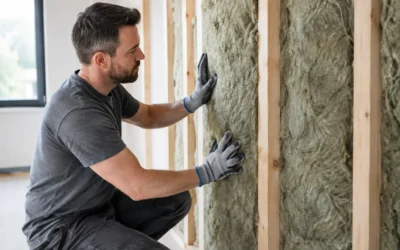
Blown cellulose is often an effective choice for open attics because it fills around framing and creates consistent coverage over large areas. Fiberglass can also perform well when installed to the proper depth without gaps, voids, or compression. Mineral wool offers strong thermal and fire-resistant qualities in specific assemblies. The best material depends on the roof structure, moisture conditions, budget, and project goals.
Consistency is just as important as the nominal R-value. An attic with high insulation levels in the center but thin coverage at the exterior walls can still lose heat where ice dams commonly form. Properly installed insulation extends to the eaves while preserving the ventilation channel needed above it.
Protect the attic hatch and knee walls
An uninsulated, unsealed attic hatch can act like an open window in the ceiling. It should be weatherstripped and insulated so it does not become a concentrated source of heat loss. Pull-down stairs need a sealed, insulated cover box rather than a loose piece of batt insulation laid on top.
Cape-style homes and finished attic spaces often have knee walls that separate conditioned rooms from unconditioned side attics. These areas are frequent trouble spots. Knee walls need a continuous air barrier and insulation on the correct side of the assembly. Without that detail, warm air can flow behind the wall and directly into the roof area.
Use Attic Ventilation Correctly
Ventilation helps remove moisture and keeps a cold attic cold, but it is not a substitute for air sealing and insulation. Adding more roof vents to an attic that is leaking warm house air can make the symptoms harder to predict without solving the underlying heat loss.
A vented attic generally needs a clear air path from intake vents near the soffits to exhaust vents near the ridge or high on the roof. Vent baffles maintain that channel where insulation meets the eaves. They also keep blown insulation from blocking soffit openings.
Balanced intake and exhaust matter. Ridge vents without adequate soffit intake may not perform as intended, while powered attic fans can sometimes pull conditioned air from the house through leaks. Each roof should be evaluated as a system rather than fitted with a one-size-fits-all ventilation product.
Cathedral ceilings, low-slope roofs, and homes with complex additions require even more care. There may not be enough space for a conventional vent channel above insulation. In those cases, a properly designed unvented roof assembly using closed-cell spray foam or another code-compliant approach may be appropriate. HFO spray foam can provide high R-value in limited space while helping control air movement, but it must be specified for the assembly and installed by trained professionals.
Address Moisture and Air Quality at the Same Time
Ice dams are primarily a heat-loss issue, but moisture is part of the story. Warm indoor air carries water vapor. When that air leaks into a cold attic, it can condense on roof sheathing, fasteners, and framing. Frost buildup may appear harmless until a warmer day causes it to melt and soak the insulation below.
Bathroom and kitchen exhaust fans should vent outdoors, not into the attic. Ducts should be insulated and properly connected so humid air does not escape at a joint. Homes that have been tightened through air sealing should also have appropriate mechanical ventilation planning, particularly when combustion appliances, high occupancy, or indoor humidity concerns are present.
A building-performance assessment can identify whether the problem is attic bypasses, inadequate insulation, poor ventilation, excess indoor humidity, or a combination of these conditions. This helps avoid spending money on a roof-side fix when the real issue is within the thermal boundary.
What Homeowners Can Do During an Active Ice-Dam Event
If an ice dam is already forming, safety comes first. Avoid climbing onto an icy roof or attacking the dam with a hammer, shovel, or sharp tool. Those methods can damage shingles and create unsafe conditions.
A roof rake used from the ground can remove snow from the lower portion of the roof and reduce the amount of meltwater reaching the eaves. Use it carefully to avoid scraping roofing materials. For a large dam, visible interior leakage, or a steep and difficult roofline, a qualified roof professional can use appropriate removal methods, including controlled steam techniques.
Heat cables may offer temporary protection at known problem areas, but they consume electricity and leave the heat-loss cause in place. They are best viewed as a short-term risk-management measure, not a replacement for correcting attic conditions.
If water enters the home, move belongings away from the affected area and document the damage. Then have the roof leak and the insulation system evaluated. Wet insulation loses performance and can hold moisture against wood framing, so it should not be ignored once spring arrives.
Plan Ice-Dam Prevention Before Winter
The best time to assess an attic is before the first major snowfall, when access is easier and roof conditions are safer. Look for uneven snow melt, frosty roof nails, cold rooms beneath the attic, drafts around ceiling fixtures, and insulation that is thin, disturbed, or visibly uneven. High heating bills can be another clue that the home is losing heat through the top of the building.
For renovation and new-construction projects, ice-dam prevention should be included in the insulation and air-sealing scope from the start. Builders and remodelers benefit from clear sequencing: complete air sealing, verify required details, install insulation to the intended R-value, and protect ventilation pathways before close-in. This supports dependable inspections and helps prevent costly callbacks after the first hard winter.
Colonial Insulation evaluates the full attic and roof system, then recommends insulation, air sealing, and ventilation details that fit the home rather than a quick surface-level fix. A well-detailed attic lets snow remain snow until the weather is ready to melt it – which is exactly what a New England roof should do.