
Most homeowners pay about $2,500 to insulate an attic, with a typical range of $1,500 to $3,500, according to Bob Vila’s cost breakdown of Angi and HomeAdvisor data. Per square foot, installed prices run from about $1 to $7 depending on the material, the R-value you need and what is already in the attic. The price on your quote depends less on the national average than on three things: how much insulation your climate calls for, whether old material has to come out first, and what the quote actually includes. This guide shows you how to work out each one.
If you own an older New England home, those three answers decide the job. We install attic insulation across New Hampshire, Massachusetts, southern Maine and Vermont, and the sections below follow the same order we use when we price a house.
TL;DR
- Typical installed cost is $1.50 to $5.00 per square foot, or roughly $1,700 to $3,500 for a straightforward attic, per InsulationHelper’s 2026 guide.
- Blown fiberglass and cellulose are the lowest-cost options for an attic floor. Open-cell and closed-cell spray foam cost more per square foot and are used mostly on the roof deck.
- Removal adds roughly $1.00 to $2.00 per square foot, and contamination (mold, rodents, asbestos) can add much more.
- Cold climates need more material. The Department of Energy recommends R-49 to R-60 for an uninsulated attic in climate zones 4 to 8.
- A good quote states material, installed depth, R-value, air sealing, removal and cleanup in writing.
Table of Contents
- What attic insulation costs per square foot
- Cost by insulation material
- How much insulation your attic needs
- Attic insulation removal and replacement cost
- What affects your price
- How to read an attic insulation quote
- Why an energy audit comes before the quote
- Rebates and financing
- Get an attic insulation price for your home
- FAQ
- Sources
What attic insulation costs per square foot
The national averages from different sources overlap closely, which is useful. The Spruce reports an average of about $2,500, at roughly $1.00 to $4.50 per square foot installed. Labor alone averages $1.50 to $3.00 per square foot there. Bob Vila’s range is wider, $1 to $7 per square foot, because it includes premium materials.
Turn those into whole-attic numbers using the Spruce figures:
| Attic floor area | Typical installed cost |
|---|---|
| 1,000 sq ft | $1,000 to $4,500 |
| 2,000 sq ft | $2,000 to $9,000 |
Geography matters too. A 2026 state comparison from UseCalcPro puts the Northeast at $2,700 to $3,300 per project, against $1,500 to $2,000 in the South. Colder regions need a higher R-value, and that means more material.
Treat these as published figures for their year, not a quote. Material prices move: Owens Corning announced a 6% increase on U.S. fiberglass batts, rolls and loose-fill from June 15, 2026, and that kind of change flows into installed prices.
Cost by insulation material
Material is the biggest lever you control. HomeEnergyDecisions’ 2026 table gives installed costs per square foot:
| Material | Installed cost per sq ft | R-value per inch |
|---|---|---|
| Blown fiberglass | $1.50 to $2.50 | R-2.5 to R-3.5 |
| Blown cellulose | $1.50 to $3.00 | R-3.2 to R-3.8 |
| Fiberglass batts | $1.50 to $3.50 | about R-3 |
| Mineral wool batts | $2.50 to $4.50 | about R-3.7 |
| Open-cell spray foam | $3.00 to $5.00 | about R-3.5 to R-3.9 |
| Closed-cell spray foam | $5.00 to $8.00 | about R-6 to R-7 |
The R-values for batts and mineral wool are typical manufacturer-range figures, so confirm the exact number on your quote.
Blown-in cellulose and fiberglass
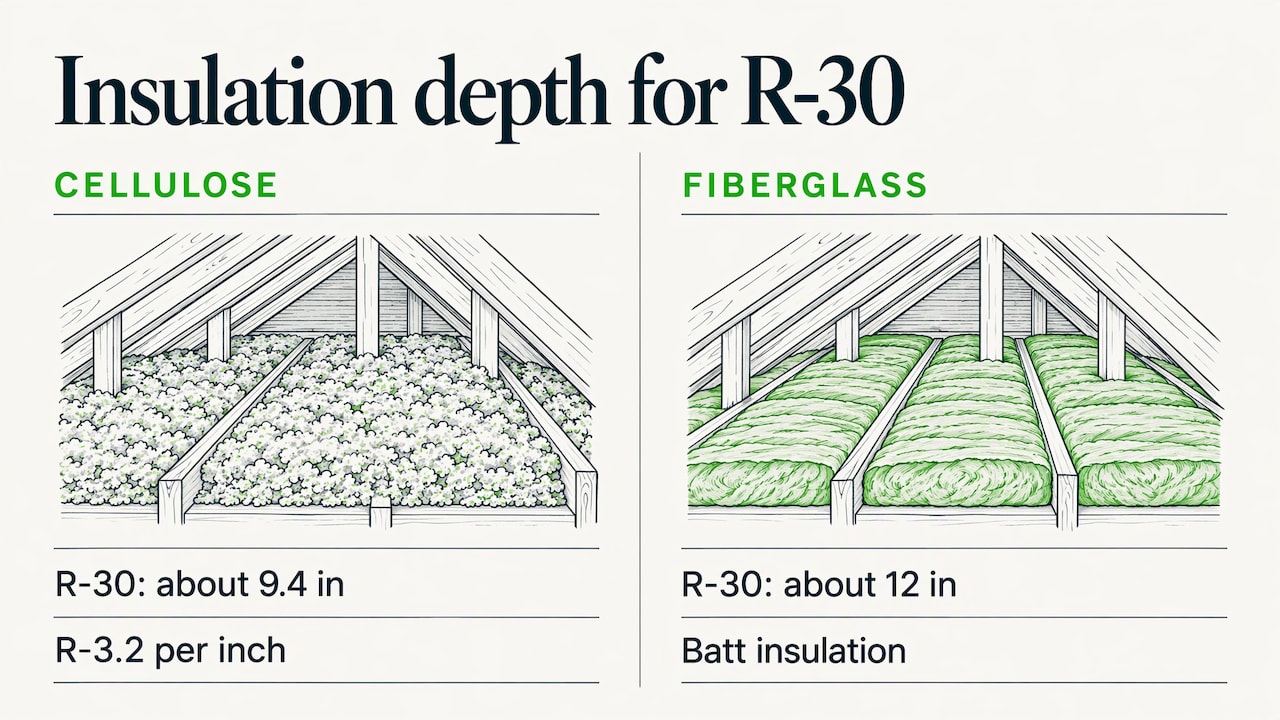
For an open attic floor, these are the workhorses. The material is blown over the joists, fills gaps around wiring and framing, and reaches a high R-value at a moderate price. Cellulose delivers about R-3.2 per inch, so meeting R-30 takes about 9.4 inches of cellulose or 12 inches of fiberglass batt. We install both, and our pages on cellulose insulation and cellulose versus fiberglass walk through how they compare in a New England house.
A worked example: a 1,000-square-foot attic floor blown with cellulose at $1.50 to $3.00 per square foot lands at $1,500 to $3,000 before any removal or repair.
Spray foam
Spray foam seals air leaks and insulates in one step, which is why it is the usual choice when you want the attic inside the home’s conditioned space (insulating the underside of the roof deck rather than the floor). That costs more: InsulationHelper puts spray foam along a roof deck at $3.00 to $7.50 or more per square foot. Roof-deck foam also covers a larger surface than the attic floor, since the roof slopes, so the total grows faster than the floor area suggests.
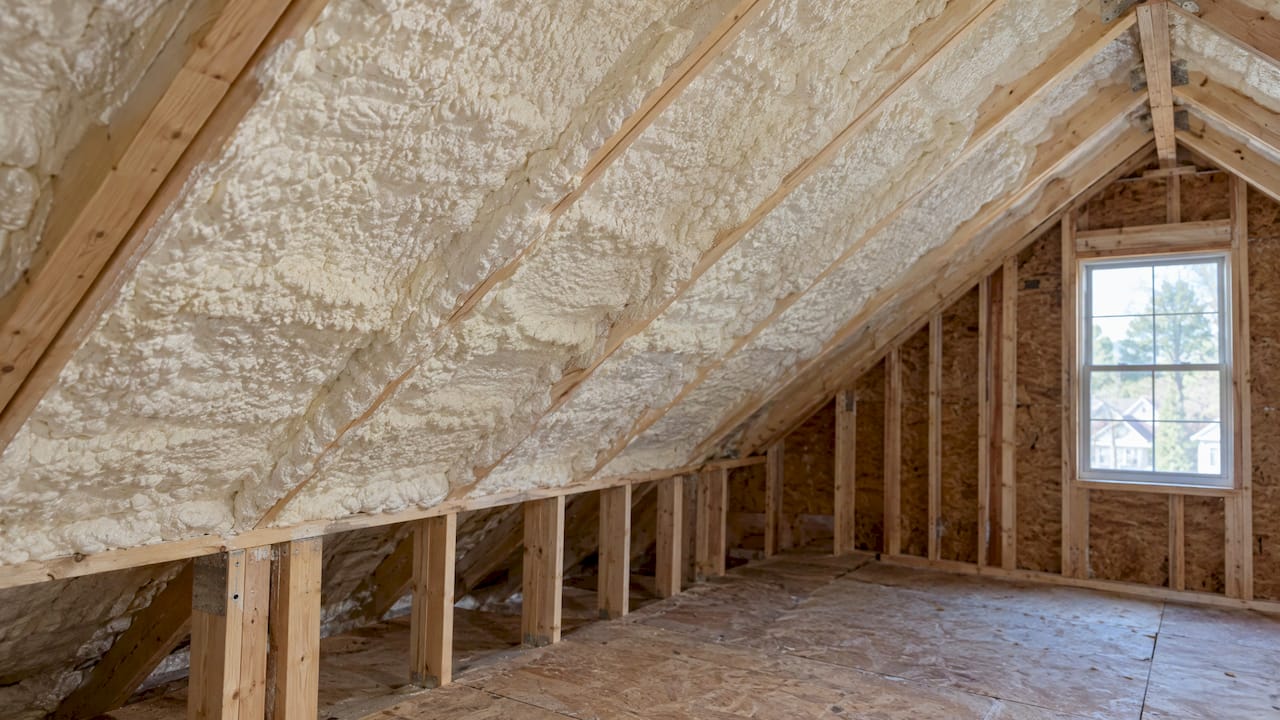
Closed-cell foam packs the most R-value per inch and resists moisture. Open-cell is lighter and less expensive. Our guide to closed-cell versus open-cell spray foam explains which fits which attic, and our spray foam cost review for New England homes covers pricing in more depth. If you are weighing it against a lower-cost material, see spray foam versus cellulose.
Mineral wool
Mineral wool costs more than fiberglass or cellulose. It is a fit where fire resistance matters, such as the wall between a house and an attached garage. We install it too: see our mineral wool insulation page.
How much insulation your attic needs
The question “how much insulation in the attic” comes down to R-value, a measure of resistance to heat flow. Higher is better, and the right number depends on your climate zone. The Department of Energy’s consumer guide recommends, for an uninsulated attic:
- Zone 1: R-30 to R-49
- Zones 2 and 3: R-38 to R-60
- Zones 4 to 8: R-49 to R-60
New England sits in zones 5 and 6 for most of the region, with the coldest northern areas higher. If you already have 3 to 4 inches of insulation, the DOE target in zones 5 to 8 is R-38 to R-49 added on top. New-construction code points the same way: the IECC tables compiled by Pacific Northwest National Laboratory list R-49 ceiling minimums for zones 7 and 8 across the 2009 to 2021 editions.
What that means in inches
Depth depends on the material. HomeEnergyDecisions estimates R-49 takes roughly 14 to 18 inches of blown fiberglass or cellulose. That is why a quote should state the installed depth and the R-value, not just “add insulation.” If your joists are only 6 or 8 inches deep and you can see them, you are well below target. For a closer look at our region, read what R-value for attic insulation in New England and attic insulation for cold climates.
More depth costs more, but not in a straight line. Labor and setup are largely fixed, so going from R-30 to R-49 adds material cost without doubling the job.
Attic insulation removal and replacement cost
Topping up existing insulation is the cheaper path, and the DOE guidance supports adding on top when the old material is dry and clean. Removal becomes necessary when the insulation is wet, moldy, contaminated by rodents, compressed and degraded, or blocking access for air sealing, according to HomeEnergyDecisions, which cites DOE and ENERGY STAR guidance.
Published 2026 figures from InsulationHelper:
| Job | Published cost |
|---|---|
| Removal only | $1.00 to $2.00+ per sq ft |
| Straightforward removal project | $600 to $1,200 |
| Remove and replace | $2.50 to $7.00+ per sq ft |
| Remove and replace, 1,000 sq ft attic | $2,500 to $7,000+ |
What pushes removal costs up
The same source lists extra work that can appear once the attic is open: mold remediation, pest exclusion, electrical or roof-leak repair, asbestos abatement and ventilation rebuilding. HomeEnergyDecisions puts contaminated removal at $4.50 to $6 per square foot and asbestos testing at $250 to $850. Licensed abatement of asbestos-bearing material such as vermiculite costs $10 to $25 per square foot there. These are not typical, but older New England attics are exactly where they turn up, so ask for the attic to be inspected before a firm price is set.
If you suspect vermiculite or asbestos, do not disturb the material. Have it tested, and use a licensed abatement contractor for removal.
What affects your price
Beyond material and removal, these items move a quote:
- Attic size and shape. Square footage is the base. Complicated rooflines, knee walls and low sections take more labor.
- Access. A pull-down stair is easy. A small scuttle hatch with long crawls raises labor, which The Spruce lists among the cost drivers, along with attic size and repairs needed.
- Air sealing. Sealing gaps around chimneys, wiring and top plates before insulating is where much of the energy savings come from. It adds cost and is usually worth it.
- Ventilation. Baffles that keep soffit vents open at the eaves protect the roof and keep insulation from blocking airflow.
- Labor rates. HVAC.com reports attic insulation labor at $40 to $70 or more per hour, and rates vary by region.
- Season and schedule. Contractor demand shifts through the year, and calendars fill up before winter. Ask any contractor what their lead time is rather than waiting for a seasonal discount.
How to read an attic insulation quote
Two quotes for the same attic can differ by thousands of dollars because they cover different work. Energy Trust of Oregon advises that inclusions are what the contractor commits to for the quoted amount, and that a service not mentioned is probably not included. Cleanup and rebate paperwork should be in writing before you sign.
A complete quote states:
- The material and type (for example, blown cellulose or closed-cell spray foam).
- The installed depth and the settled R-value. Cellulose settles after installation, so settled R-value is the number that counts.
- Whether air sealing and baffles are included.
- Whether removal and disposal of old insulation and debris are included, and at what price.
- How rebates and financing are handled.
- What happens if hidden problems such as moisture or wiring turn up.
The point of this list is to compare like with like. The lowest number is often the one with the shortest list of inclusions.
Why an energy audit comes before the quote
Guessing the right R-value from the attic hatch misses the air leaks that waste the most heat. We start with a home energy audit using blower door testing and thermal imaging, so air leaks and heat loss are located before we recommend a fix. You can see what a home energy audit for insulation finds and examples of thermal imaging audits on our site. The result is a scope that matches the house, so the price you see is for the work that actually reduces your bills.
Rebates and financing
Incentives can change what you pay out of pocket. We are an NHSaves contractor and help New Hampshire homeowners access available energy efficiency rebates, and financing is available for insulation projects. Rebate amounts and eligibility change, so we confirm them against the current program rules when we prepare your estimate.
Get an attic insulation price for your home
Our attic insulation services cover blown cellulose, fiberglass, mineral wool and open-cell, closed-cell and HFO spray foam, installed by our trained crew in New Hampshire, Massachusetts, southern Maine and Vermont. We do not publish flat prices because attic size, access, existing material and target R-value change every job. We give you a written scope you can compare line by line.
Book an audit and attic assessment through our energy audit page, and we will tell you the depth, the material and the cost that fit your house. If you are leaning toward foam, start with our guide on whether spray foam for your attic is worth the cost.
FAQ
What is the average cost of attic insulation?
About $2,500 nationally, with most projects between $1,500 and $3,500, according to Bob Vila. Cold-climate homes needing higher R-values tend to land at the upper part of that range. Spray foam on the roof deck costs more per square foot.
How much does it cost to remove old attic insulation?
Professional removal is published at about $1.00 to $2.00 or more per square foot, and $600 to $1,200 for a straightforward job, per InsulationHelper. Mold, rodent contamination or asbestos raises the price. An attic inspection tells you which case you have.
How thick should attic insulation be?
It depends on the material and your climate zone. Reaching R-49 takes roughly 14 to 18 inches of blown fiberglass or cellulose, per HomeEnergyDecisions, and the DOE recommends R-49 to R-60 for uninsulated attics in zones 4 to 8.
Is it cheaper to add insulation on top than to replace it?
Usually yes. If the existing insulation is dry, clean and not badly compressed, new material can go over it. Removal is for wet, moldy, contaminated or degraded insulation, or where it blocks air sealing.
Sources
- How Much Does Attic Insulation Cost? A Budget Breakdown (Bob Vila)
- How Much Does Attic Insulation Really Cost? (The Spruce)
- Average Insulation Cost by State in 2026 (UseCalcPro)
- Owens Corning price announcement, June 2026
- Attic Insulation Cost in 2026: Price by Material (HomeEnergyDecisions)
- Attic Insulation Cost, Prices, Materials, and Cost Factors (InsulationHelper)
- Attic Insulation Removal Cost (2026) (HomeEnergyDecisions)
- Consumer Guide to Home Insulation (U.S. Department of Energy)
- 2009-2021 IECC and IRC Minimum Insulation Requirements (PNNL)
- Calculating blown-in insulation costs (HVAC.com)
- How to read insulation bids (Energy Trust of Oregon)