
A bedroom that feels cold even when the thermostat reads 70 degrees usually has a building-envelope problem, not a heating-system problem. Mineral wool insulation is one option that can help New England homes and commercial buildings hold more consistent temperatures, reduce sound transfer, and add valuable fire resistance where it matters most.
For homeowners, builders, and remodelers, the appeal is straightforward: mineral wool delivers dependable thermal performance without losing its shape or settling over time. But it is not a one-size-fits-all answer. The right insulation strategy depends on the assembly, the available cavity depth, the condition of the existing building, local code requirements, and whether air leakage or moisture is also part of the problem.
What Is Mineral Wool Insulation?
Mineral wool is made from natural rock and recycled slag that are melted, spun into fibers, and formed into batts, boards, or loose-fill products. It is commonly called rock wool or stone wool. Unlike fiberglass batts, mineral wool is denser and more rigid, which helps it fit securely between framing members and makes it well suited to applications where sound control, fire resistance, and moisture resilience are priorities.
Most mineral wool batts provide an R-value of roughly R-4 to R-4.3 per inch, although performance varies by product and installation. That means a standard wall cavity can achieve a meaningful thermal upgrade without compressing the insulation. In roofs, exterior walls, basement assemblies, and multifamily partitions, mineral wool can contribute to a more durable and comfortable building envelope.
Its fibers are water resistant, but mineral wool is not an air barrier or a waterproofing system. It can allow water vapor to pass through rather than trapping it, which can be useful in properly designed wall and roof assemblies. If bulk water is entering the structure, the source of that leak still needs to be corrected. If outside air is moving through gaps around framing, wiring, rim joists, or penetrations, air sealing should be part of the work.
Why Mineral Wool Insulation Works Well in New England
New England buildings face a demanding combination of prolonged winter cold, summer humidity, wind-driven rain, and large seasonal temperature swings. Insulation needs to do more than raise an R-value on paper. It needs to support a complete assembly that manages heat, air, and moisture predictably.
Reliable thermal performance
Mineral wool holds its form well when installed correctly. It is less prone to slumping than some loose materials and can be cut precisely around electrical boxes, pipes, and irregular framing. That matters in older homes, where framing bays are rarely uniform and small gaps can become pathways for heat loss.
The material also performs well at lower temperatures. That is valuable during a New Hampshire, Maine, Vermont, or Massachusetts winter, when an underinsulated attic, exterior wall, or garage ceiling can make specific rooms uncomfortable and force heating equipment to work harder.
Fire resistance where assemblies need it
Mineral wool is noncombustible and can withstand very high temperatures. It does not replace required fire-rated construction details, but it can strengthen the fire-resistance strategy within walls, floors, mechanical rooms, and exterior assemblies.
This benefit is especially relevant for multifamily buildings, attached garages, commercial projects, and renovations where fire separation requirements are part of the scope. Builders still need to follow the approved assembly and applicable state and local code. A quality installation supports that process rather than creating inspection questions late in the schedule.
Better sound control between spaces
The density that helps mineral wool stay in place also helps reduce airborne sound. It can make a noticeable difference in interior partitions, home offices, bedrooms, media rooms, and multifamily walls. Sound reduction is not only a luxury feature. For households working from home or living with active families, quieter rooms can improve how the entire property functions.
In commercial settings, mineral wool can help limit sound transfer between offices, tenant spaces, or mechanical areas. Results depend on the complete assembly, including drywall layers, resilient channels, door openings, and penetrations. Insulation helps, but it cannot overcome a large untreated opening in the partition.
Moisture-aware performance
When paired with a properly designed air and water-management system, mineral wool can be a smart choice for assemblies that need to dry. Its moisture resistance helps it retain its thermal characteristics after limited exposure to moisture, unlike materials that can absorb and hold water more readily.
Still, the details matter. A wet basement wall, a roof leak, or poorly flashed siding requires a repair plan before insulation is added. Covering a moisture problem can turn a manageable issue into hidden damage.
Where Mineral Wool Makes the Most Sense
Mineral wool is often selected for exterior walls during new construction or major remodeling, especially when builders want high R-value performance in standard framing cavities. It can also be installed as continuous exterior insulation in certain wall systems, helping reduce thermal bridging through studs.
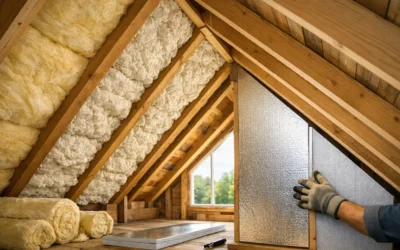
In attics and cathedral ceilings, mineral wool batts or boards can be effective when the roof assembly has been designed for proper ventilation or unvented-roof performance. The available depth is critical. New England energy codes may require insulation levels that exceed what a shallow roof cavity can deliver with batts alone, so the design may call for a combination of materials or additional exterior insulation.
Basement and crawlspace projects require more careful evaluation. Mineral wool can be an excellent component in a basement wall assembly, but the foundation must be dry and the insulation approach must account for concrete, vapor control, and rim joist air leakage. In many homes, the rim joist is a major source of drafts and deserves targeted air sealing before the rest of the basement is finished.
For interior walls and floors, mineral wool is a practical upgrade when sound control is the priority. It is commonly used around bathrooms, laundry rooms, bedrooms, and between dwelling units. These applications may not reduce heating bills dramatically, but they can make a home or building substantially more comfortable to occupy.
Mineral Wool vs. Other Insulation Options
Every insulation material solves a different part of the building-performance puzzle. Mineral wool is strong on fire resistance, sound reduction, dimensional stability, and thermal performance. It does not automatically stop air leakage, which is why it is often paired with dedicated air-sealing measures.
Fiberglass can be a cost-effective option for many framed walls and attics, particularly when budget and cavity access are the main considerations. Its results depend heavily on careful installation, full cavity coverage, and air sealing around the assembly.
Blown cellulose is a strong choice for dense-packing existing walls and bringing attic insulation up to recommended levels. It can be especially effective in older homes with limited access, though moisture conditions and ventilation details should be reviewed first.
Spray foam provides insulation and air sealing in one application. Closed-cell foam can also add moisture resistance and high R-value in limited space, making it useful at rim joists, complex rooflines, and certain foundation applications. Open-cell foam has different vapor and moisture characteristics and should be selected based on the assembly, not simply on price.
The best approach may use more than one material. A project might use spray foam to seal difficult rim joists, mineral wool in exterior wall cavities, and blown cellulose across an attic floor. That is not overbuilding. It is matching each material to the location where it performs best.
Installation Details That Protect Performance
Even a high-quality mineral wool product can underperform if it is poorly installed. Batts should be cut to fit snugly around obstructions without excessive compression or gaps at the edges. Gaps reduce the effective R-value and can create cold spots that lead to discomfort or condensation risk.
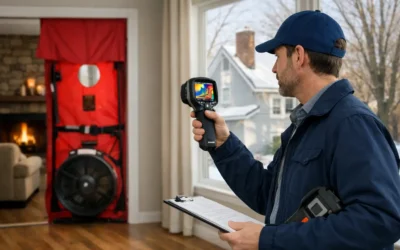
Before insulation goes in, installers should evaluate air leaks at top plates, bottom plates, pipe penetrations, wiring holes, duct openings, and transitions between building materials. In many New England homes, stopping uncontrolled air movement is the fastest path to reducing drafts and improving room-to-room comfort.
For builders and remodelers, sequencing is equally important. Insulation should be coordinated with rough mechanical work, air sealing, vapor-control details, and inspection requirements. A trained installation team helps keep the project moving and avoids the rework that can follow a failed insulation or energy-code inspection.
Start With the Building, Not the Product
Choosing mineral wool should begin with an assessment of the property’s actual conditions. Cold floors, ice dams, high utility bills, mold concerns, and noisy rooms can each point to a different combination of insulation, air sealing, ventilation, and moisture management.
Colonial Insulation helps property owners and construction professionals evaluate those conditions before recommending a material. The goal is not to sell a single insulation type. It is to build an assembly that supports code compliance, lower operating costs, cleaner indoor air, and dependable comfort through every New England season.
If you are planning a renovation, new build, attic upgrade, or basement project, ask how mineral wool fits into the complete air, thermal, and moisture-control strategy. The right answer should make the space feel better long after the walls are closed.